Russia has lost around 1.2 million soldiers during the Ukraine War—a number that pales in comparison to its losses during the “Great Patriotic War” from 1941 to 1945.
Russia’s “special military operation” in Ukraine has lasted longer than Russia’s fight against Nazi Germany in World War II.
Russia’s contribution to the fight against Nazi Germany lasted 1,418 days. Russia’s invasion of Ukraine hit its 1,418th day on January 11—one month shy of the upcoming fourth anniversary on February 24, 2026.
Russia’s “Great Patriotic War” During World War II
Russia’s participation in World War II is historically referred to as the “Great Patriotic War” within the Soviet Union and modern Russia. In many ways, the moniker fits. Though the West often remembers D-Day as the crucial moment turning the tide against Hitler’s Germany, the Soviet Union first managed to stop Germany’s Blitzkrieg war machine—and then counterattack to the gates of Berlin by April 1945.
On June 22, 1941, Nazi Germany launched Operation Barbarossa. The attack caught Moscow by surprise. Up until the early morning hours of June 22, the Soviet Union and Nazy Germany were allies. They had even conspired to invade and divide Poland in May 1939.
The first months of World War II were catastrophic for Russia. The German Wehrmacht advanced rapidly along three axes of advance in the south, center, and north of the Soviet Union. The Red Army suffered enormous defeats, losing millions of troops and tens of thousands of aircraft, tanks, artillery guns, and vehicles. By December, German units were in the outskirts of Moscow and could even see the Kremlin in the distance.
But, like the French armies of Napoleon Bonaparte, the German forces were not ready for the Russian winter—and with a combination of the deep freeze and a Russian counterattack, the war stalled until 1942.
The following year, fierce fighting continued in the environs of Moscow, but the Nazis failed to make additional progress. The main thrust of their advance that year came in the south, as the German leadership went for Russia’s oil reserves. However, as before, the winter came with a massive Russian counterattack—surrounding German troops at Stalingrad, where they surrendered the following spring.
1943 was the year that the balance of the war tilted toward Russia. The Battle of Kursk proved to be the Wehrmacht’s last major offensive on the Eastern Front. The largest tank battle of the war devastated both sides and failed to produce a concrete victor. A few months later, the Russian forces went on the offensive and never stopped until the war’s end.
Indeed, in the summer of 1944, it was also the Red Army’s Operation Bagration, in addition to the D-Day landings in Normandy, that ultimately led to Germany’s defeat. The operation led to the largest defeat of the German forces in the war.
The Kremlin’s “Special Military Operation” Isn’t Much By Comparison
On February 24, 2022, the Kremlin launched its “special military operation” in Ukraine. The goal was to topple the Ukrainian government and capture the country within three days to two weeks. Almost four years later, and over 1.2 million casualties and tens of thousands of heavy weapon systems lost, the Russian forces are still trying to meet their objectives.
Yet Russia’s seemingly astronomical losses in Ukraine pale in comparison to those during World War II, when an estimated 11 million soldiers—and at least 10 million civilians—perished. This point is one that Russia’s defenders often make in messaging surrounding the war, suggesting that the Kremlin is far from exhausted from the fighting in Ukraine.
Still, after 1,418 days of fighting in Ukraine, the Russian forces have failed to even achieve their limited objectives.
With no end in sight for the “special military operation” in Ukraine, the comparison between the performance of the Russian forces in World War II and Ukraine should concern the Kremlin.
About the Author: Stavros Atlamazoglou
Stavros Atlamazoglou is a seasoned defense journalist specializing in special operations and a Hellenic Army veteran (national service with the 575th Marine Battalion and Army HQ). He holds a BA from the Johns Hopkins University and an MA from the Johns Hopkins’ School of Advanced International Studies (SAIS). His work has been featured in Business Insider, Sandboxx, and SOFREP.
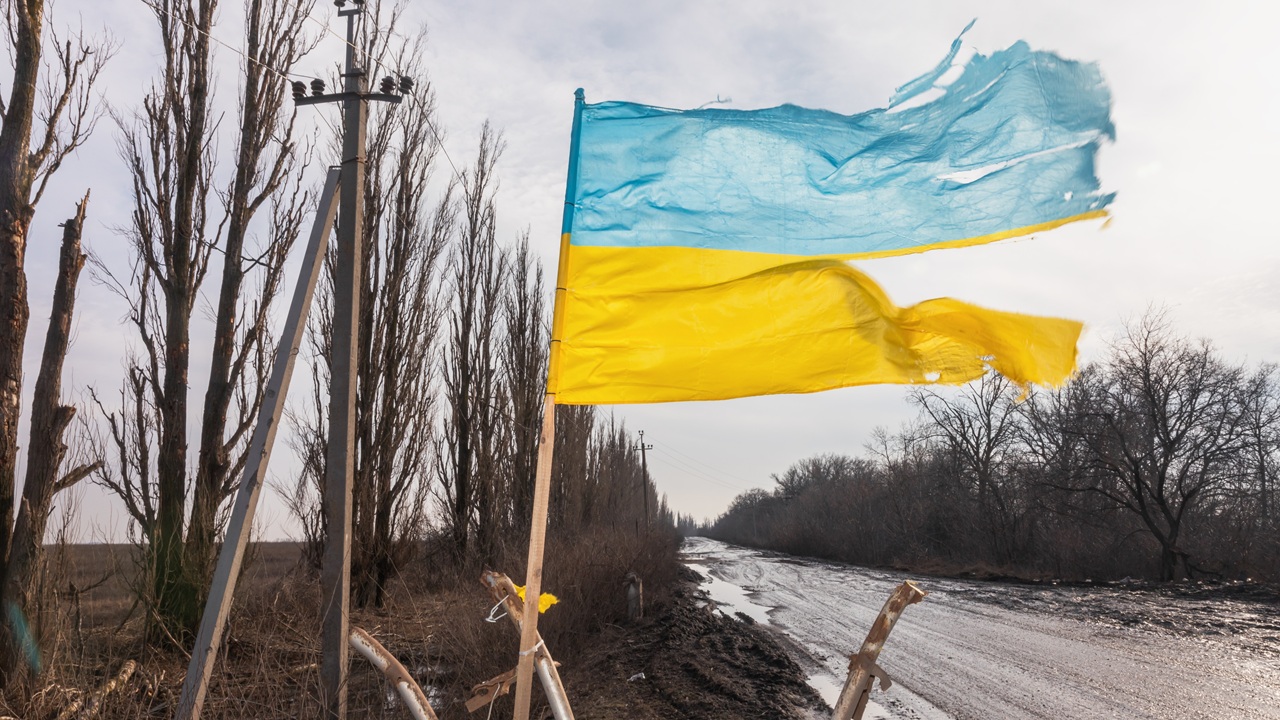
Image: Shutterstock / Drop of Light.