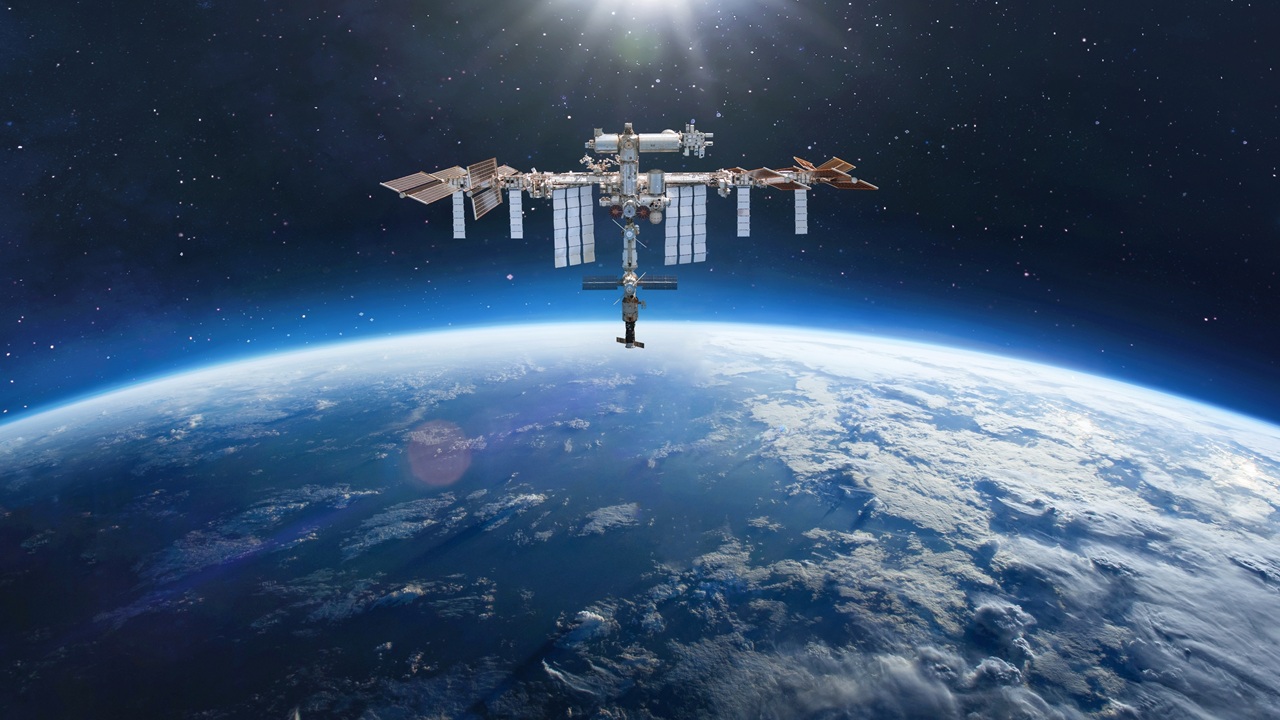
After suffering an emergency in space, it took NASA nine months to rescue its stranded astronauts. China took nine days.
China continues its long march toward space dominance. On the heels of now iconic images of Chinese taikonauts on China’s modular space station barbequing meat in orbit on the eve of their triumphal return to Earth, news broke that their return vehicle was damaged. It appears that space debris crashed into their craft right before the taikonauts were set to board that craft and return to Earth.
The Chinese Crew Made It Home Safely
Because of this suspected damage, the crew stayed in orbit, running various risk assessments and impact analyses to ensure the station’s continued structural integrity. Some speculated that if it was found that their re-entry vehicle had suffered damage, Beijing might turn to America, notably SpaceX, to assist them in returning the stranded taikonauts.
But that was not the case. Instead, the Chinese relied upon the Shenzhou-21 vehicle, which had already docked at the station and was meant to support the succeeding Chinese manned mission to the station.
Nine days after they were originally supposed to return home, the three-person crew of taikonauts made it safely to Earth—having spent 204 days in orbit, a record for a Chinese crew.
Remember That Time Americans Were Stranded on the ISS?
It’s a stunning comparison with the shambolic, almost Soviet-like nature of America’s ailing manned spaceflight program. Remember that in 2024, the crew of Boeing’s new prototype, the Starliner capsule, were supposed to fly into orbit, dock with the International Space Station (ISS), and then return home quickly.
Unfortunately for the American crew, the Starliner capsule was deemed unsafe for the crew to return home in—stranding them on the ISS in orbit for nine months, with no viable return plan.
In the months that followed, the Americans from the Starliner mission broke some records of their own, none of them good. The United States, which on paper is the world’s dominant space power, could not muster up the capability to get a return mission up and running. A combination of bureaucratic inertia, political obstruction due to animosity between the Biden administration and Elon Musk, and overall incompetence led to the failure to rescue the Americans stranded on the ISS sooner.
Compare that to the Chinese experience, which in many respects was far more caustic. After having been damaged in a bizarre space junk incident (it is still unclear what precisely hit the Chinese Shenzhou-20 return capsule), the Chinese taikonauts made it home just nine days after they were supposed to.
Beijing found a reliable workaround, and it did not allow for anything to slow it down in returning its people to the Earth’s surface. That’s just the opposite of what happened when those Starliner passengers were stranded on the ISS: no one in Washington could have been bothered to bring them home sooner.
China’s Space Program Can Get Things Done—America’s Can’t
What’s more, the incident with the Chinese return capsule underscores the growing risk posed by space debris, even for well-controlled orbital missions. The Chinese space agency, CMSA (China Manned Space Agency), had plans and standby vehicles in place—such as a spacecraft in near-readiness to act as a lifeboat.
But the Chinese upstaged the Americans (again) in the critical domain of manned spaceflight operations. What could have very easily been an epic disaster in orbit became a minor inconvenience.
The Americans were quietly chuckling after news broke that the Chinese were stuck in orbit. It was obviously a reaction to the humiliating way Washington handled a similar crisis more than a year ago. Now it is the Chinese who are laughing at the Americans because of how easy they made the fix look. This does not bode well for the new space race that is shaping up between primarily America and China.
About the Author: Brandon J. Weichert
Brandon J. Weichert is a senior national security editor at The National Interest. Recently, Weichert became the host of The National Security Hour on America Outloud News and iHeartRadio, where he discusses national security policy every Wednesday at 8pm Eastern. He is also a contributor at Popular Mechanics and has consulted regularly with various government institutions and private organizations on geopolitical issues. Weichert’s writings have appeared in multiple publications, including The Washington Times, National Review, The American Spectator, MSN, and the Asia Times. His books include Winning Space: How America Remains a Superpower, Biohacked: China’s Race to Control Life, and The Shadow War: Iran’s Quest for Supremacy. His newest book, A Disaster of Our Own Making: How the West Lost Ukraine is available for purchase wherever books are sold. He can be followed via Twitter @WeTheBrandon.
Image: Shutterstock / Dima Zel.