When I attended a Stations of the Eucharist presentation, it was electric. Other attendants and I were fascinated as the story of our salvation and the Real Presence of Jesus in the Holy Eucharist was foretold in the Old Testament and revealed in the New Testament.
“It started with a talk that I gave at the Palm Beach men’s conference in 2023,” shared Fr. Jonathan Meyer, a National Preacher for the National Eucharistic Revival. “That is the first time that the Stations of the Eucharist really went viral (reaching 900,000 views on YouTube), and this gave it its fame. I’ve been promoting and encouraging and teaching that ever since in a variety of ways. A man in his eighties came up to me [and said], ‘I’ve gone to daily Mass for sixty years, and I didn’t know the Mass was a sacrifice.’”
Fr. Meyer’s The Stations of the Eucharist book was recently released, along with a companion booklet. In conjunction, Dynamic Catholic is offering a free Holy Week Retreat on The Stations of the Eucharist. When you sign up, you will receive links to videos by Fr. Meyer.
“The Stations of the Eucharist are ‘stops’ along the way from Genesis to Revelation,” Fr. Meyer explained, “fourteen biblical reflections that help us understand the Mass as a sacrifice. As Catholics, we have this idea that ‘I don’t know Scripture.’ [But when people hear about the stations, they think] ‘I actually know these passages’ and ‘I know more than I think I know.’ You’ve heard these passages 1,000 times, but you haven’t looked at it this way before, as in the case with Abraham and Isaac.” The Stations of the Eucharist is 151 pages, and a color image accompanies each station, along with a takeaway and a virtue.
Although I was blessed to fall in love with Our Lord in the Holy Eucharist when I made my first Holy Hour as a teenager, The Stations of the Eucharist made the theology behind Our Lord’s sacrifice come more alive for me.
“Every single one of us in our own life has struggle, trial, loneliness, frustration, anxiety, and we find all of that in Jesus’ sacrifice on the Cross,” Fr. Meyer related. “The Stations of the Eucharist help us to understand that Mass is the Cross and the Resurrection. The stations help us to understand our sacrifice, our sufferings, our struggles. We are not abandoned in this; we have a place—to take our lives and unite them to His.”
“The book is really intended to be a journey, to be an experience, to transform the reader to not just understand content but to really embrace the Mass as sacrifice. Going through a deep biblical journey can be transformative. The Blessed Sacrament is Jesus, and there is only One that can change and transform hearts, and that is God Himself. There is no surer way to encounter the Lord than through the Mass and the Most Blessed Sacrament,” emphasized Fr. Meyer.
Although the stations may be reflected on during the entire year, they take on a deeper meaning as we reflect on Christ’s total gift of self for us. “Holy Thursday is part of the Triduum and, in fact, part of Our Lord’s passion because it is the same reality. It’s intentional, isn’t it, that when we read the Passion on Palm Sunday or Good Friday, that it begins with the Last Supper narrative. The Church is teaching us that the sacrifice and offering that happens at the Last Supper leads us to Good Friday and ultimately to an empty tomb. Every Mass is Calvary, and there is no greater love than God giving Himself unreservedly to His people. So, the Eucharist is the greatest love story ever.”
“I was born in 1976, and my understanding of the Eucharist and the predominant teaching about the Eucharist at that point was communion,” added Fr. Meyer. “There was a great emphasis on reception of Communion and how we become communion. Thanks be to God, things began to shift through John Paul II and Pope Benedict toward Adoration and the Real Presence. The greatest shift in the Eucharistic Revival is the emphasis on the theology of presence. It is an opportunity for us to shift and look at the Eucharist as sacrifice. So, after thirty some years of communion and thirty some years of presence, there is a shift to sacrifice.”
“This is something that was not emphasized even in seminary. The Mass as an efficacious offering that I want to attach something to has been lost. Ask a parish secretary how many people are coming in and asking for Masses to be offered.”
“My hopes are that this book gets into the hands of fallen-away Catholics, that it brings our Protestant brothers and sisters [to understand] this, that it strengthens priestly and religious vocations, [and] that it unites families and brings them back to the Lord,” reflected Fr. Meyer.
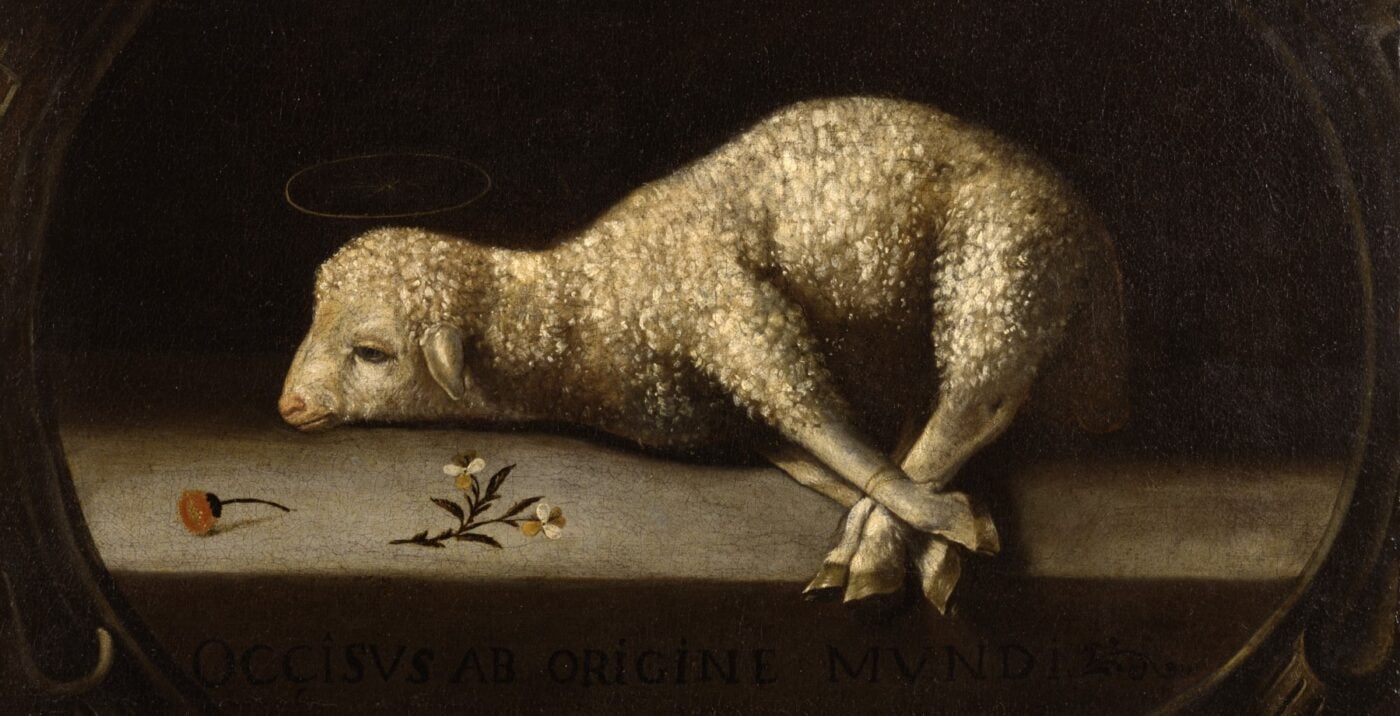
Image from Wikimedia Commons