Over four years of border tensions and clashes have drilled a deep well of distrust between Pakistan and Afghanistan.
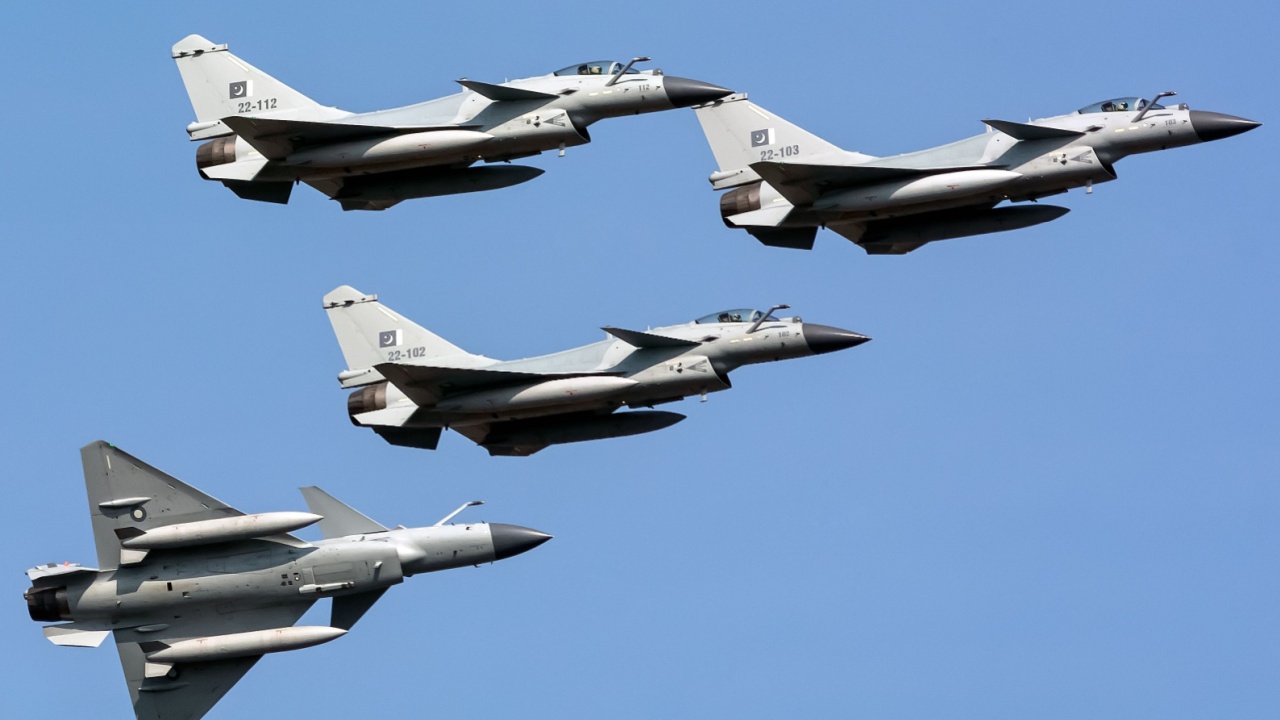
Pakistan-Afghanistan relations have entered their most dangerous phase in decades. In late February 2026, cross-border skirmishes escalated into what Pakistan’s defense minister has described as a state of “open war,” after Taliban forces attacked Pakistani border posts and Islamabad responded with large-scale air and artillery strikes on Afghan territory. Afghan officials say they have repelled attempted Pakistani strikes on Bagram airbase and inflicted heavy casualties.
At the same time, Pakistan claims to have hit dozens of Taliban targets and justified its actions as self-defense against insurgents based in Afghanistan. The Taliban have retaliated with drone strikes on major Pakistani military installations, including Nur Khan Airbase in Rawalpindi and bases in Quetta and the tribal districts.
Against this backdrop of open clashes, the deeper problems in the relationship between Pakistan and Afghanistan have come into sharp focus. What we are seeing now is not an isolated border incident, but the eruption of long-simmering disputes over cross-border terrorism, the legitimacy of the colonial-era border (the Durand Line), Afghan refugees in Pakistan, and regional alignments.
For much of the last three decades, Islamabad saw the Afghan Taliban as a strategic asset that could secure “strategic depth” against India and ensure a friendly regime in Kabul. Pakistani intelligence supported the anti-Soviet Mujahideen in the 1980s, backed the rise of the Taliban in the 1990s, and hosted Taliban leaders in Quetta during the 2001–2021 period of US/NATO intervention.
The Taliban’s return to power in Kabul in August 2021 initially seemed to vindicate the Pakistani strategy. Yet the relationship deteriorated quickly. Analysts now describe a dramatic shift in Pakistan’s role from principal supporter of the Taliban to its primary enemy, as Islamabad accuses the Taliban of sheltering anti-Pakistan insurgents and Kabul resents what it sees as Pakistani interference in Afghanistan’s domestic affairs and its high-handedness. The current open clashes crystallize this reversal. Pakistani officials now label the Taliban regime its primary security threat, while Taliban leaders denounce Pakistan’s airstrikes as violations of sovereignty and acts of aggression.
At the heart of the present crisis is the question of cross-border terrorism, especially the role of the Tehreek-e-Taliban Pakistan (TTP). The TTP, ideologically aligned with the Afghan Taliban but organisationally distinct, has waged a violent insurgency against the Pakistani state for years. After being pushed out of Pakistan’s tribal areas by military operations, many TTP fighters relocated across the Durand Line into Afghanistan.
Since 2021, Islamabad has repeatedly charged that Kabul allows the TTP and allied jihadist factions to use Afghan territory as a haven and staging ground for attacks inside Pakistan. Pakistani security officials directly blame Kabul for a sharp surge in militant violence along the border and in Khyber Pakhtunkhwa province, making TTP sanctuaries their core grievance in bilateral talks.
The Taliban leadership rejects these accusations, insisting that Afghan soil will not be used against other states and portraying the issue as a blowback of Pakistan’s own policies sponsoring terrorist groups for use against India. Kabul has been unwilling or unable to disarm or expel the TTP, in part because of close personal and ideological links and in part because it wants to use them as a bargaining chip vis-à-vis Pakistan.
Pakistan has increasingly escalated its response during the past few years to TTP provocations using Afghan territory. Since 2024, Pakistan has launched multiple airstrikes on Afghan territory—in Khost, Paktika, and other eastern provinces—claiming to target TTP camps and fighters.
Each round of strikes has provoked Taliban retaliation with cross-border artillery fire and now drones, creating a cycle of escalation that culminated in the current multi-day clashes and mutual declarations of inflicting “hundreds” of casualties on the other side. These figures are impossible to verify independently. In short, the unresolved TTP problem has transformed Afghanistan from perceived “strategic depth” into a strategic liability for Pakistan.
The other structural problem is the contested nature of the border itself. The 2,600-kilometer (1,616-mile) Durand Line, drawn by the British in 1893, has never been formally recognized by any Afghan government as an international boundary. Pashtun tribes straddle both sides of the border, and local populations have long moved across it with little regard for checkpoints or visas.
Since 2015, Pakistan has tried to “harden” the frontier by fencing large stretches of it and tightening controls at key crossings such as Torkham and Spin Boldak. The Taliban, like their predecessors, oppose these measures, arguing that they divide local tribes and encroach on Afghan territory. This state of affairs has produced repeated clashes between border forces—sometimes sparked by disputes over new fencing, construction of border posts, or unilateral closures of crossings by Pakistan.
In February 2023, for example, heavy gunfire around the Torkham crossing led to several days of closure; in late 2025, there were lethal exchanges at Spin Boldak that killed soldiers and civilians and displaced local residents. The current fighting reprises this pattern on a larger scale, with shelling reported along multiple sectors of the border.
Pakistan frames effective border control as a counter-terrorism necessity. For the Taliban, Pakistani fortifications and occasional cross-border strikes are seen as an assault on Afghan sovereignty and an attempt to impose the Durand Line unilaterally. Without a mutually accepted definition of the border, small incidents easily escalate into full-blown crises.
A third major fault line is the fate of millions of Afghans in Pakistan. For decades, Pakistan hosted large Afghan refugee populations, but this has changed in the last few years. In 2023, Islamabad launched the “Illegal Foreigners Repatriation Plan,” ordering all undocumented Afghans—about 1.7 million people—to leave.
By late 2025, UN agencies reported that arrests and deportations of Afghans had increased elevenfold compared to the previous year, and Pakistan began extending expulsions even to documented migrants and holders of Afghan Citizen Cards. Afghan authorities and international organisations have condemned these actions as collective punishment and warned of severe humanitarian consequences as deportees return to a country facing economic collapse, drought, and political repression.
For Kabul and many ordinary Afghans, Pakistan is now seen less as a refuge and more as a hostile neighbor forcibly expelling vulnerable people. In Pakistan, Afghan refugees are increasingly blamed for creating security threats. Pakistani officials allege that terrorists hide among refugees, that Afghan communities shelter militants belonging to the TTP and Islamic State-Khorasan (ISIS-K), and that Pakistan has “paid in blood” for decades of hospitality.
This hardening of attitudes feeds into the broader deterioration of relations. Afghan public opinion, shaped by images of deportations and reports of police harassment, has become less receptive to Pakistani diplomacy. Pakistani public opinion, shaken by terrorist attacks and economic strains, has become less sympathetic to Afghan suffering. The refugee issue, therefore, both reflects and reinforces the security and border crises.
Border tensions have also had severe economic consequences. Afghanistan is landlocked and heavily dependent on trade routes through Pakistan—especially via the Karachi port and the land crossings at Torkham and Chaman. Each time violence erupts, these crossings are closed or restricted, disrupting the flow of goods, fuel, and people. Since 2021, Afghan businesses have faced recurrent closures, arbitrary delays, and new Pakistani regulations on transit and banking. Pakistan, meanwhile, complains of smuggling, tax losses, and security risks emanating from poorly controlled trade routes.
The latest clashes have again halted or severely limited cross-border traffic in several sectors, compounding Afghanistan’s economic crisis and hurting Pakistani border economies that depend on trade and trucking. In the longer term, the erosion of economic interdependence removes one of the few remaining incentives for cooperation.
The bilateral crisis is also nested in a wider regional competition. Pakistani officials increasingly claim that Afghanistan is acting as a “proxy” for India, pointing to India’s diplomatic presence in Kabul and alleged covert support to insurgent groups in Pakistan’s Balochistan province and tribal districts—charges that both New Delhi and the Taliban deny.
For Islamabad, the nightmare scenario is an Afghanistan that is both hostile and aligned with India, encircling Pakistan from the west as India does from the east. For the Taliban, cultivating ties with India and other regional actors is a way to reduce dependence on Pakistan and gain diplomatic leverage. This creates a classic security dilemma: each side’s efforts to enhance security through new partnerships are interpreted by the other as evidence of encirclement or betrayal.
In this complicated context, both governments use hardline positions on the bilateral relationship to bolster domestic legitimacy. Pakistani leaders portray airstrikes and a tough line on refugees as necessary to protect national security; Taliban leaders frame resistance to Pakistani incursions as a continuation of jihad and defense of Afghan national honor. Concessions are politically costly on both sides, making de-escalation difficult even as Kabul and Islamabad recognize the dangers of uncontrolled conflict.
Despite their fiery rhetoric, both Islamabad and Kabul face strong incentives to avoid full-scale war. Pakistan is grappling with economic crisis, political instability, and multiple internal insurgencies; sustained conflict with Afghanistan would strain its military and finances. The Taliban, meanwhile, preside over an isolated, aid-dependent economy and cannot easily absorb prolonged bombardment or loss of key infrastructure.
However, finding a way out of the hostile relationship that they have locked themselves into will be far from easy. Mistrust on both sides is deep, and both Islamabad and Kabul believe they have been repeatedly betrayed by the other. But the current open clashes demonstrate that the costs of unmanaged hostility are rising fast—not only for Pakistan and Afghanistan, but for the wider region already plagued by “forever wars.”
About the Author: Mohammed Ayoob
Mohammed Ayoob is a university distinguished professor emeritus of International Relations at Michigan State University and a senior fellow at the Center for Global Policy. His books include The Many Faces of Political Islam (University of Michigan Press, 2008), Will the Middle East Implode (2014), and, most recently, From Regional Security to Global IR: An Intellectual Journey (2024). He was also the editor of Assessing the War on Terror (2013).