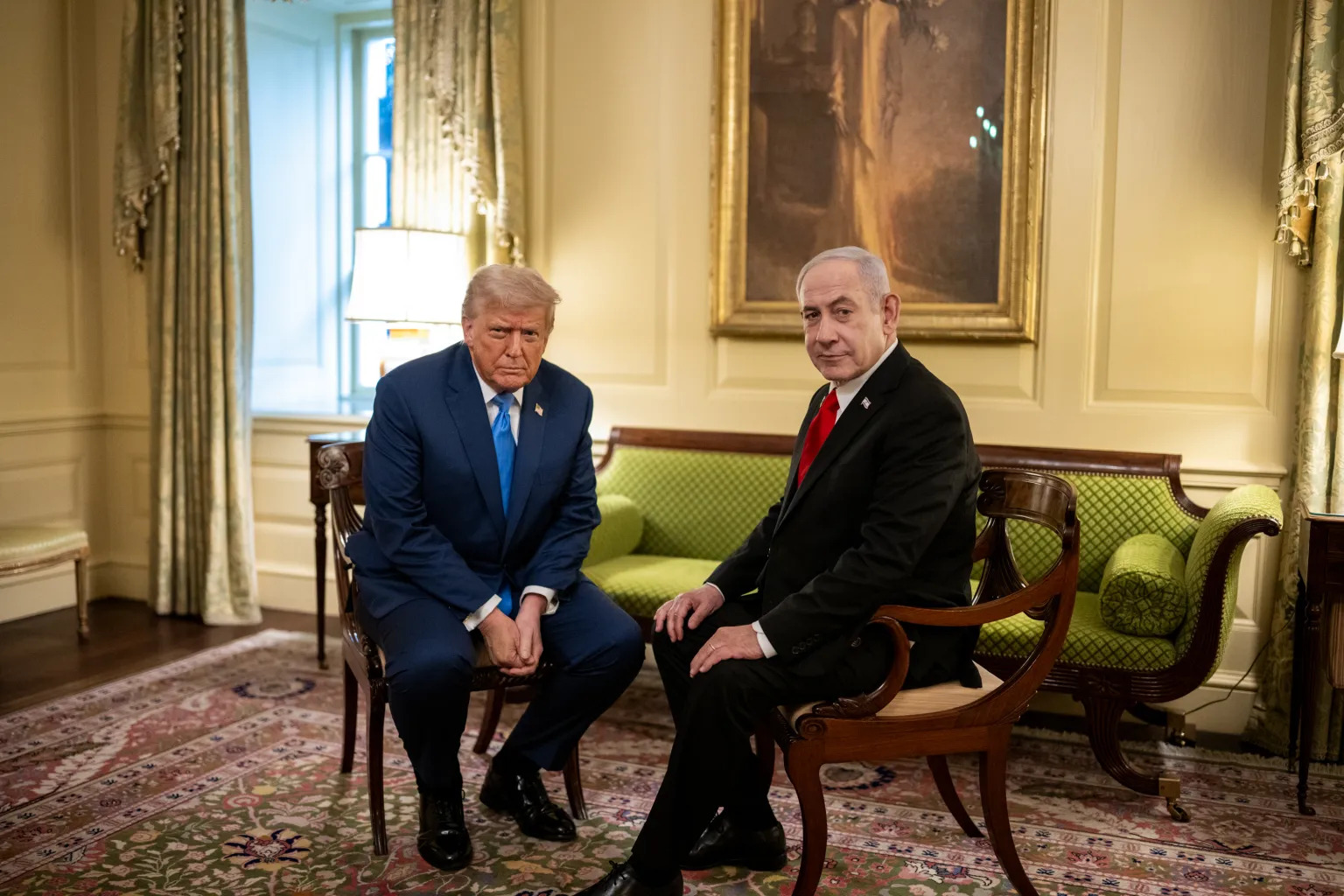
There is a possibility that Benjamin Netanyahu may bow out of the Israeli elections this fall, a high-impact event bound to leave a deep mark on Israeli politics.
Benjamin Netanyahu believes he has a short window of opportunity to eliminate the long-standing threats from Israel’s fiercest regional rivals. Given enough overwhelming force, advanced technology, accurate intelligence, and pure determination, he could achieve his goals by the end of the spring or early summer. At that point, the campaign season kicks into high gear in Israel and the United States. In the latest issue brief from the Center for the National Interest (CFTNI), Senior Fellow Joshua Yaphe explores the different scenarios that could result.
Electoral success demands that both governments have sufficient time this summer to trumpet their successes, with the troops returning home, their economies back on a solid footing, and the elimination of threats from missiles, drones, and terrorist attacks. Strong voter turnout does not require dealing with the chaos and destruction left over from the wars. That is the media narrative Prime Minister Netanyahu and President Donald Trump would prefer this election season, leaving the ruling elites in Tehran, Beirut, and Ramallah to sort out their own governance issues.
Netanyahu has already declared his candidacy for October, and military success against Iran could put him within reach of another term, while Trump has dismissed anti-Israel critics on the right by declaring that his approach is the definition of “America First.” That being said, it is hard to imagine why Netanyahu would want to run again. He will have accomplished his vision for ensuring the security of the Jewish state. Another term will only bring more legal battles, the struggle to maintain a coalition, demands from the far-right for full annexation of the West Bank, international pressure to repair the damage across the region, and the chance that Netanyahu overstays his welcome as public opinion moves on from the war or external factors intervene.
Netanyahu has no choice but to signal his intent to run. At the first indication he plans to step down, the election cycle will kick into full gear, distracting from his military campaign and complicating his ability to maintain the coalition government.
Similarly, he needs a pardon from President Isaac Herzog before he leaves the scene, but Herzog is unlikely to grant one without assurances that Netanyahu will step down, which Netanyahu cannot provide because it would undermine his ability to finish the job. For as much as the narrative seems straightforward going into this fall, the truth may be that only Netanyahu himself knows if he will run again.
The full text of the report is available here.
For more CFTNI publications, see the website.
About the Author: Joshua Yaphe
Joshua Yaphe is a senior fellow at the Center for the National Interest. He was previously a senior analyst for the Arabian Peninsula at the US State Department’s Bureau of Intelligence and Research and visiting faculty at the National Intelligence University. He has a PhD in History from American University in Washington, DC, and is the author of two books. Saudi Arabia and Iraq as Friends and Enemies: Borders, Tribes and a History Shared is available in paperback from the University of Liverpool Press, and Time and Narrative in Intelligence Analysis: A New Framework for the Production of Meaning is available in a free, open-access digital version at the Routledge website.
The opinions and characterizations in this piece are those of the author and do not necessarily represent those of the US government.