Even as President Donald Trump has proposed a mammoth $1.5 trillion defense budget for fiscal year 2027 (FY27)—which calls for building a “Golden Fleet” that includes new Trump-class battleships—the United States Navy will continue to shrink this year.
According to the newly released US Navy’s 2026 ship inactivation schedule, more than a dozen warships and support vessels will be retired in FY26 without new vessels to replace them.
Among the surface combatants slated for retirement are the Ticonderoga-class guided-missile cruisers USS Shiloh (CG-67) and USS Lake Erie (CG-70). Both of those vessels were granted a brief reprieve after being previously slated for decommissioning on September 30, 2025, the final day of FY25. However, as USNI News reported, CG-70 was among the warships dispatched to the United States Southern Command (USOUTHCOM) as part of the buildup of forces with the ongoing drug interdiction mission.
Following the decommissioning of CG-67 and CG-70, both will continue to “serve as logistics support assets,” which means that parts from the vessels can be cannibalized to keep other vessels in service, USNI News explained.
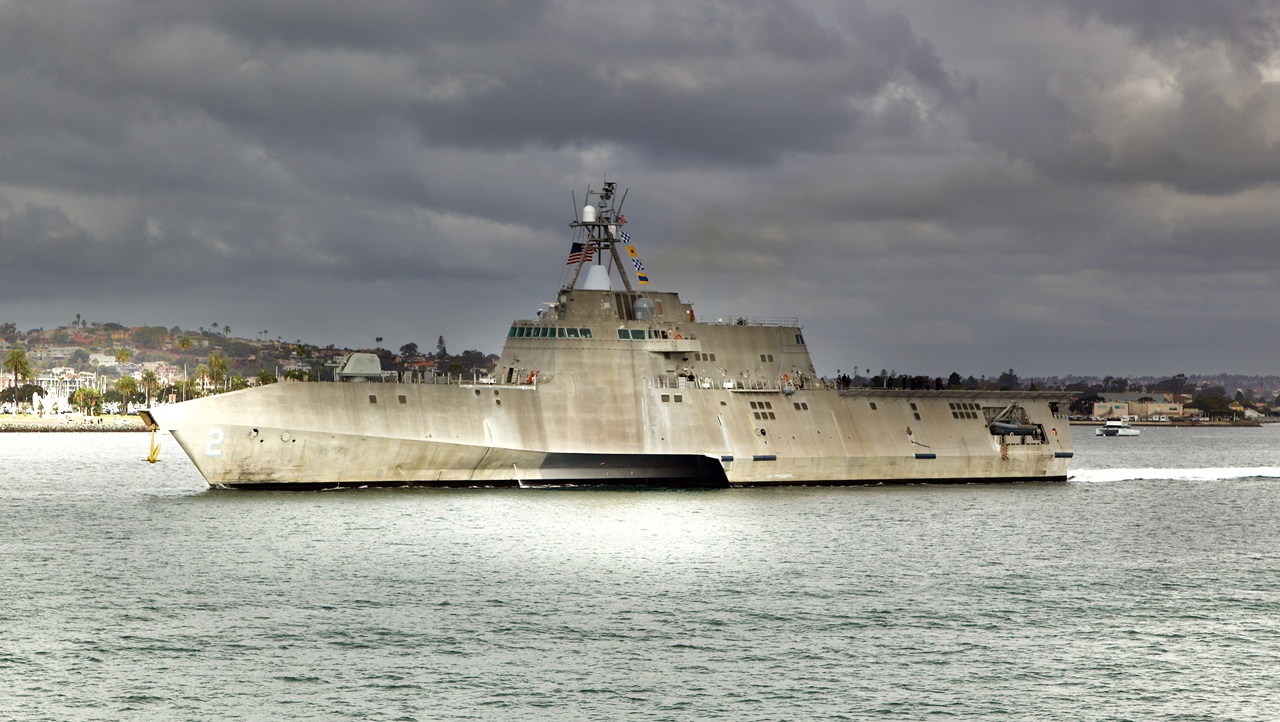
The Whidbey Island-class dock landing ship USS Germantown (LSD-42) and the Littoral Combat Ship USS Fort Worth (LCS-3) will both be deactivated this year as well. The 40-year-old LSD-42 will also become a logistics support asset, while LCS-3 will be dismantled. USS Fort Worth is the latest LCS to be retired years ahead of schedule due to mechanical failures with its combing gear that led to reliability issues. The US Navy previously determined it was not cost-effective to repair or upgrade the oldest Freedom-class LCS vessels.
Two More Submarines Are on the Chopping Block
The Los Angeles-class nuclear-powered fast-attack submarine USS Newport News (SSN-750) was decommissioned in January after 37 years of service. Another Los Angeles-class boat, the 35-year-old USS Alexandria (SSN-757), is set to be retired in August.
Both of the submarines will be “defueled and scrapped at Puget Sound Naval Shipyard, in Bremerton, Wash.,” USNI News previously reported.
The Virginia-class submarine USS Idaho has been completed and is expected to be commissioned later this year, functionally replacing one of the two lost submarines. But this still leaves the Navy’s “silent service” one vessel short.
Military Sealift Command to Retire Six Vessels
In FY26, the Military Sealift Command (MSC) will retire three of its aging Henry J. Kaiser-class oilers, including USNS Big Horn (T-AO-198), USNS John Ericsson (T-AO-194), and USNS Pecos (T-AO-197).
T-AO-194 will be cannibalized for parts to keep the MSC’s remaining oilers in service. T-AO-198 and T-AO-197 will head to the inactive fleet.
Three Roll-on/Roll-off ships serving with MCS will be transferred to the Maritime Administration. Those vessels include the USNS Pomeroy (T-AKR-316), followed by USNS Watkins (T-AKR-315), and USNS Red Cloud (T-AKR-313), beginning with T-AKR-316 on April 1. That will be followed by T-AKR-315 being removed from active service on July 1, with T-AKR-313 finally being transferred on September 30, the final day of FY26.
The vessels have been in service for 25 years and can transport both military vehicles and humanitarian aid.
MCS will also retire the offshore petroleum distribution system ship, USNS Vice Adm. K.R. Wheeler (T-AG5001) on July 1, following two decades of service.
The United States Navy opted to retire the vessels due to high maintenance costs and to free up resources as it begins transitioning to more advanced ships.
America Is Down an Aircraft Carrier, Too
One warship not on the 2026 ship inactivation schedule was the USS Nimitz (CVN-68), the US Navy’s oldest in-service nuclear-powered supercarrier. The carrier completed her final deployment in December, arriving at Naval Base Kitsap, Washington. Current plans call for the flattop to head to Norfolk this spring, where she will be decommissioned, followed by the beginning of her years-long recycling process.
There has been speculation that, due to delays with the next Gerald R. Ford-class supercarrier, the future USS John F. Kennedy (CVN-79), USS Nimitz could remain active until 2027 to cover operational gaps. However, that seems unlikely, as extensive maintenance would still need to be carried out in order to keep the Nimitz in fighting shape, and preparations are already underway for the carrier’s decommissioning.
However, the lack of available supercarriers has resulted in the deployment of USS Gerald R. Ford (CVN-78) being further extended. It could be nearly a year before the newest carrier, now in the Middle East, finally returns to her homeport later this spring.
About the Author: Peter Suciu
Peter Suciu has contributed more than 3,200 published pieces to more than 4 dozen magazines and websites over a 30-year career in journalism. He regularly writes about military hardware, firearms history, cybersecurity, politics, and international affairs. Peter is also a contributing writer for Forbes and Clearance Jobs. He is based in Michigan. You can follow him on Twitter: @PeterSuciu. You can email the author: [email protected].