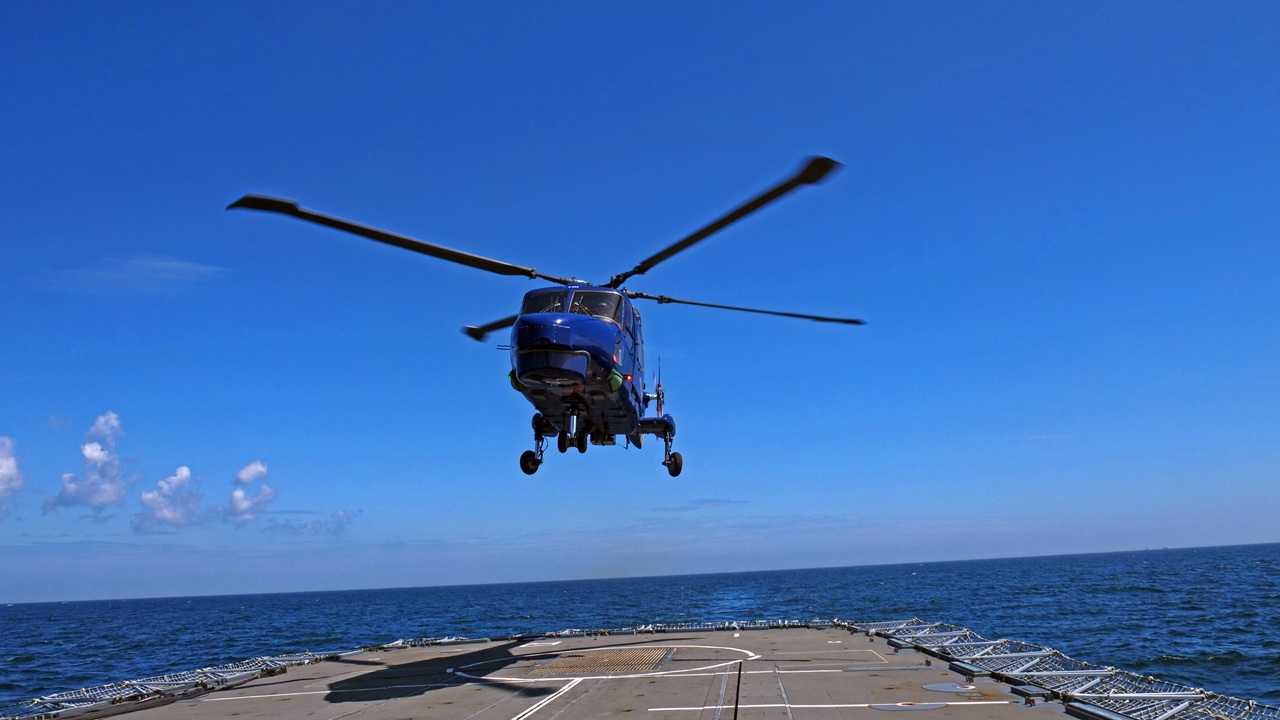
The Navy is attempting to recover a fallen MQ-9 Reaper drone in the Yellow Sea, although the circumstances of its loss remain murky.
The United States Navy is now attempting to recover one of its most sophisticated and expensive unmanned aerial vehicles (UAVs) after it fell into the Yellow Sea on Monday. The MQ-9 Reaper, assigned to the United States Air Force’s 431st Expeditionary Reconnaissance Squadron at Kunsan Air Base, experienced an “incident’ near Maldo-Ri Island off the west coast of South Korea during a routine flight operation.
The cause of the incident is under investigation, and it is still unclear whether the single-engine turboprop drone suffered catastrophic damage or some part of it can be recovered.
“The incident is still under investigation,” the 8th Fighter Wing said in response to Yonhap News Agency’s inquiry about the cause of the accident. “In the meantime, we can confirm … when an incident happens, we immediately conduct thorough investigations, implement corrective actions, and ensure accountability at every level.”
What to Know About the MQ-9 Reaper
- Year Introduced: 2007
- Number Built: 300+
- Length: 36 ft 1 in (11 m)
- Wingspan: 65 ft 7 in (20 m)
- Weight: 10,494 lb (4,760 lb)
- Engines: One Honeywell TPE331-10 turboprop engine
- Top Speed: ~300 mph (482 km/h); typical cruising speed 194 mph (313 km/h)
- Range: 1,200 mi (1,900 km); up to 27 hours’ endurance, depending on payload
- Service Ceiling: 50,000 ft (15,240 m)
- Loadout: 7 hardpoints; 3,800 lb (1,723 kg) payload capacity
- Aircrew: 0
The Reaper’s Remarkable—and Controversial—Service History
The MQ-9 Reaper was developed as a follow-up to the MQ-1 Predator. The Reaper can carry a great deal of ordnance—double the number of Hellfire missiles that the Predator could carry, and up to 500 pounds of bombs.
The MQ-9 can also employ up to eight laser-guided missiles. The Hellfire missile in particular has been a boon for the US Army; it possesses highly accurate, low-collateral damage, anti-armor, and anti-personnel engagement capabilities, and has been widely used during the Reaper’s operations throughout the War on Terror.
When loaded with such ordnance, the MQ-9 can fulfill the “hunter” component of a hunter-killer drone, while also offering an extended range of more than 1,600 miles (2,575 km) and the ability to stay airborne indefinitely with aerial refueling. The range would allow it to fly near North Korea, the demilitarized zone (DMZ), and even much of the East China Sea and Taiwan.
“MQ-9 operations will support U.S.-Korean priorities in intelligence, surveillance, and reconnaissance across the Indo-Pacific theater, enhancing the joint capability to respond to threats and emerging situations while strengthening our alliance,” the 8th Fighter Wing said in a press release in September, emphasizing “the dedication of the United States to peace and security on the Korean Peninsula.”
The MQ-9 can fly at very high altitudes, and it was used in countless military operations in the Middle East and over Afghanistan and Pakistan. During that time, it attracted some controversy, as the ease of conducting drone strikes led to an increase in their use—raising questions about the legality, morality, and strategic wisdom of such operations.
Last year, the US Air Force conducted tests that enabled the MQ-9 to be remotely landed via satellite control, and in 2023, the service began conducting trials of the Reaper from dirt runways. The ability to launch and land from remote airstrips worldwide could further enhance the drone’s capabilities, making it uniquely qualified to conduct irregular warfare operations in support of combatant commander objectives.
Despite its capabilities, the slow-flying Reaper has been described by The New York Times as “easy to shoot down” with modern equipment. The paper also noted that the drone has a history of “mechanical issues in the past decade, leading to crashes.”
Other Indo-Pacific Salvage Efforts Underway
It is unclear what efforts are being made to recover the MQ-9 drone, but it will be only one of two ongoing salvage operations in the Western Pacific.
Last week, the US Navy Safeguard-class salvage ship USNS Salvor (T-ARS-52) began a search for a Boeing F/A-18 Super Hornet and a Sikorsky MH-60R Sea Hawk helicopter. The two aircraft crashed within half an hour of each other last month while operating from USS Nimitz (CVN-68) during what is likely to be that carrier’s final deployment. The recovery effort is now underway in the South China Sea.
About the Author: Peter Suciu
Peter Suciu has contributed over 3,200 published pieces to more than four dozen magazines and websites over a 30-year career in journalism. He regularly writes about military hardware, firearms history, cybersecurity, politics, and international affairs. Peter is also a contributing writer for Forbes and Clearance Jobs. He is based in Michigan. You can follow him on Twitter: @PeterSuciu. You can email the author: [email protected].
Image: Shutterstock / Kurtis Jacques.