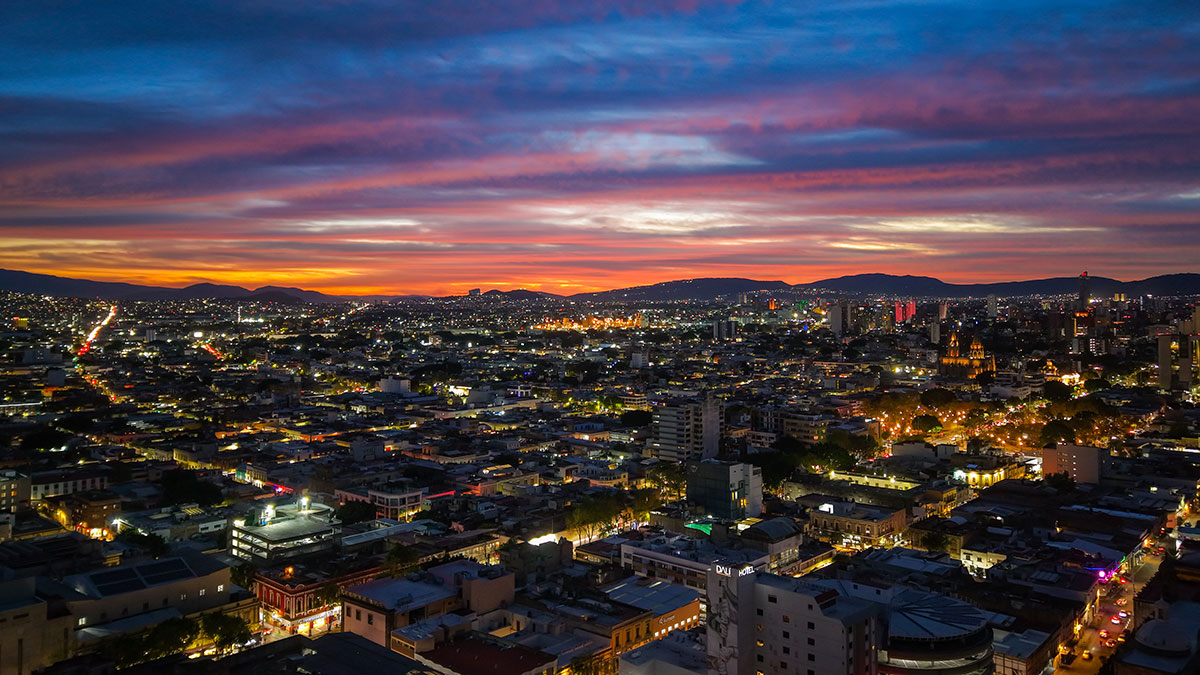
I’ve been visiting Mexico for 20 years, and more frequently over the last decade since marrying a Mexican. I’ve road-tripped through the Yucatán and Quintana Roo, and spent time in Mexico City and Querétaro, among other places—admittedly a narrow aperture for such a big and diverse country. But it’s enough dots to sketch a few lines, and to get a feel for the relative trajectories of Mexico and my home country, Australia.
Mexico has always felt intense. For a young man out of rule-obsessed Australia, the chaos can be exhilarating. Everything is fundamentally negotiable. You can just do things.
Finally, a reason to check your email.
Sign up for our free newsletter today.
On my most recent trip, however, those same qualities registered differently. I saw the chaos as less empowering and more dysfunctional. This shift says as much about my own life arc—moving from a risk-seeking young man to an early-middle-aged father—as it does about the state of the country. “Anything is possible” reads very differently to a young single man compared with a father of four young kids.
I thought I’d share some observations that have accrued over the years.
Mexico is culturally, economically, and ethnically hierarchical. This hierarchy has deep roots, stretching back through both indigenous and Spanish social structures. Given such stratification, one would expect low socioeconomic mobility—and for the most part, that expectation holds. Class is “sticky” here.
Yet there is a puzzle: the outsize success of newer immigrant groups over the past century, particularly from the Lebanese and Jewish communities. Mexico’s richest man, Carlos Slim, is of Maronite Lebanese descent, and the same pattern appears across Latin America—from business elites to heads of state, such as El Salvador’s president, Nayib Bukele.
If class is fixed, how did these newcomers succeed? Mexico doesn’t value abstract merit as the West tends to do. No apparent school-to-university-to-career pipeline exists. Instead, the country rewards tight in-group capital: family cohesion, internal trust, and ethnic credit networks. A healthy distance from the local indigenous-white caste logic helps newcomers, too. With a status illegible to traditional Mexican castes, they can carve out their own destinies.
These groups arrived with merchant traditions and intra-marriage habits that functioned as portable infrastructure. They didn’t need the Mexican state to work because they effectively had their own internal state.
Status illegibility enables status arbitrage, most visibly in relationships. People marry foreign partners who would otherwise sit well outside their dating market at home. I’ve seen upper-class Mexicans marry thoroughly ordinary Australians—and vice versa—because the foreigner is harder to place within familiar status frameworks. In a sometimes comical twist, many white Mexicans simply read white Australians as “upper class” by default.
Of course, this kind of arbitrage applies to cross-cultural unions generally. Norwegian author Karl Ove Knausgård writes about how he can’t read a Swedish woman’s status by her clothes. Swedish customs are illegible to him. If even Swedish and Norwegian customs are mutually unreadable, then the range of who you can be in a place truly foreign is wider than you think.

It is also hard to make good money as an employee in Mexico. In Australia, there is a relatively high floor: a salary can sustain a middle-class life. Mexico has no such floor. Wages are low, and the labor pool so vast that employment offers little upside. Equity is the only serious path to wealth.
The opportunity to build a business, however, is real. One Spanish woman I spoke with in Mexico City told me it was far easier to start a company there than in her native Europe. An industrial equipment–rental owner showed me machinery he had imported from India—far cheaper than what is available in the U.S. or Australian markets, where environmental standards are tighter. The Mexican market is huge, the general chaos is high enough that you can “just do things,” and the regulatory touch is . . . negotiable. But this lack of formal structure has a darker side.
Entrepreneurship in Mexico often involves “innovating” in the regulatory environment as much as in the marketplace. Corruption takes many forms and has become an industry of its own. One sub-sector of that industry, born from a quirk of Mexico’s tax system, is particularly illustrative.
The facturera industry is the manufacture of invoices from fake companies. It’s used for tax avoidance and money laundering, and ChatGPT tells me that it accounts for as much as 2 percent of Mexican GDP. Ironically, the money laundering bit means paying taxes on otherwise untaxed income. These middlemen invoice-manufacturers sit at the center of a network that spans legitimate businesses and government officials.
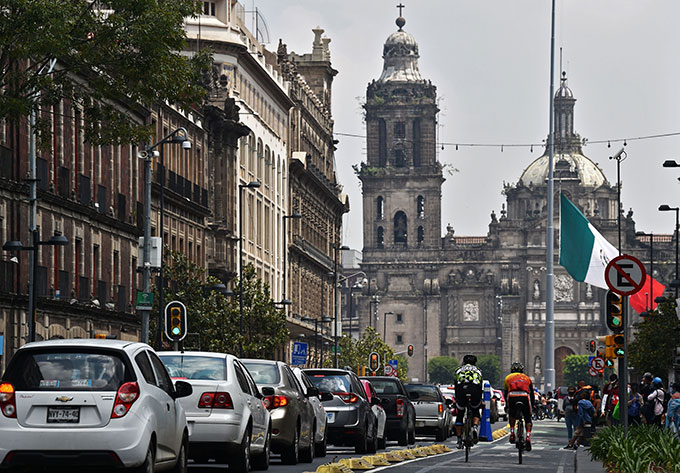
Mexico City “cargo cults” the practices of wealthier places. Bike lanes adorn terrible roads for riding. I met a few families who insist on separating their recycling from their trash, despite there being no recycling collection. And some curious status markers are peculiarly local: high-end restaurants often offer cuts of “kosher” meat. This meat may be purchased from a kosher supplier, but it’s not kosher in any meaningful sense (e.g., the restaurant is not kosher-certified). The dish signals quality and status in its association with the wealthy Mexican Jewish community.
The single greatest test for state capacity isn’t a space program or high-speed rail; it’s drinking water on tap. Providing safe, reliable water to millions of households requires boring, consistent competence and coordination across decades. It requires a state that can plan beyond the next election cycle and a citizenry that trusts the infrastructure.
Mexico fails this test. The country’s bottled water industry is the largest per capita in the world. It’s the total outsourcing of a public good to private entities. Once you build an entire economy around 20-liter garrafones, try building a public system to replace it. It’s too late—the incentives are broken. Beyond the ongoing financial cost, abundant potable water is a symbol of functionality and order, like houses of worship. The same logic applies to the sewerage system (can it handle flushing toilet paper?).
I’ve spent a bit of time in South Africa, and I often find myself comparing South Africa with Mexico. Both countries boast huge capital cities, gorgeous coastlines, and stunning natural attractions. Each country has massive pools of under-employed labor, leading to “make-work”—like men waving you in and out of car spots for a tip. Each society is divided into ethno-classes. The Mexican elites were smart enough to avoid legal apartheid, which has saved the country from U.S. approbation. But the economic and other informal divisions are just as sharp.
Consider the language of service. In Mexico, the standard call for a waiter is joven —literally, “young man.” In South Africa today, you’re probably not brave enough to call anyone “boy.” In France, garçon (boy) is harmless. In Mexico, I can’t bring myself to call a 50-year-old server joven. Maybe it’s the Australian in me. I just say amigo. That said, native women at shop counters will call me joven, so perhaps it’s less racially tinged than I first assumed.
In Mexico, as in South Africa, many amenities we’d consider public in Australia are often privatized: security, play areas, health care. The rich live behind fortifications. Even the middle class often live within gated communities.
Security is privatized in other ways, too, in Mexico. Every meaningful restaurant and nightclub pays a fee to its regional cartel. And it matters whether you are stopped by state police, federal police, or the army.
The ability of a state to maintain public goods and social order is surprisingly contingent. Perhaps state capacity is a foundational thing, hard to retrofit onto broken incentives. Once a society normalizes private provision of order, it’s incredibly hard to claw back. You need a broadly vested elite, upfront. Which is the opposite of how ethno-classist states like Mexico and South Africa are born.
Comparing the distribution of land in Mexico and Australia is instructive in revealing each country’s social architecture. In Australia, after the landed gentry (“squatters”) swallowed up vast swaths of territory in the 1860s, the government implemented reforms to redistribute land to smaller yeomen—albeit with mixed results. Mexico, by contrast, came early to be dominated by large landowners, the latifundistas. Though the country experienced wars and revolutions in reaction to its ethno-oligarchic economic and political order, many of these imbalances have persisted. The two paths have left distinct legacies in Australian and Mexican attitudes toward equality and hierarchy.
In Mexico, again as in South Africa, cheap labor means that household help is abundant. Even middle-class families can often afford staff. Some households have generational, live-in employees who become part of the family fabric; others rely on more transient help. This abundance of inexpensive labor means that childcare is available almost everywhere—shopping centers, restaurants. (One wonders whether this helps support fertility rates.)
At times it feels as if Australia is reaching for some of these benefits but cannot quite bring itself to grasp them. The country has one of the highest foreign-born shares in the world, yet it structurally avoids the large-scale use of immigrant labor in domestic service. Australians may want abundant help, but they also insist on equality. There remains a deep cultural aversion to the servant-class model. Still, as property prices rise, immigration continues, and the wealth gap widens between long-established Australians and newer arrivals, greater social rifts may emerge.
Both South Africa and Mexico suffer from brain drain: the brightest tend to go to the U.S. or some other land of opportunity. But pessimism lies thicker in South Africa. The decline is palpable. Cape Town, a cousin and once-peer of Sydney, feels forsaken (though its rising property prices beg to differ). Mexico just feels stagnant, in a shoulder-shrug way. This feeling seems to say: sure, much has improved, and more might improve, but it will probably be eaten up by the corruption.
That said, a striking feature of travelling around South Africa is the endless, gorgeous pockets you’re tempted to buy land in. A beautiful homestead, perhaps in the shadow of some great mountain; acreage with wild game. You see much less of that in Mexico.
Mexico’s economy mirrors its social stratification. Two distinct economies exist side by side: one for the wealthy, often at least as expensive as what we find in Australia, and another—more affordable and more informal—for ordinary Mexicans.
Food runs the gamut from street vendors to high-end supermarkets, some fancier than anything in Australia. The same is true of medical services: you can obtain top-tier care on demand, but it will cost you. For everyone else, it’s a dog’s-breakfast public health system. Australia, by contrast, tends to offer a much narrower band of outcomes—generally ranging from fine to good—apt for a nation where mediocrity is a virtue.
Prices in Mexico seem to have skyrocketed over the last decade. I suspect this reflects both a weaker “Pacific peso” and the broader convergence of global capital. Is it good or bad for Australia that we now appear less expensive by comparison? It feels bearish for us, as if our “First World premium” were evaporating.
The idea that in Mexico “you can just do things” applies broadly. Sanborns, for example, combines a restaurant with a department store. Or consider KidZania in Mexico City—a bizarre theme park where children roleplay as workers in places like Amazon warehouses or pharmaceutical factories (they love it!). The whole enterprise is branded, a kind of hyper-capitalist fever dream. Perhaps more room is available to experiment with new formats when rent and labor are cheaper.
If Australia sits on the fringes of empire, Mexico stands at its feet. When the U.S. Treasury targeted a large Mexican bank last year with accusations of money laundering, it was a stark reminder of where sovereignty ultimately lies. The United States effectively erased a Mexican financial institution overnight.
Mexico’s once-robust manufacturing sector has been ceding ground to China for some time. I met a former clothing manufacturer who watched his business evaporate in the 2000s as production shifted to China. The rise of the Chinese auto industry now feels like the next looming shock. Chinese cars are already everywhere in Mexico.

One thing that feels more alive than ever is Mexican culture. Music is a great example. There is a popular, cross-class, and entirely unironic appreciation for Mexican megastars—Luis Miguel, Alejandro Fernández, Thalía. With a distinctly national flavor, these performers fill stadiums. In Australia, by contrast, musicians tend to be either global (AC/DC) or niche (Nick Cave). They are rarely coded as distinctly “Australian.” We don’t really have a national pop culture that everyone—from the billionaire to the taxi driver—sings along to without irony. Mexicans will absolutely sing along to Juan Gabriel. Mexico’s culture is operatic. It is a telenovela writ large.
Maybe John Farnham is an exception, but I’m clutching at straws. Perhaps it’s an Anglo thing: folk or “national” music has always been a little too on the nose for the English tradition. American music now dominates the airwaves in many countries, and while it is certainly present in Mexico, Mexicans do not appear ready to give up their affection for their own musical traditions.
Urban design, or its lack thereof, can be grim in Mexican cities. Outside the old Spanish colonial centers, the landscape often becomes a jagged concrete jungle. If this is a YIMBY paradise—where anyone can build anything—count me out. Querétaro’s mass middle-class housing developments rival Soviet Khrushchyovkas in their ugliness. Still, perhaps they would look different in a country with four times the GDP per capita.
Then again, look at Tulum. They’ve essentially doubled the size of the tourist strip in a decade. Tulum is the perfect adult’s playground. It’s what Byron Bay would be if we were allowed to do things in Australia. But Tulum is better understood as an extension of New York City than a part of Mexico. It’s a walled garden for the global elite, with just the right amount of Mexican chaos.
And then there are the small things. The everyday machismo that still dictates social interactions (only men pay in group situations). The fact that raw chickens are yellow because of their feed (marigold petals). The chili on fruit and salt in beer—the Mexicans are correct about this, by the way (and you can do it, too).
And the food. Tongue and cow head street tacos. Menudo (tripe soup) is the most underrated dish in Mexico. Why is it a hangover cure and a breakfast staple like its tripe soup cousin in Georgia (xashi) and Vietnam (pho)? And who first thought to combine clams and tomatoes to make Clamato, a national drink in Mexico?
I love the guerito and gallo nicknames streets vendors have for my kids. (My youngest really does strut like a plucky little rooster). There are endless natural sites to visit. A niche personal favorite is the cave of the hanging serpents—but be prepared for blind snakes gulping down bats inches from your face.
Top Photo by Luis Gutierrez/Norte Photo/Getty Images
Source link