The Department of Commerce should consider Israeli AI security companies for its trusted partner program to ensure the US tech stack is the global standard.
The core of the Trump administration’s artificial intelligence (AI) playbook has been simple and steadfast: don’t just out-innovate China—out-sell it, by offering the most compelling AI package from chips to apps. While there is no doubt that America is the world leader in advanced or “frontier” models, chips, semiconductors, data centers, and apps in general, the missing piece of the American tech stack is undoubtedly AI security. To create the most appealing US AI stack for global customers, America should merge forces with its strong ally that is defining this new field of technology: Israel.
White House Special Advisor for AI and Crypto (also dubbed the AI and Crypto Czar), David Sacks, regularly articulates the worldview that America’s best chance of winning the global AI race is by making the American “tech stack” the global standard. For an administration that believes in removing obstacles for business and empowering the private sector to lead, partnering with Israeli AI companies is a natural continuation of patterns already occurring in the private sector. The Department of Commerce (DOC) is currently gathering information from the public that will shape what constitutes the American tech stack to be exported abroad. Israel possesses the ideal candidates for the DOC’s “trusted partner” program.
Security Is a Missing Layer in the US AI Package
To create an AI technology package adopted across the globe, it has to be secure by design, not as an afterthought. This is where Israel’s unique expertise becomes critical.
Unlike traditional cybersecurity, AI security must defend against the AI system itself, becoming the weapon through adversarial manipulation. Israel has created an entire ecosystem around the fastest-growing segment of AI security—protecting and testing generative AI systems. Companies like Cyera protect data in large language models (LLMs), Islandprevents browser-based AI data leaks, and Zenity leads in AI red-teaming.
American AI companies are cementing collaborations with these companies and others, and over the past two years, there has been a plethora of private acquisitions of Israeli startups, such as Tenable’s acquisition of Apex Security, an exposure management platform originally backed by AI visionary Sam Altman. American Palo Alto Networks acquired Israeli browser security company Talon in December 2023, which prevents data leaks through LLMs used in the browser. Google’s recent $32 billion acquisition of Israeli tech firm Wiz in November 2025 was the latest signal that the market understands the dominance of Israeli security tech.
Ensuring that AI tools are fundamentally secure is now more critical than ever before, with the rise of agentic AI, where agents take actions on a user’s behalf. A 2024 survey found that 82 percent of businesses intend to adopt AI agents—autonomous entities capable of executing tasks independently—within the next one to three years, which will simultaneously create major enhancements in productivity while also opening up a whole new class of vulnerabilities. Where American companies lead the way in the development of frontier models, Israel excels at breaking them by stress-testing and “red-teaming” them to find their vulnerabilities before an adversary can. AI tools are dynamic and constantly evolving, so traditional security testing isn’t sufficient.
Israel’s Proven Advantage in AI Security
Israel’s advantage comes from necessity: Much like traditional warfare, Israel is the target and testing ground for emerging malicious technologies, creating a culture trained to find vulnerabilities early on and to build pragmatic tech solutions that are battle-tested against real nation-state adversaries, not theoretical threats. Israeli AI security companies lead in stopping attackers from manipulating AI systems to leak sensitive data, bypass safety guardrails, or make harmful decisions. As attacks on AI tools grow more sophisticated, incorporating Israeli AI security tech from the start gives global customers confidence that adopting the American tech stack is the safest choice.
Despite being a tiny country that has been besieged by war for the past two years, Israel continues to dominate US private cybersecurity funding due to its unique talent pipeline. Military conscription recruits top talent from high school into elite security units such as Unit 8200—Israel’s version of the US National Security Agency—which has produced more tech unicorns than any university or business. AI security pioneer Aim Security, which Cato Networks acquired in September 2025, was founded by 8200 veterans. Israel’s outsized combination of talent and innovation in a country with a small market results in a global tech mindset—an invaluable quality for a trusted partner in America’s AI tech stack.
Sacks repeatedly emphasizes the necessity of the American tech stack to be “sticky,” meaning that customers will be locked in and averse to changing. However, stickiness requires trust, and trust requires security. America will have the biggest global market share if our products are the most secure. China is already exporting its own AI stack with DeepSeek and Huawei, and finding buyers throughout the developing world. If the American tech stack is perceived as insecure, then potential buyers will pick China. But if Israeli AI tech becomes a “preferred partner,” the combination of US advanced models fortified by Israeli security will be an unbeatable combination.
While much can be said about the importance of economic partnership between allies with shared values, the argument for an AI partnership between the United States and Israel is strictly a matter of economic competitiveness. When the Commerce Department considers the components of the American AI Exports program, it should weigh AI security as heavily as infrastructure and software and recognize that the best way to fill the gap in American AI leadership is with an Israeli partnership.
About the Author: Leah Siskind
Leah Siskind is director of impact and an AI research fellow at the Foundation for Defense of Democracies. Her research focuses on adversarial use of AI by state and non-state actors targeting the United States and its allies. She previously served as the deputy director of the AI Corps at the US Department of Homeland Security.
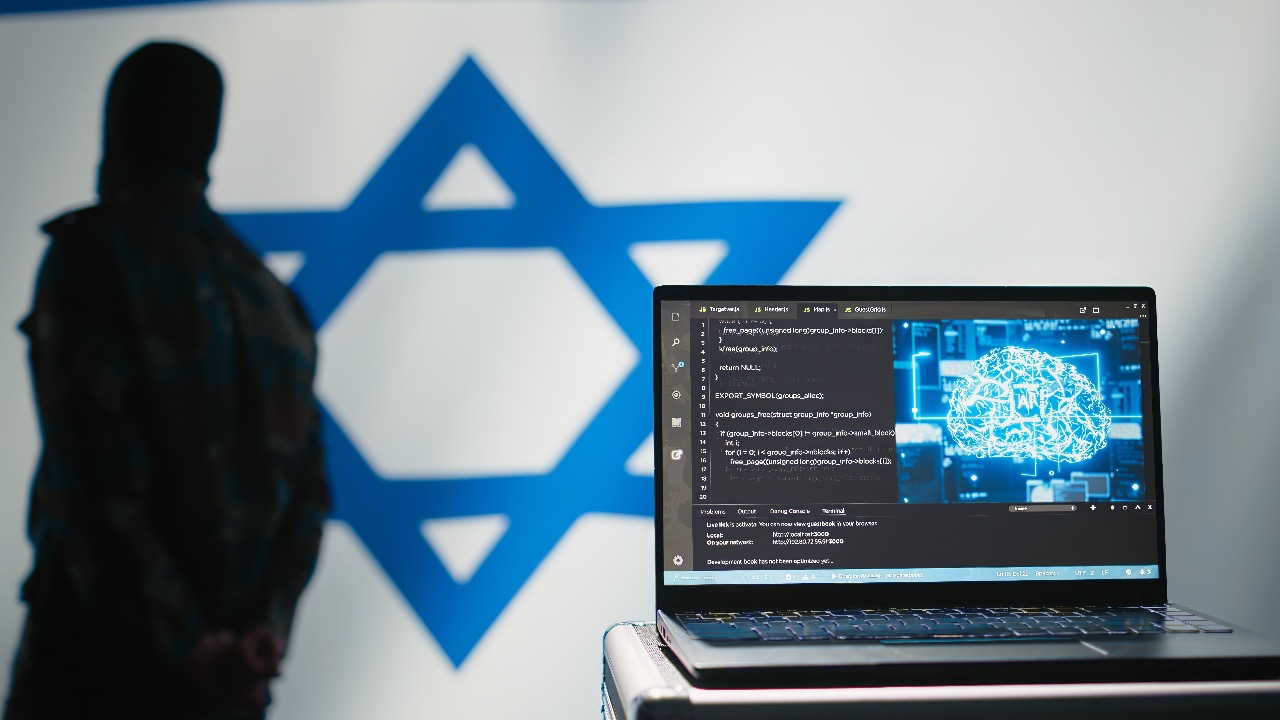
Image: DC Studio/shutterstock