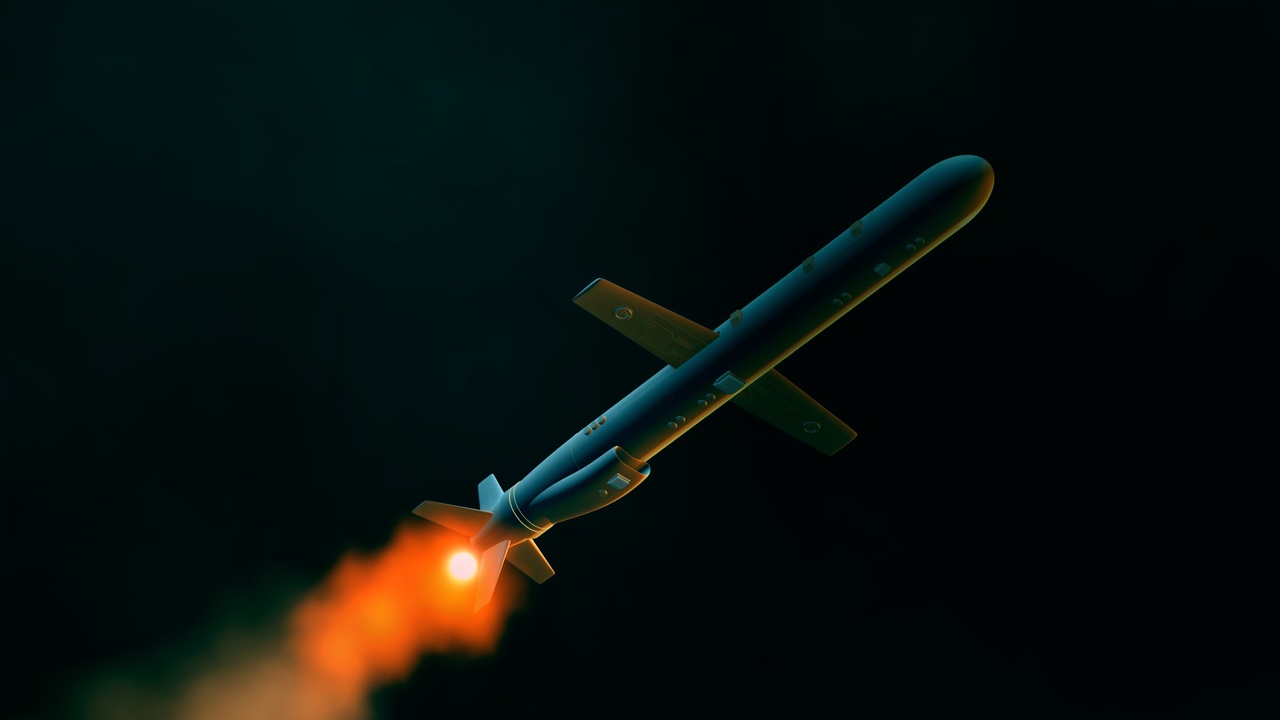
Three new American systems stand out in the air campaign against Iran: the newly-introduced “PrSM” missile, the low-cost “LUCAS” drone, and a new Tomahawk missile with apparent stealth capabilities.
Operation Epic Fury, the ongoing military campaign against Iran, is now in its third day.
After more than 60 hours of combat, there is sufficient information and footage to analyze some of the weapon systems used in the operation. And this is an operation with several firsts. Indeed, the US military has used at least three new weapon systems in the conflict thus far.
America’s Long-Range “PrSM” Missile Got Its Combat Debut
US Central Command (CENTCOM) footage from the operation shows a US Army M142 High Mobility Artillery Rocket System (HIMARS) somewhere in the desert firing a PrSM missile toward targets in Iran. Although CENTCOM did not say what kind of munition the HIMARS fired, the footage it released clearly shows PrSM missiles. The ground-launched munition is distinctly different in shape and details from the MGM-140 ATACMs.
The product of a joint US-Australia project, the PrSM is a ground-launched missile intended to replace the MGM-140 ATACMs. The munition entered service in 2023. It has an unclassified range of approximately 250 miles and carries a 200-pound warhead. In addition to the M142 HIMARS, the PrSM can be launched by the M270 Multiple Launch Rocket System.
Considering the PrSM’s shorter range compared to other missiles and munitions, the military very likely used the missile against Iranian targets in the southwestern part of the country.
LUCAS: America Is Using Iran’s Own Drones Against It
Another weapon system that debuted in Operation Epic Fury is the LUCAS one-way attack unmanned aerial system. And this one comes packed with a heavy dose of irony, in addition to its explosive warhead. The LUCAS drone is a replica of Iran’s Shahed-style loitering munitions, used to great effect during Russia’s ongoing war against Ukraine.
A few months ago, the US military established Task Force Scorpion Strike in the Middle East to provide the combatant command with a one-way attack unmanned aerial system capability.
“CENTCOM’s Task Force Scorpion Strike – for the first time in history – is using one-way attack drones in combat during Operation Epic Fury. These low-cost drones, modeled after Iran’s Shahed drones, are now delivering American-made retribution,” CENTCOM wrote on X (formerly Twitter).
What makes the LUCAS particularly useful in the ongoing conflict, and in general, is its cost-effectiveness. Similar to Iran’s Shahed drones, a LUCAS costs around $35,000, offering a much more affordable kinetic option than a million-dollar missile. To be sure, the drone does not have the precision, speed, stealth, and destructive capability of other munitions. But it is a useful tool to have in large-scale combat operations. The kamikaze drone can be fired by both ground and naval forces.
The Mysterious “Stealth Tomahawk” Missile May Have Been Used
Finally, the US Navy has likely fired a new, stealth version of the Tomahawk missile. In footage released by the Navy, one can see a black Tomahawk cruise missile. Tomahawks usually are grey, and all but one of the munitions depicted in the footage are grey. The black color is very likely a low-observable coating aimed at absorbing enemy radar and enhancing the survivability of the missile.
The RGM-109 Tomahawk Land Attack Missile (TLAM) is a cruise missile that can be fired by both submarines and surface combatants. There are several variants of the Tomahawk, with operational ranges of up to 1,200 miles. There is remarkable footage from the early hours of the operation showing several Tomahawks cruising at over 500 miles per hour at low altitudes, approximately 100 feet over the ground, to avoid detection by Iran’s air defense umbrella. Tomahawks can carry 1,000-pound unitary and fragmentation warheads.
About the Author: Stavros Atlamazoglou
Stavros Atlamazoglouis a seasoned defense journalist specializing in special operationsand a Hellenic Army veteran (national service with the 575th Marine Battalion and Army HQ). He holds a BA from the Johns Hopkins University and an MA from the Johns Hopkins’ School of Advanced International Studies (SAIS). His work has been featured in Business Insider, Sandboxx, and SOFREP.