To win the AI race against China, Congress must mobilize all forms of power, modernize the grid, onshore critical supply chains, and address America’s STEM talent gap.
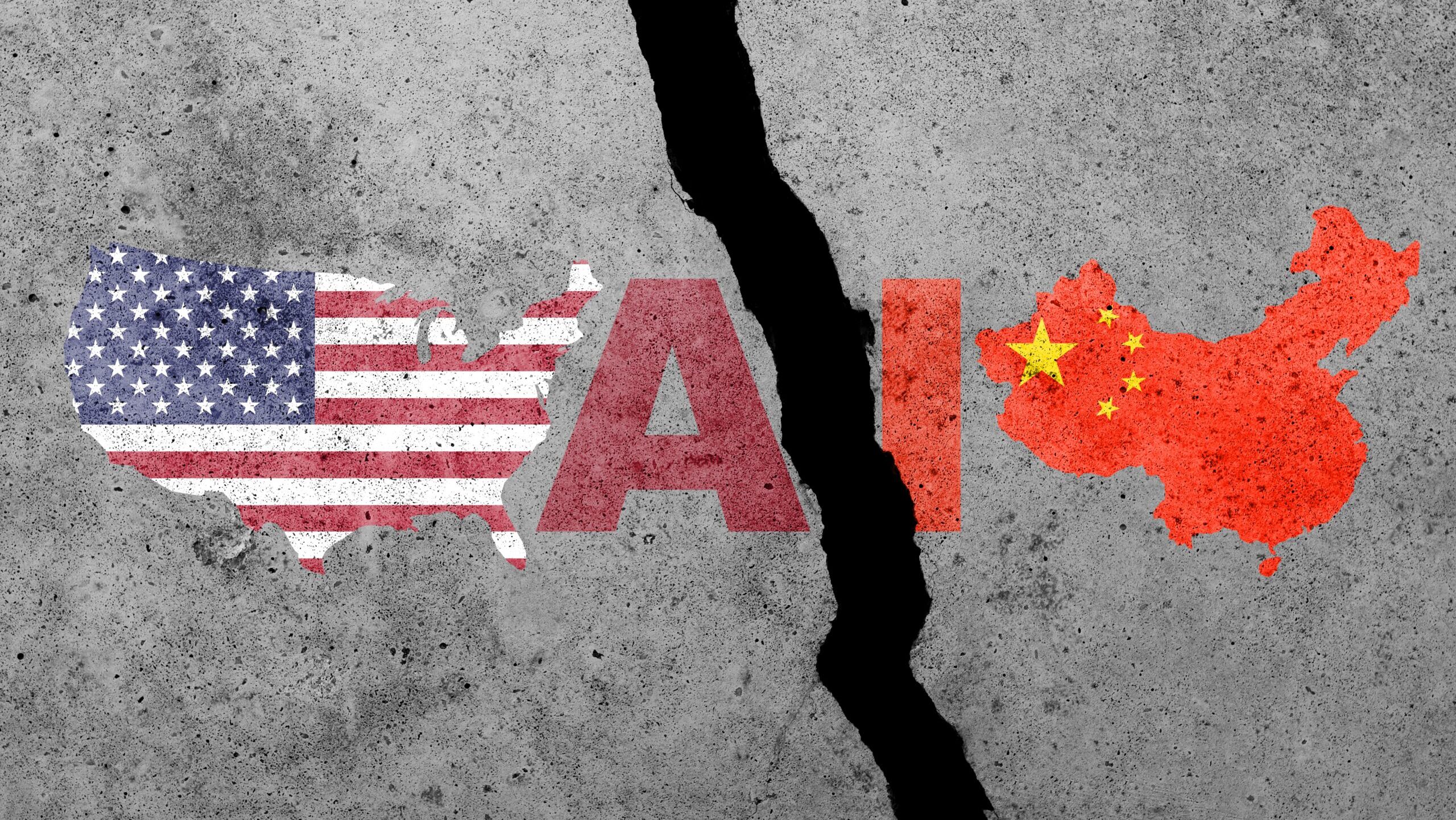
America stands at a crossroads in the most consequential technology race of our lifetime. The outcome of the US–China competition for artificial intelligence (AI) will determine which country—and which set of values—leads the global economy and secures geopolitical preeminence.
While the United States was first on the AI scene, and still holds important advantages, new findings from the American Edge Project (AEP) reveal a troubling reality: we are not positioned for long-term success.
China is moving faster and with greater strategic focus across the four pillars that will decide the race: energy, compute, talent, and adoption. Unless Congress acts, America will lose its early advantage and give the Chinese Communist Party (CCP) the opening it needs to gain more ground and win this high-stakes race.
China Is Building the Foundations of AI Power Faster Than the United States
Start with energy. China is treating AI like a national industrial project—and building the power system to match it. Beijing already generates twice as much electricity as the United States and will add 60 percent more capacity by 2040. Last year, it invested $300 billion more than America did in energy infrastructure. Since 2009, China has built more than 18,000 miles of ultrahigh-voltage transmission lines. The United States has built zero.
Meanwhile, our own energy infrastructure is straining under modern demand. Seventy percent of US transmission lines are more than 25 years old. The American Society of Civil Engineers (ASCE) gives our energy grid a D+. And experts warn we could see a 100-fold increase in power outages by 2030 if we fail to modernize. The frustrating part is that we have the ability to rapidly scale energy generation, but we just aren’t executing. Roughly 12,000 energy projects remain stuck waiting for connection approvals. Lead times for gas turbines have grown to seven years. And transformer prices have risen between 45 percent and 95 percent since 2020.
Energy is not our only gap. China is also outpacing us in talent. It is producing millions more Science, Technology, Engineering, and Mathematics (STEM) graduates each year and aggressively growing the skilled workforce needed to develop and deploy AI systems at scale. America’s innovation ecosystem is the best in the world, but our talent pipeline is no longer keeping pace with global competition.
China is also moving faster on adoption. Eighty-three percent of Chinese organizations report deploying generative AI, compared with 65 percent in the United States. And Beijing is exporting its AI ecosystem abroad, and in so doing, embedding censorship and surveillance norms into the digital infrastructure of emerging markets. If those tools become the default worldwide, global digital standards will tilt toward authoritarian control rather than democratic openness.
Losing the AI Race Would Undermine US National Security
The competition is not theoretical. If China succeeds in winning the tech race, it will capture trillions of dollars in economic value, make the world increasingly dependent on its technology and supply chains, and secure a critical military edge that would undermine the national security of the United States and our allies.
The good news is America still leads in AI innovation today. US companies control about 75 percent of global AI computing power. We have a three-to-one advantage over China in AI chips. Our tech companies are pioneering the most advanced AI models in the world. But this lead means nothing if we cannot build the infrastructure to sustain it.
Congress Must Treat AI as a National Infrastructure Priority
We need decisive action, and that begins with Congress.
Lawmakers must codify and fully fund this administration’s AI Action Plan. The plan addresses the structural weaknesses holding America back: energy infrastructure, permitting reform, cybersecurity, domestic manufacturing, and workforce development. Codifying it would create a durable federal framework and prevent a patchwork of state-level mandatesfrom slowing innovation.
Congress must also act on four critical fronts. First, accelerate power generation with an “all-of-the-above” approach consisting of nuclear energy, natural gas, renewables, and advanced energy sources. China isn’t picking favorites. We shouldn’t either.
Second, modernize the grid by streamlining permitting and expanding transmission capacity. Third, onshore critical supply chains, particularly gas turbines and power transformers. China is the world’s largest exporter of power transformers and other critical inputs. We cannot remain dependent on foreign suppliers for infrastructure that will power our digital and economic future. And fourth, address our talent shortage through expanded STEM education, streamlined high-skilled immigration, and workforce retraining programs.
Some argue that America should slow down. They want more studies and more reviews. But China is not slowing down; it is moving with purpose. We must do the same.
America has risen to the moment before. We built the Arsenal of Democracy, won the space race, and invented the digital world that powers the global economy. The AI revolution is another such moment. We can win it, but only if we act with the urgency of a modern-day moonshot.
About the Authors: Senators Saxby Chambliss and Kent Conrad
Saxby Chambliss is an American lawyer and retired Republican politician who served as a US senator from Georgia (2003–2015) and a US representative (1995–2003). During his House tenure, he chaired the Intelligence Subcommittee on Terrorism and Homeland Security, leading a pivotal post-9/11 investigation. In the Senate, he chaired the Agriculture Committee and was the ranking member of the Intelligence Committee. Chambliss was recognized by The Washington Post in 2011 for leadership on deficit reduction. He retired in 2015 and joined DLA Piper as a partner and serves as an adviser to the American Edge Project.
Kent Conrad is a former US senator from North Dakota (1986–2013) and a leading Democratic voice on fiscal policy. Renowned for his expertise in budgetary matters, he chaired or served as the ranking member of the Senate Budget Committee for 12 years and was a prominent advocate for deficit reduction and the Simpson-Bowles plan. A self-described “deficit hawk,” Conrad earned bipartisan respect for his deep understanding of fiscal issues, earning recognition from Time as one of “America’s 10 Best Senators” in 2006. Following retirement, he has remained active in public policy, co-chairing the Bipartisan Policy Center’s Commission on Retirement Security, serving on the board of the Committee for a Responsible Federal Budget, and as an adviser to the American Edge Project.
Image:Tomas Ragina/shutterstock