Everything and everyone is oriented toward something. A hammer is oriented toward driving nails. A bird is oriented toward flight. Human beings, made of both body and soul, are likewise oriented toward what gives meaning and direction to our lives. This truth becomes especially clear in worship. At Mass, we are not passive observers but embodied participants, offering prayer not only with our minds but with our bodies. The direction we face matters because it reveals whom we are seeking.
Throughout history, human beings have oriented their prayer toward what is holy. Muslims pray toward Mecca. The ancient Jewish people prayed toward Jerusalem, longing for the restoration of the Temple. Christians, from the earliest centuries, have prayed facing East—ad orientem—toward the rising sun. This ancient practice expresses a profound truth of faith: we are oriented toward the rising Son, Jesus Christ, the Light of the world, the true Temple raised in three days (Jn 2:19).
The readings for the Third Sunday in Ordinary Time are immersed with this language of light, direction, and reorientation. In the First Reading, the prophet Isaiah proclaims, “The people who walked in darkness have seen a great light; upon those who lived in a land of gloom a light has shone” (Is. 9:2). This is not merely poetic imagery. Darkness represents disorientation—life without reference to God—while light restores clarity, purpose, and direction. To see the light is to know where to turn.
In the Gospel, St. Matthew makes explicit that this prophecy is fulfilled in Jesus Christ. As Jesus begins His public ministry, Matthew repeats Isaiah’s words: “The people who sit in darkness have seen a great light” (Mt. 4:16). Christ Himself is the light that rises upon the world. His first words in the Gospel are an invitation to reorientation: “Repent, for the kingdom of heaven is at hand” (Mt. 4:17). Repentance is not simply moral improvement; it is a turning—a reorienting of one’s entire life toward God.
This turning is made visible when Jesus calls the first disciples. Peter, Andrew, James, and John are literally redirected. They leave their nets, their former way of life, and follow Him. Their bodies move because their hearts have been reoriented. Christian discipleship always involves this double movement: turning away from darkness and turning toward the Light.
The Church’s ancient practice of facing East during prayer reflects this same spiritual reality. Pope Benedict XVI wrote, “Praying toward the east means going to meet the coming Christ. It expresses the eschatological dimension of the liturgy” (The Spirit of the Liturgy). When priest and people face the same direction in prayer, they visibly express that all are turned together toward the Lord who comes, rather than toward one another.
The Second Reading from St. Paul’s First Letter to the Corinthians further reinforces this theme of orientation. Paul pleads with the divided community to be “united in the same mind and in the same purpose” (1 Cor. 1:10). Division arises when attention shifts away from Christ and toward personalities, preferences, or factions. Unity is restored when the community is reoriented toward the Cross of Christ, “the power of God” (1 Cor. 1:18). Liturgical orientation quietly teaches this unity by directing everyone—clergy and faithful alike—toward the same Lord.
The Responsorial Psalm gives voice to this posture of faith: “The Lord is my light and my salvation; whom should I fear?” (Ps. 27). To face the Lord is to stand in confidence, knowing that our lives are ordered not by chaos or fear, but by divine light. Orientation in worship reinforces this truth week after week, forming us to trust in God’s saving presence.
The Church teaches that the liturgy is not self-focused but God-centered. The General Instruction of the Roman Missal reminds us that the Mass is “directed to God” and is “the action of Christ and of the Church” (GIRM 16). Facing East powerfully safeguards this truth. It reminds us that the Mass is not a closed circle, but a pilgrimage toward the heavenly Jerusalem.
After the Second Vatican Council, many priests began celebrating Mass facing the people, even though the Council itself never mandated this practice. The traditional posture of the priest facing the same direction as the congregation came to be seen as outdated, often misunderstood as the priest turning his back on the people. In reality, this orientation signifies that priest and faithful together face the same direction, united in worship and journeying toward God, much like an airline pilot leading passengers toward a common destination. The priest is the pilot, and the plane is flying toward heaven.
This Sunday, the Third Sunday in Ordinary Time, as we hear of light dawning, disciples being called, and a divided people urged toward unity, we are reminded that Christian worship is always about orientation. We are a people who have seen a great light. When we become disoriented by sin, fear, or distraction, the Church gently turns us again toward Christ—“the Lord, our light and our salvation” (Ps. 27). Facing the Rising Son, we rediscover who we are and where we are going.
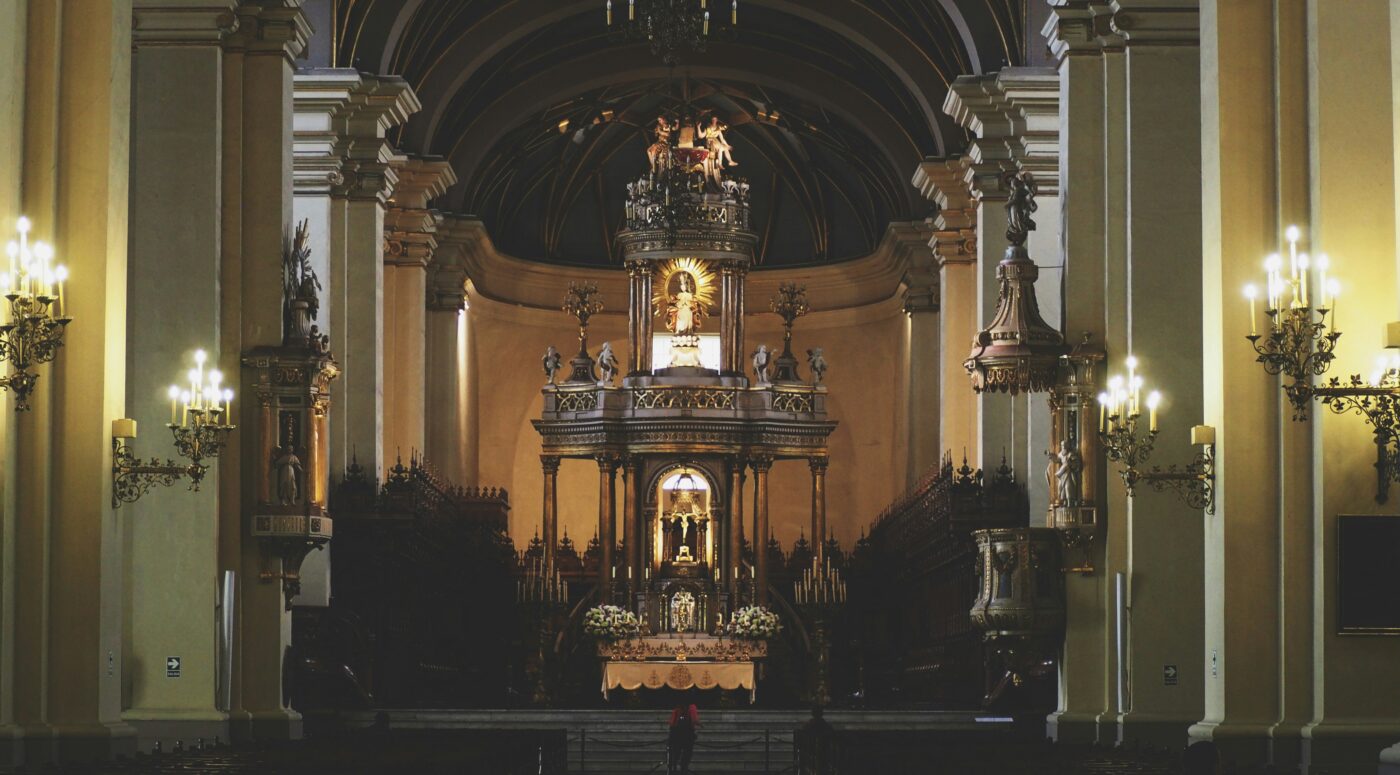
Photo by Drew Harbour on Unsplash