Despite successful attacks on the Afghan Taliban, Pakistan is exposing itself to further instability.
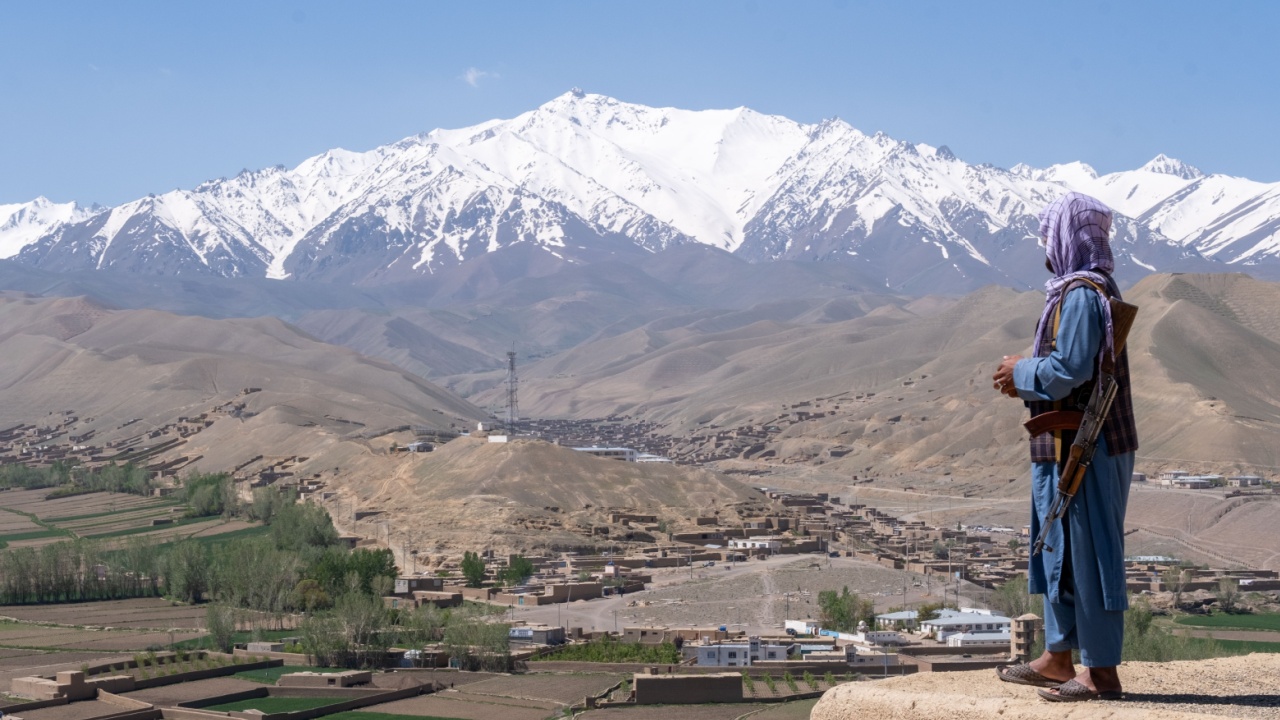
As the Iran war rages, the world has largely overlooked a conflict on the Indian subcontinent, a conflict unfolding between traditional allies, the Afghan Taliban and Pakistan. After declaring an “open war,” the former patrons of the Taliban launched airstrikes deep into Afghanistan in late February, targeting Kabul and even Kandahar, the symbolic headquarters of the Taliban.
While an Eid al-Fitr ceasefire brokered through Turkish, Qatari, and Saudi mediation temporarily paused the fighting, the fracture in this relationship repeats Pakistan’s historic relationship with previous Afghan administrations. Now that Pakistan has resumed hostilities, Afghanistan finds itself in a paradoxical situation. For the first time in nearly five decades, Afghanistan is at relative peace, at least internally. And yet, it is trading blows with the very state that enabled the Taliban to come to power.
Historically, Pakistan’s relationship with Afghanistan has been rocky, with Islamabad viewing all of Afghanistan’s various governments—the monarchy, the communists, the Western-backed republic, and now the Taliban—as potential threats that could be made into vassals. The need for a subservient Afghanistan was born out of the fear of encirclement by India and the Soviet Union, as well as Afghanistan’s opposition to the Durand Line, the border that divides local Pashtun tribes on both sides.
Pakistan backed Afghan Islamist factions beginning in the early 1970s. The funding of the mujahideen network ultimately led to the fall of the Soviet-backed government in 1987. The Taliban, emerging out of Pakistan’s Deobandi madrassas, gave Islamabad the strategic depth it sought.
But when the Taliban swept Kabul in 2021, it inherited the concerns of its predecessors. The Taliban refused to behave as a client state and showed reluctance to curb the Tehreek-e-Taliban Pakistan (TTP), a group that seeks to spread Taliban-style rule into Pakistan. The group, emboldened by the Taliban’s ascendency, regularly plans and carries out terrorist attacks within Pakistan.
Pakistan’s current military operation remains significant for making a shift in its actions. After targeting TTP’s hideouts and leaders since 2021, the Pakistani government targeted the Afghan Taliban military infrastructure last October and then in February, including a drug rehabilitation center in Kabul. The Taliban accused Pakistan of killing 400 people; Pakistan claimed that the target was an ammunition depot.
Despite the Taliban’s possible exaggeration of the casualty figures, Pakistan’s objective is to degrade the Taliban military. This is a policy seemingly borrowed from India, which in recent years has rejected the distinction between the Pakistani military establishments and their proxy terrorist groups like Lashkar-e-Taiba or Jaish-e-Mohammed.
The Taliban continues to govern Afghanistan with a centralized authority that all previous administrations lacked. Supreme Leader Haibatullah Akhundzada can obtain the bay’ah, the traditional Islamic oath of allegiance, from other factions. Despite evidence of internal factionalism, the Taliban maintains a monopoly of power across the country.
With the Taliban entrenched hold, and reluctance, the tensions in this region are likely to persist. The most pertinent security threat for Pakistan remains retribution from the Taliban. This could raise fresh security challenges for Pakistan’s already overstretched military. Cross-border attacks by the TTP across the border and their expansion into urban areas would add to unrest in the Balochistan and Khyber Pakhtunkhwa provinces. The TTP may even aim to target Punjab, the most populous province and the heart of the Pakistani establishment.
Internationally, Pakistan finds itself in a precarious position. Its western neighbor, Iran, is embroiled in a conflict with the United States and Israel. To the east, there is the sensitive border with India, which Pakistan provoked last year. In this context, Pakistan’s tactically successful strikes against the Taliban may merely presage a strategic defeat.
About the Author: Aishwaria Sonavane
Aishwaria Sonavane is the research analyst at the Pakistan Desk and the programme manager at the Network for the Advanced Study of Pakistan at the Takshashila Institute, an Indian think tank. Her work focuses on counter-militancy, foreign policy, and defense, with a broader regional emphasis on Afghanistan, India, and Pakistan. She tweets at @aishwaria_s.