The Trump administration’s bid for American energy dominance requires sustained attention, not public relations cinema.
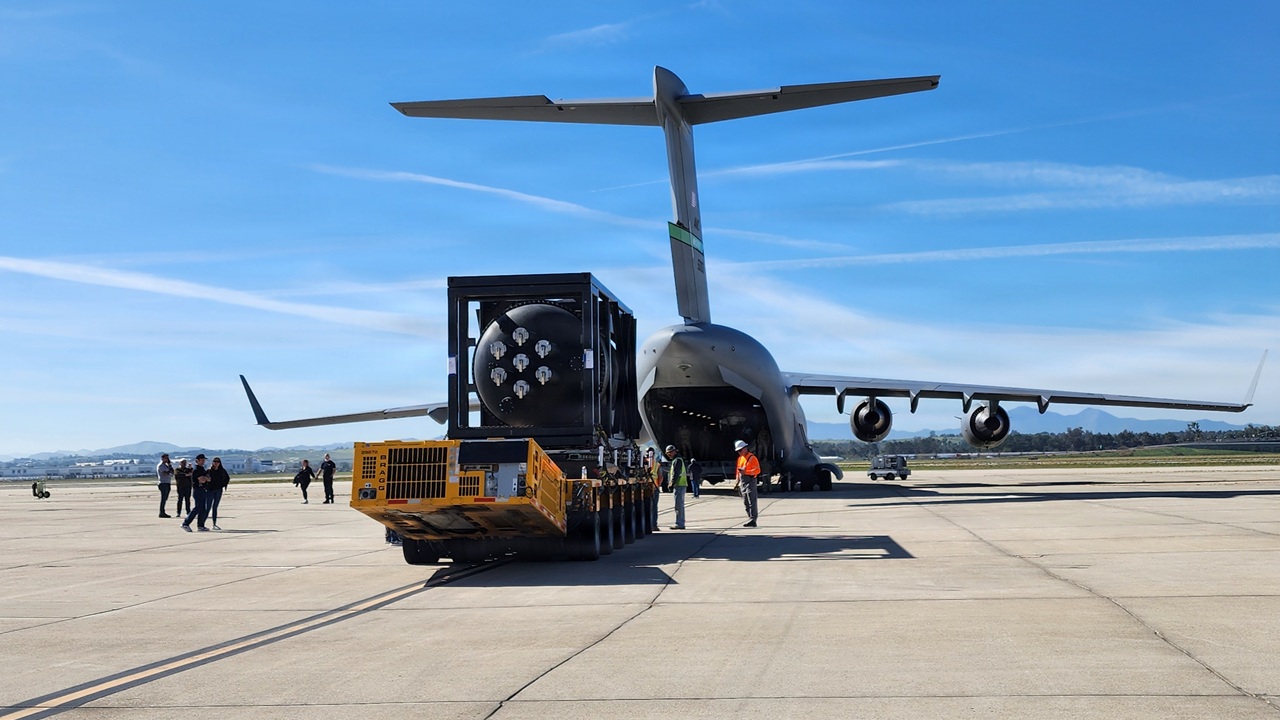
The hoped-for nuclear renaissance in America now has a highlight reel. It is a spectacular cinematic marriage of national security and nuclear flexing that features three massive C-17’s airlifting a Valar Atomics’ Ward 250 advanced nuclear reactor from California to Utah.
This is the vivid imagery of American energy dominance that the Trump administration loves. It projects an agile private sector driving nuclear expansion in tandem with US military might that can deliver a microreactor anywhere in the world on demand.
But is this image reality?
Valar’s Nuclear Reactor PR Exercise
Despite its obvious success, the Ward 250 flight raises questions about how much of this is public relations vs. actual progress toward the administration’s nuclear deployment goals.
The Ward 250 flight occurred because Valar is building a reactor test site at the San Rafael Energy Lab in Orangeville, Utah. But no power will be produced at this site. It is building a test reactor “designed to support research and development, not power generation.”
The Wall Street Journal reported that Valar paid the cost of the flight. But the political and public-relations return on this investment was likely priceless as the event featured Utah Governor Spencer Cox, Secretary of Energy Chris Wright, and Under Secretary of Defense for Acquisition and Sustainment Michael Duffey.
Valar is a start-up launched in 2023, and its founder wants to make it the fissioning counterpart to Elon Musk’s SpaceX. It is suing the Nuclear Regulatory Commission (NRC), which will ultimately determine whether Valar’s reactor can be licensed for commercial operation, with the objective of lifting the agency’s “regulatory barriers.”
Valar originated in tech-heavy El Segundo, California, and has attracted significant venture capital investment. That has given it a certain start-up tech cache that perhaps other, more prosaic reactor vendors don’t have. That, among other reasons, has helped make it a darling of the Trump administration.
Valar is a participant in the Department of Energy’s (DoE) Reactor Pilot Project and its Advanced Nuclear Fuel Line Pilot Project. The government’s Pilot Project aims to demonstrate that three advanced reactors achieve fission by July 4, 2026. Whether cold or hot fission is required is unclear, but the difference matters. The fuel project is designed to create TRISO fuel for these and other advanced reactors. In this case, Valar seems to be repurposing fuel obtained from General Atomics and building an assembly line.
It is interesting that Valar was the test case for military microreactor transportation. It is not part of any military microreactor project. The Department of Defense’s Project Pele aims to develop and demonstrate the ability to effectively transport a TRISO-fueled military microreactor inside a standard 20-foot shipping container. But the Pele reactor chosen by the Department of Defense’s Strategic Capabilities Office is being built by BWXT, not Valar. Perhaps Valar will become part of another DoD project, Janus, that has not yet selected reactor vendors.
Questions About Valar’s Claims
Despite the excitement, the Valar flight does not represent “the dawn of a new era in American nuclear engineering” as the company’s founder said. The transported reactor was a single unit, non-operational and unfueled.
It was also not the first time the US military had transported a nuclear reactor. There are several examples of airplanes carrying nuclear reactors in the 1950s and 1960s. And in 1992, two C-5 aircraft transported Russian TOPAZ-II space nuclear reactors to New Mexico. These reactors were fueled with 93 percent enriched uranium.
In addition, questions have been raised about the depth of Valar’s nuclear expertise and other claims of its success.
For example, Valar announced that its Project NOVA core achieved zero-power criticality in November 2025 at Los Alamos National Laboratory. But as former Assistant Secretary of Nuclear Energy Katy Huff explained, the zero-power criticality test at Los Alamos “was a cold zero power test that did not take the fuel up to actual power densities. The DoE was not prescriptive [in the Reactor Pilot Project] about whether they meant zero power or full power criticality, which might allow companies to declare victory even if the milestone is less meaningful.”
The Valar reactor seems to have some advantages, as the US government approved its Preliminary Documented Safety Analyses (PDSAs). But there are numerous other competitors in the small reactor horse race, and several are outpacing Valar.
Other Companies Are Moving Ahead of Valar
NuScale’s small modular reactor (SMR) has received design certification, while other small reactors are still in the planning stage. Yet it struggles to build a committed customer base despite the energy needs of AI data centers and the administration’s need for a reactor deployment victory.
The TerraPower Natrium reactor has received a construction permit for its Kemmerer, Wyoming, location, the first such approval in the United States in almost a decade. The BWRX-300 SMR has received a construction license from the Canadian regulatory authority. And Radiant Energy is planning a full power test, not a cold test, of its small reactor to meet the Independence Day deadline.
The US Needs a Strategy for Building Nuclear Capacity
President Donald Trump is committed to vaulting America back to the top position in the global nuclear power competition. That is a critical objective for domestic energy production and national security purposes. But the administration lacks a sound strategy for achieving this goal. Instead, it has embraced a scattergun approach designed to blast away at perceived bureaucratic barriers and fire out executive orders and initiatives in hopes that some will hit the target.
This is not the typical method for building sustained nuclear energy capability. And while it may create more opportunities more quickly than a more traditional approach, it hasn’t yet delivered any new commercial reactors under contract or construction in the United States.
In place of delivery, there is relentless corporate and government hyperventilating over every incremental milestone in microreactor development. This raises concerns about whether this well-funded American nuclear expansion will again fall into an endless R&D trap at the expense of deployment. By contrast, China is building nuclear reactors like Legos, and Russia has signed agreements to export SMRs.
Valar’s high-flying video delivered on two of the Trump administration’s priorities. It created undeniably compelling public-relations cinema and projected American dynamism in nuclear energy.
What it didn’t do is prove that America can achieve the nuclear energy dominance it so desperately desires. That goal is a decade or more away, and it requires devoting much more attention to overcoming technical, financial, and policy hurdles than heralding highlight reels.
About the Author: Kenneth N. Luongo
Kenneth N. Luongo is a recognized innovator, entrepreneur, and leader in global nuclear energy and transnational security policy. He is the president and founder of the Partnership for Global Security (PGS). He has been a TEDx presenter, written over 100 articles, including in The New York Times and Foreign Affairs, and engaged extensively with global media, governments, and audiences around the world on nuclear energy and transnational security challenges and responses. He was formerly a senior advisor to the secretary of energy and a professional staff member on Capitol Hill.