When Netflix announced on December 5 that it would acquire Warner Bros. in a transaction valued at $82.7 billion, politicians on both sides of the aisle were quick to raise alarms. President Trump warned that the combination of the two companies “could be a problem” because of their size and said that he wanted to “see what percentage of the market they have.”
Such fears about market concentration come up in any such merger. But the idea that large companies are bad for consumers has been proven wrong time and time again. The most recent Nobel Prize in Economics was awarded to three individuals focusing on the economic theories of Joseph Schumpeter, whose concept of “creative destruction” describes a process “that incessantly revolutionizes the economic structure from within, incessantly destroying the old one, incessantly creating a new one.”
Finally, a reason to check your email.
Sign up for our free newsletter today.
Creative destruction, or competition, is what drives technological innovation and economic growth. Schumpeter’s views on competition help us see why big businesses—like the one a Netflix-Warner Bros. merger would create—could benefit consumers.
Crucially, Schumpeter argued that large firms were best positioned to engage in creative destruction because of their size and resources: they can invest more money into research and development to produce new technologies and drive innovation. Netflix has consistently pushed the boundaries of innovation—it essentially invented long-form content streaming, for example. The merger would allow it to keep bringing these benefits to consumers.
Indeed, a compelling case can be made that consumers will benefit from a hypothetical merger. Benefits could include more tiered pricing, which expands consumer choice and yields potential cost savings, since customers would no longer have to subscribe to both Netflix and HBO. A Netflix/HBO bundle could achieve efficiencies that would let Netflix offer both content libraries for less.
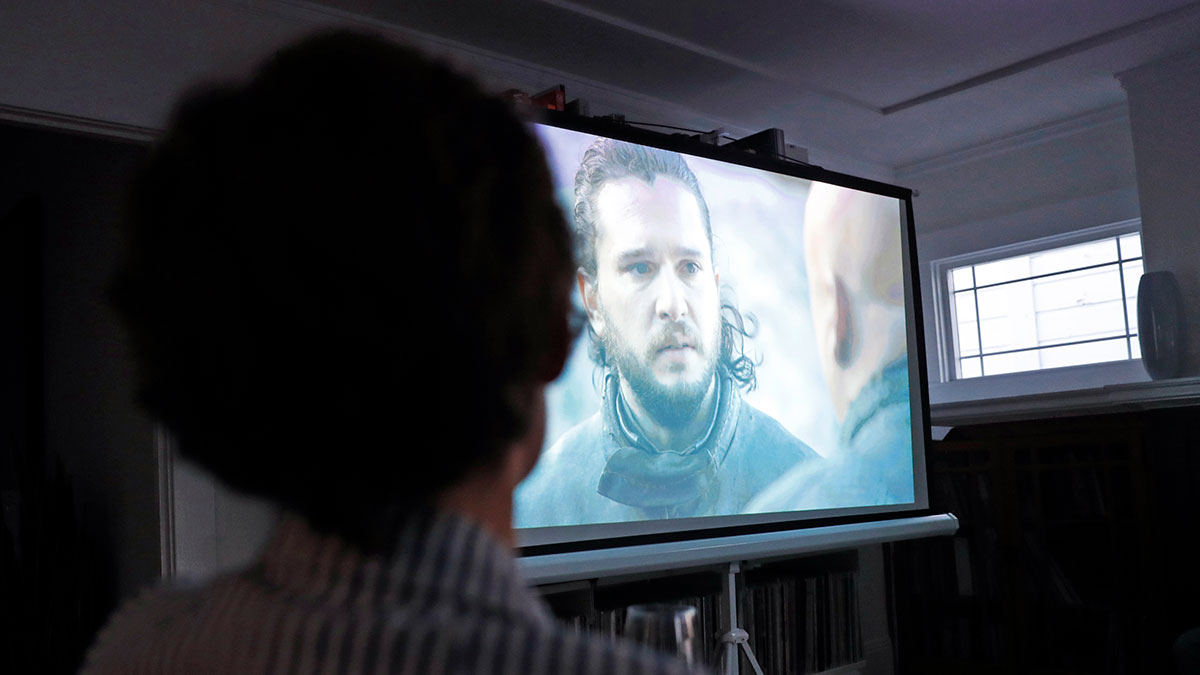
The deal would also provide Netflix with access to a vast library of programming, including the DC Universe (Batman, Superman, and more), the Harry Potter franchise, the Game of Thrones universe, and iconic television franchises like The Sopranos, The Wire, and The White Lotus. Netflix could then pursue unique content collaborations and bring back old shows or movies with new content offerings, from sequels to spinoffs, to the delight of consumers.
Netflix may face an uphill battle to prove that the acquisition of Warner Bros will not give it a market share of over 30 percent—which would make the merger presumptively unlawful, under Department of Justice guidelines. But how is this market share calculated? Is it based on market user accounts? Number of shows/movies watched? Total hours of content consumed?
Recently, Meta won a landmark case in which the courts ruled that the Federal Trade Commission had “proposed a market definition” that was “unduly narrow.” Just as Meta evolved from “friend posts” to “algorithm-suggested videos,” Netflix has been adding to its offerings, including live sporting events and video games. This expands the market in which Netflix is competing.
Moreover, one could readily argue that the competition for eyeballs is not just between Netflix, Amazon, Hulu, and other streaming services. It also includes YouTube, TikTok, and other social media companies that produce video content. These conceptual arguments may haunt federal regulators if this case goes to court.
Getting larger does not guarantee market dominance, one should also note. In a bid to form a media giant to compete with Netflix and others, Warner Bros. itself merged with Discovery in 2022. At the time of the merger, Warner Bros. stock was priced at about $25; by the start of 2025, it had lost more than half its value. The combined entity has not been able to innovate and keep up with the market.
The standard market analysis driving future antitrust cases should include a Schumpeterian creative destruction litmus test: Does the acquisition prevent innovation, or facilitate it? Antitrust scrutiny should not be reduced to simple market share analysis alone. It might be concerning if Warner Bros had new technology poised to reshape the content market, but it does not. Netflix’s takeover would not limit or slow innovation.
Judged by a Schumpeterian creative destruction litmus test, the acquisition of Warner Bros would not stifle innovation, and as such, the potential benefit to consumers is far higher than the threat posed by Netflix increasing its market share by 10 percentage points. Our first instinct should not be that big is bad, but rather, that big can be better for all.
Photo by Scott Strazzante/San Francisco Chronicle via Getty Images
City Journal is a publication of the Manhattan Institute for Policy Research (MI), a leading free-market think tank. Are you interested in supporting the magazine? As a 501(c)(3) nonprofit, donations in support of MI and City Journal are fully tax-deductible as provided by law (EIN #13-2912529).
Source link