
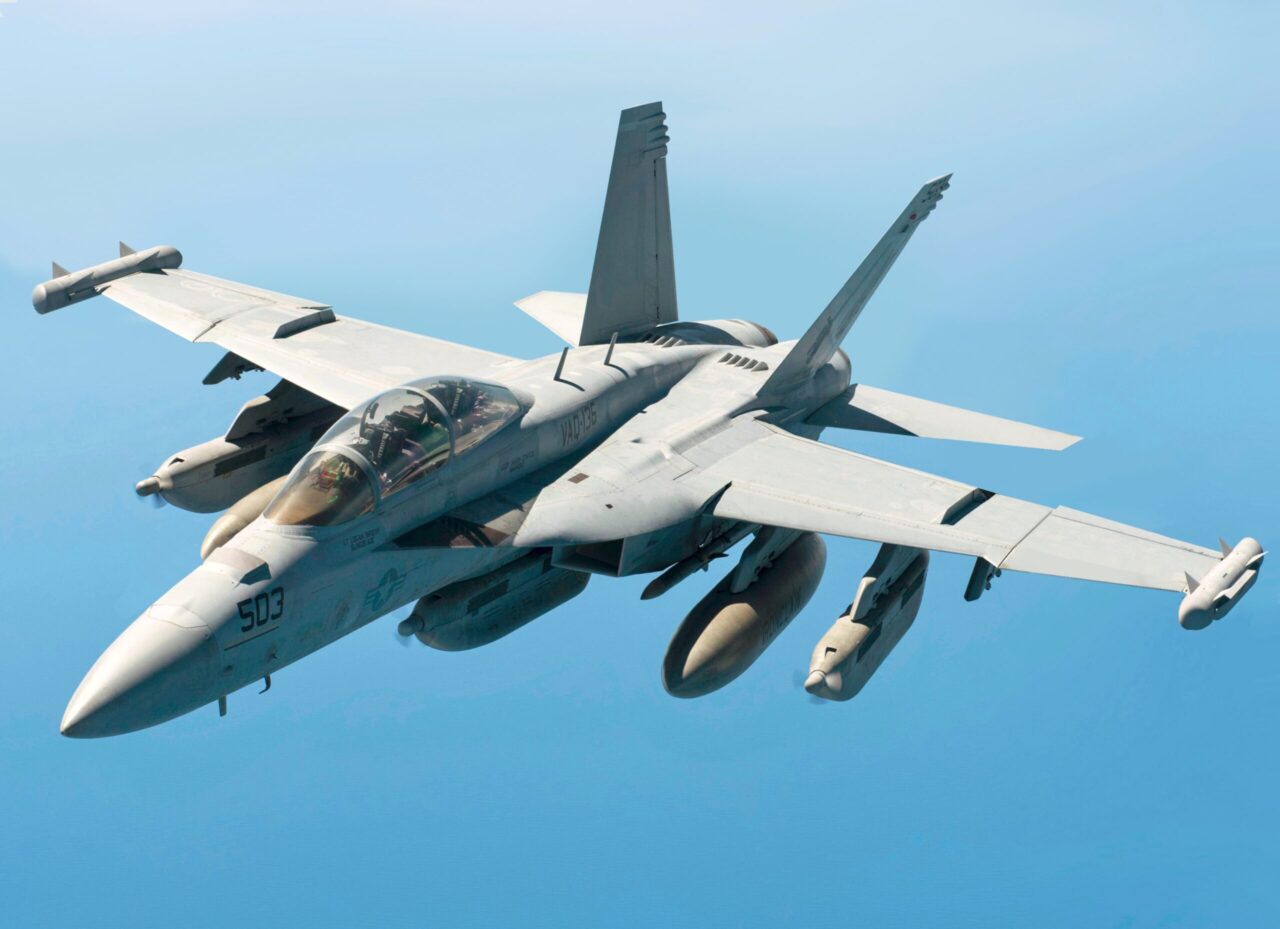
The newly created information warfare unit will seek to exploit vulnerabilities from the seabed to space, gathering intelligence and data from potential adversaries.
Even as Secretary of Defense Pete Hegseth has pushed for an American military focused on returning to a “warrior ethos” that prioritizes physical fitness over soft skills, the United States Navy has established a fighting force desperately needed for 21st-century combat.
The Information Warfare Squadron (IWRON) Two is one of two units approved to be set up within a 48-month pilot program. As its name suggests, personnel serving in IWRON won’t be jumping out of planes, trained in underwater demolitions, or likely even being the types of “warriors” that Hegseth envisioned. However, these warfighters will engage potential adversaries, likely without the adversaries’ awareness.
America Prepares for Information Warfare
Information warfare (IW) is something that America’s adversaries are already using, even if we are not aware of it. It is built around the manipulation of information, data, and technology, and can include electronic jamming, direct cyberattacks, propaganda, and disinformation.
In that way, IW blurs the lines with cyber warfare, psychological operations (psyops), and electronic warfare (EW). It can target not only an adversary’s command and control and decisionmaking, but also public opinion.
The United States has been under assault from IW for years.
It is present in the countless fake social media accounts online that seek to divide Americans and sow distrust in our elections, elected officials, and even how our government functions.
The US Navy Will Engage in IW
IWRON Two is part of the four-year pilot program that was created in June of this year at the Fleet Commanders’ Readiness Council, where top officials in the US Navy sought to develop a period of “learning, adaptation, and innovation, with a focus on improving readiness, refining doctrine, evaluating the effectiveness of integrated IW capabilities.”
The newly created IW unit will seek to exploit vulnerabilities from the seabed to space, gathering intelligence and data from potential adversaries. It further seeks to increase the lethality of the US Navy’s Carrier Strike Groups.
“This is a paradigm shift in how we fight and win in the 21st century,” explained Vice Adm. Mike Vernazza, commander, Naval Information Forces. “For too long, Information Warfare has been a collection of vital but often disparate capabilities. Today, we change that. Today, we forge a unified force, a sharpened spear, ready to deliver the necessary decisive decision advantage to our Carrier Strike Group Commanders in any environment.”
IWRON Two will be based on the East Coast of the United States, with a second IW unit to be stood up on the West Coast next year. Each squadron will be staffed with service members from the Navy Information Operations Command, the Naval Information Warfare Training Group, the Navy Cyber Defense Operations Command, the Strike Group Oceanography Team, and the Fleet Intelligence Detachment DC.
“IWRON-2 will not only meet, but exceed the standards of excellence because we must. Our mission demands it. We are here to strengthen the readiness, lethality, and survivability of our Carrier Strike Groups by integrating our advanced IW capabilities,” said Capt. Jon O’Connor, who was named commander of IWRON Two this month. “This is about warfighting, pure and simple.”
Information Is Key to the Battlefield
Earlier this year, the US Air Force also reactivated its 23rd Electronic Warfare Squadron to enhance electromagnetic spectrum operations and address evolving aerial combat threats.
According to the 350th Spectrum Wing at Eglin Air Force Base, Florida, of which the EWS is a part, the unit’s mission is to provide enhanced intelligence across the electromagnetic spectrum.
“The 23rd EWS supports mission data file (MDF) reprogramming efforts for command and control, intelligence, surveillance, and reconnaissance (C2ISR) platforms, combat rescue platforms, and expendables for the Combat Air Force (CAF), including the High-Speed Anti-Radiation Missile (HARM).”
About the Author: Peter Suciu
Peter Suciu has contributed over 3,200 published pieces to more than four dozen magazines and websites over a 30-year career in journalism. He regularly writes about military hardware, firearms history, cybersecurity, politics, and international affairs. Peter is also a contributing writer for Forbes and Clearance Jobs. He is based in Michigan. You can follow him on Twitter: @PeterSuciu. You can email the author: [email protected].
Image: Wikimedia Commons.
















.jpg)