I made the decision to move to Hungary just after the fall of the Berlin Wall, fully intending to return eventually to the United States, my homeland. But life intervened. I met my wife, who is Czech, and job opportunities and proximity to Central Europe offered a far better quality of life than Washington, D.C., where I had worked in government. My Hungarian and Swiss parents had exposed me to their European traditions, and Europe continues to excite me even after decades of working and traveling there. After thirty-five years in Hungary, I have yet to lose my enthusiasm for the riches of European culture.
But I am increasingly frustrated by the supercilious attitude of the European Union, which for generations has allowed itself the luxury of relying on American economic and defense subsidies, doled out by the United States with no strings attached. The deliberate tactlessness with which the Trump administration signaled to Europe that the Continent needed to contribute more to its own defense shocked many European leaders, leading to the belated realization of Europe’s relative weakness. Europe’s inability to act in a unified way, combined with its desperation to keep the border with Russia as far away as possible, lead one to the uncomfortable feeling that European leaders don’t actually want the war in Ukraine to end—not yet anyway, especially since no one knows what will come next.
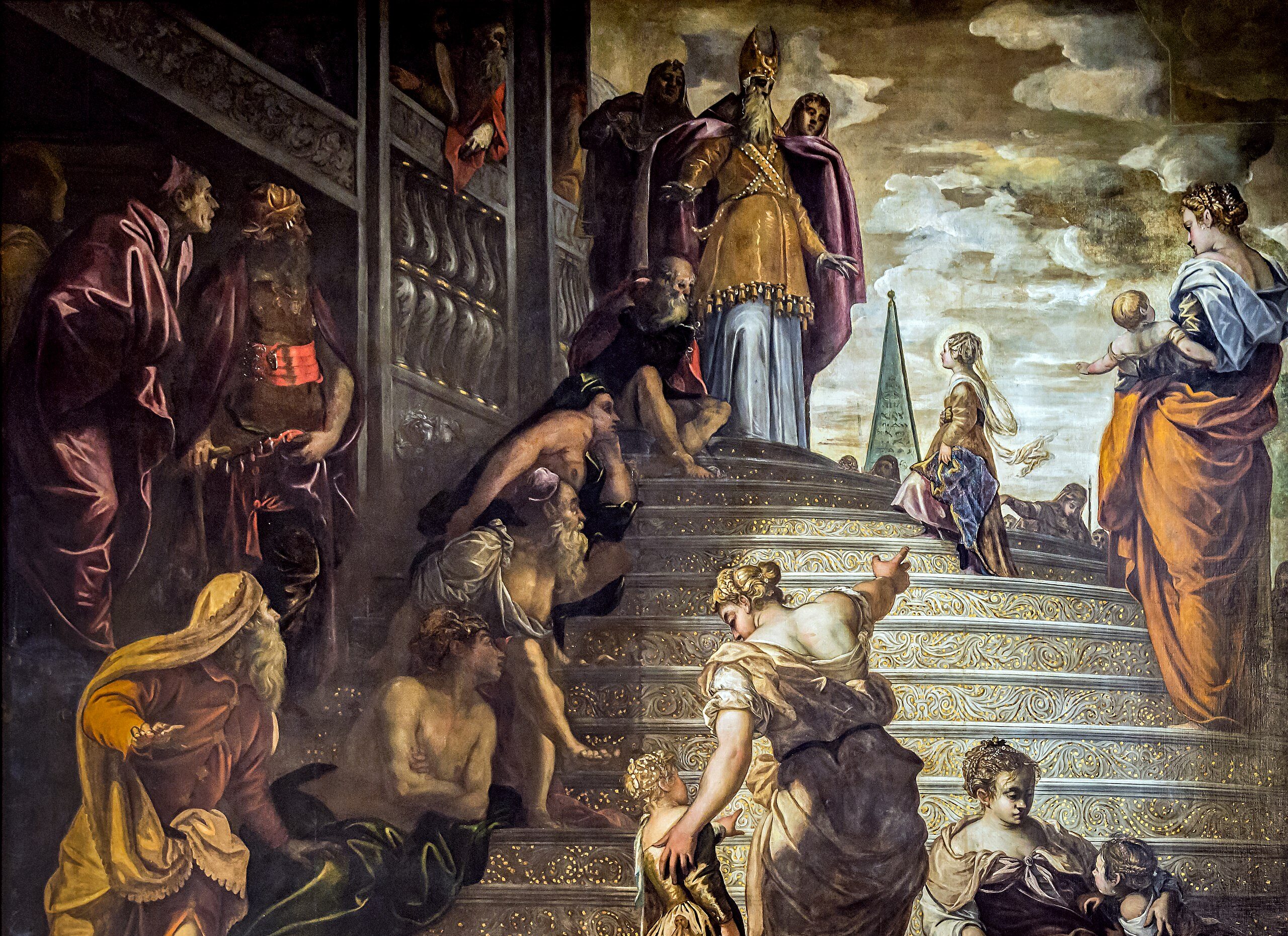
Here in Hungary, my wife and I are exploring Europe while we can. I have long thought that there are some things in life you just don’t believe in even if you are told about them—and that putting in slightly more effort can reveal amazing things. Last June, I thought it was high time for another trip to Venice, even though it’s always too hot and crammed to the point of immobility. But still, what a glimmering jewel! We visited churches off the beaten path, not only for the stunning Gothic and Renaissance architecture but also for the art collections they house. San Zaccaria, a former monastic church, contains Giovanni Bellini’s famous altarpiece, and Tintoretto’s paintings cover the walls. From there we floated off to Madonna dell’Orto, the fifteenth-century inner-city church, once Tintoretto’s home parish, now displaying many of his works. Even contemporary art seduces in equally leisurely settings: the Venice Biennale occupies a sprawling elegant garden alongside the great lagoon, where some couples stroll arm in arm, taking in the offerings of different countries’ permanent galleries, some of them dating to the Biennale’s founding in 1895.
One evening a small, sleek mahogany motoscafo sped us an hour or so along the perimeter of the Venetian lagoon to the ancient fishing island of Burano, known for its lace; a short stroll among its colorful houses brought us to the island of Mazzorbo and the Basilica of Santa Maria Assunta, the oldest church in all of Venice, while the true epicureans seek out the wine resort of Venissa. The music-obsessed visit those sites where Monteverdi, Wagner, and Stravinsky died; the literati come to pay respects to Ezra Pound and of course, most famously, Gustav von Aschenbach, the cholera- and love-stricken protagonist of Thomas Mann’s Death in Venice. Venice itself is dying—it is actually sinking and may not be here by the end of the century. Even the ennui of a jaded traveler can’t keep you from thinking: “Well, maybe just one more time, while we still can; probably there is something still to see, while we can, and, even if not, well, still, one more drink at Harry’s Bar, one more sunset over St. Mark’s.”
Trips to Ischia, Champagne, and Versailles filled out the summer season, and in autumn came the Vienna State Opera’s mind-altering production of Janáček’s The Makropulos Affair (1926). It is almost distressingly easy to fall into the lethargic pleasure of the Habsburgian golden age as you linger over an espresso in Merano in the Tyrol or over a fine Wachau Riesling on Lake Fuschl in Austria’s Salzkammergut region near Salzburg. On one such lazy day, I wandered over to Hellbrunn Palace, which features Europe’s last fully operational Baroque hydraulic water park. Lining its elegant paths and exquisitely manicured garden are hidden fountains and hydraulically driven musical theaters, with crowns levitating and falling on jets of water to symbolize the rise and fall of nations and statesmen. Baroque barons once vied with each other to install such pleasure gardens, only to dismantle them once these playful waterworks fell out of fashion. How lucky we are to still have this one!
Retirement allows for lazy, indulgent wanderings that provoke equally lazy and indulgent reflections. I find myself imagining, for example, that some of the characters in Richard Strauss’s Der Rosenkavalier come from a place like Hellbrunn Palace. In the opera, the aristocratic, aging Marschallin initiates a steamy relationship with the much younger Octavian. Unthinkingly, the Marschallin suggests to the count, her cousin, that Octavian deliver a ceremonial silver rose to Sophie, the young lady whose hand the count seeks. Some hours later, the now visibly older Marschallin, realizing that her time has come and gone, stoically gives up her young man: “I promised to love him in the right way, that I myself would still love his love for another!”
Dominant sevenths ensue—gorgeous, dissonant, chords characteristic of Strauss—and then: “Of course, I did not think that it would happen so soon!”
The opera is notable for its handling of themes of love, aging, and social change in eighteenth-century Vienna, particularly when it accentuates the style and grace with which the Marschallin withdraws. In any event, the opera’s action seems to offer an apt metaphor for our present day. Has Europe’s time come and gone? Are we really losing the Continent because we wanted to believe in the myth of the silver rose? While relishing for so many years the torpid pleasures of a golden age, have we allowed ourselves to forget that what we don’t protect we will surely lose? Europe has been jolted into the realization that perhaps it just doesn’t matter anymore, at least politically. Will it now step back stoically and stylishly and accept its new place in the antechamber, just looking in at those who hold the future? Europeans badly want the Continent, the birthplace and glory of our Western civilization, to do something to make itself proud again. How sad that we all believe it will not.