The Pentagon’s shift towards long-term procurement contracts, rather than temporary year-by-year funding, is a welcome step in improving America’s ailing defense industry.
After decades of just-in-time logistics, financial engineering, and capital allocation strategies that rewarded Wall Street at the expense of the warfighter, the administration has opened a multi-front campaign to reset the defense-industrial base around a single objective: peace through strength.
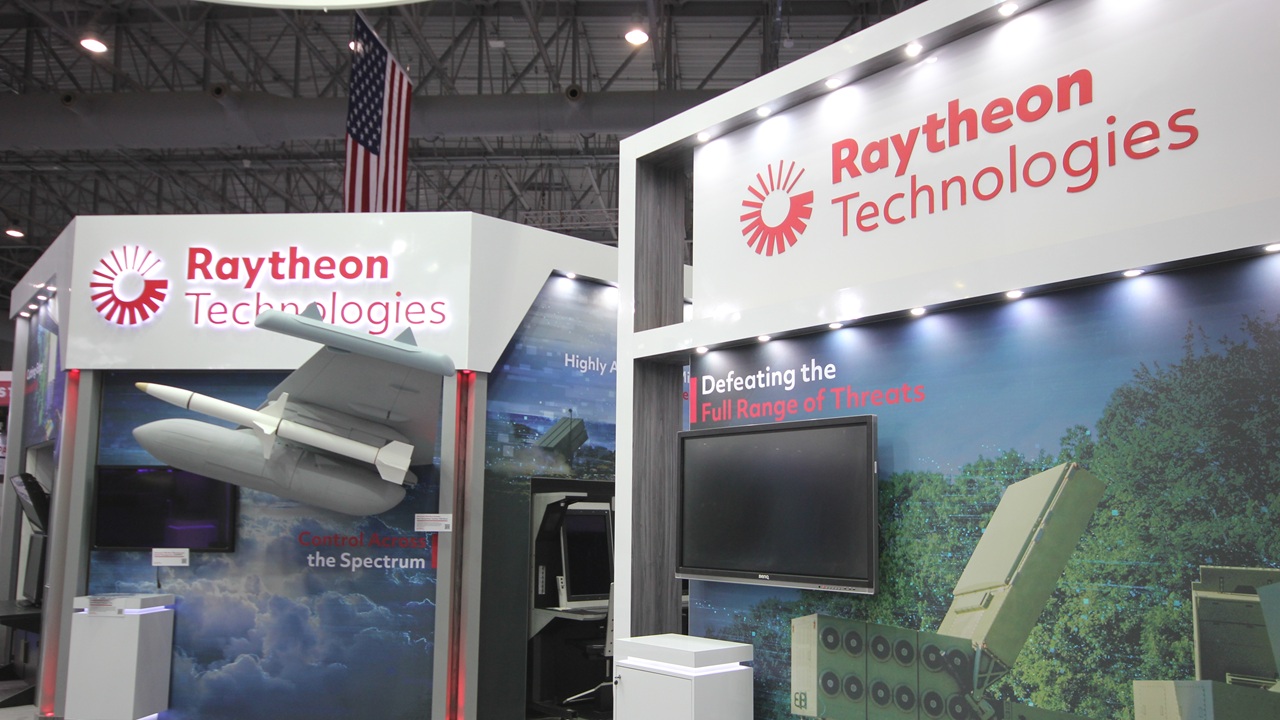
The most recent step is the move to seven-year missile production agreements with Lockheed Martin and RTX (Raytheon). These agreements function as clear demand signals that the Pentagon’s era of episodic procurement is ending—and that sustained production is again a strategic priority.
Why the Department of Defense Needs Multi-Year Procurement Contracts
This effort builds on earlier actions. Capital starvation was reversed through FY25 reconciliation funding. Strategic intent was reinforced through a proposed FY27 defense budget of $1.5 trillion. Discipline was added through executive action empowering Secretary of Defense Pete Hegseth to penalize firms that prioritize dividends and share buybacks while delivering late and over cost.
The logic is direct. Increased funding represents the investment. The executive order provides downside protection. Multi-year production contracts convert both into sustained throughput. Together, these measures form a coherent industrial strategy that treats production capacity as a core national security asset.
For years, the principal barrier to scaling production was demand signal uncertainty. As a result, defense primes hesitated to build factories, hire workers, and qualify suppliers for contracts that might disappear after a single budget cycle. Annual funding produced short planning horizons.
Seven-year frameworks will change that calculation. By committing to bulk procurement through 2032, the Pentagon strengthens its negotiating position on unit pricing, while industry gains the confidence to invest in capacity. These agreements move the Department beyond the short-war procurement mindset that left magazines depleted and production lines fragile for much of the 21st century. In its place emerges a model that rewards continuity, resilience, and sustained output.
Hegseth’s next challenge is ensuring that the FY25 reconciliation funds do not simply pool at the top of the supply chain. The Pentagon must use these funds to help Tier 2 and Tier 3 suppliers purchase the specialized tooling they need. Without a healthy base of sub-tier suppliers, a seven-year contract with a prime contractor is just an expensive piece of paper.
The Seven-Year War Chest Is Needed to Prevent Congressional Unpredictability
Credible demand signals require a sustained pool of funding. The current approach appears to rest on two pillars: FY25 reconciliation resources, and the proposed FY27 topline increase.
An initial down payment is already available. Approximately $25 billion in FY25 reconciliation funding is dedicated to munitions and remains available for obligation through September 30, 2029. This creates a multi-year liquidity bridge that allows new production lines to be committed and paid for immediately. If these funds are used to underwrite multi-year procurement, the Department gains early momentum and locks in industrial activity ahead of the normal appropriations cycle.
Sustaining cash flow beyond the reconciliation window presents two paths. One path runs through a future reconciliation bill supported by the authorizers. The other depends on the appropriators.
Recent appropriations language suggests measured progress. Multi-year procurement authority was granted for eight out of 13 requested munitions, with the remaining requests denied due to insufficient justification. The implication is straightforward: Congress is open to broader multi-year commitments if the Department can provide clear cost, capacity, and supply-chain analysis.
The logic of multi-year procurement extends beyond interceptor missiles. To prevail in a prolonged conflict, the Pentagon must apply the same approach to major ground systems. Main Battle Tanks (General Dynamics) and armored vehicles (General Dynamics and BAE) require multi-year runways to modernize production lines and stabilize skilled labor. Artillery and tactical munitions benefit from similar certainty. The objective is sustained industrial capability across the force, supported by predictable demand and long-term planning.
The Pentagon’s Campaign Is Working
Recent public pressure from the President, including criticism of firms that elevated shareholder payouts over delivery performance, has already shifted corporate behavior. Earnings calls increasingly emphasize capacity expansion. Capital expenditure plans are growing, with Lockheed projecting ~$2.5 billion and RTX planning for $3.1 billion in 2026. Production throughput is becoming a central performance metric.
This realignment is beginning to reshape investor expectations. Growth is increasingly defined by factories, tooling, and output rather than margin expansion alone.
Moreover, expanding production requires attention beyond the prime contractors. The most binding constraints reside in second- and third-tier suppliers that operate with limited access to capital and far narrower margins for surge capacity. Solid-rocket motors remain a prominent example; major integrators depend on specialized chemical suppliers that face significant scaling challenges. Similar dynamics exist in high-strength castings, rad-hardened microelectronics, and other specialized components where a small number of firms support multiple weapon systems.
Addressing these bottlenecks requires primes to act as industrial anchors by supporting financing, supplier qualification, and long-term demand assurance. Strengthening these lower tiers is essential to translating multi-year contracts into real production gains.
About the Author: John Ferrari
Maj. Gen. John G. Ferrari is a nonresident senior fellow at the American Enterprise Institute. Over his 32-year US Army career, Ferrari, who is now retired, served as the director of program analysis and evaluation, the commanding general of the White Sands Missile Range, and a deputy commander for programs at the NATO Training Mission in Afghanistan. He has an MBA in finance and strategic management from the Wharton School at the University of Pennsylvania, an MA in national resource strategy and policy from the Industrial College of the Armed Forces (now called the Eisenhower School for National Security and Resource Strategy), and a BS in computer science from the United States Military Academy at West Point.