Almost a decade ago, my family and I changed parishes to the historic downtown church. The non-Catholic locals call it “Catholic Disneyland.” It is a shining gem on the hill that Irish immigrants started in a boxcar. The inside is glorious in its architecture, ornate paintings, and stained glass. The side chapel contains 18 holy relics, including the True Cross. On September 6, 2023, it was declared the 93rd minor basilica in the United States.
While the beauty of the church and the liturgy drew us many years ago, the location also reveals the reality of the Church’s call to save souls. Being a downtown parish, it is in an area of town known for periods of violence, homelessness, and crime. The homeless come in from the cold to warm themselves, and at times, the mentally ill disturb Mass.
As I have meditated on this dichotomy and the beauty of the church that houses the Real Presence of Jesus, I have come to see that this is exactly how it is supposed to be. The suffering, despite themselves, are drawn to Him and His love, even if they do not know it.
A few blocks away, in the shadow of the basilica, used to sit a woman begging for money and food. She was there the entire decade we have been attending the parish. I would roll down my window while I waited at the red light to hand her snacks, toiletries, gift cards, and meals. I gave her the occasional money. She was very dedicated to her spot on the corner and always friendly. She was one of the first street beggars that my daughter conversed with from a young age. My daughter would wave and say hello from her booster seat in the back, and as time went on, she would start handing her items and chatting with her.
The poor are not a mere abstraction. They are not a faceless crowd of the needy who we can simply have lofty ideals about. They are flesh-and-blood people who have been afflicted in different ways. Each one is a beloved child of God. They are made in the image and likeness of Him. They are also a reflection of the Crucified and Suffering Savior on the Cross, as St. Teresa of Calcutta said. When we scorn, ignore, judge, or fear the poor, we are missing out on an opportunity to encounter the suffering Christ.
Pope Leo in his recent encyclical Dilexi Te (“To All Christians on Love for the Poor”) explains:
Love for the Lord, then, is one with love for the poor. The same Jesus who tells us, “The poor you will always have with you” (Mt. 26:11), also promises the disciples: “I am with you always” (Mt. 28:20). We likewise think of his saying: “Just as you did it to one of the least of these brothers and sisters of mine, you did it to me” (Mt. 25:40). This is not a matter of mere human kindness but a revelation: contact with those who are lowly and powerless is a fundamental way of encountering the Lord of history. In the poor, he continues to speak to us.
It is the suffering poor who reflect Christ back to us in the startling guise of His agony and affliction. This is not a sentimental version of the Christian life. This is the nitty gritty of the Cross. The discomfort we feel at seeing the poor and the homeless is meant to awaken within us a deeper love for those who suffer. Unfortunately, too often, it hardens our hearts as we view them as a nuisance, lazy, or inconvenient.
I gently taught this lesson to two of my college students. They needed a ride to and from Sunday Mass one morning because we didn’t have Mass on campus. As we were leaving, I pulled up to the corner, and there was the woman. Sitting beside her was a friend of mine from the basilica.
I rolled down the window to greet them both. My daughter and I chatted with the woman and our friend while my two college students looked on in silence. I wanted them to know that Christian love means engaging in uncomfortable situations and seeing the dignity of the poor. It was transformative for them.
As I have written multiple times, I have been blessed to work with the homeless over the years. What I have discovered is that their stories are varied and cannot be put in a neat little box of our own perceptions. Many have suffered terrible abuse and violence, and they have forgotten or never known their human dignity. Addictions, alcoholism, and prostitution are often tied to much deeper agonies and were the result of a whole host of factors, chief among them being human sin and brokenness. Mental illness is a huge part of it, and in some cases, based on Sacred Scripture, there is also a demonic element.
Regardless of the causes, it is up to us to help restore their dignity as beloved children of God through our loving witness. They reveal to us the impoverished, suffering Christ, and we need to rip away our pride and vanity. We are too wrapped up in our own plans and comfort, which is why we need them to pull us out of our egoism.
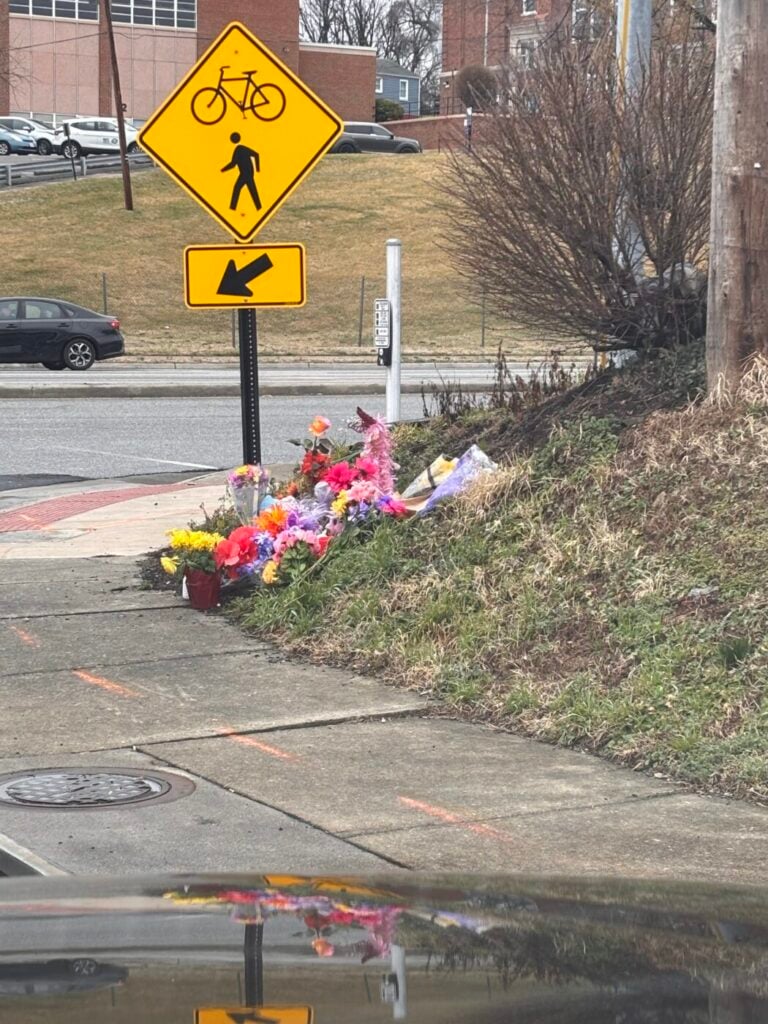
This truth was driven home last week by the witness of the woman on the corner. Her name was Kimberly. I got word that she had been murdered on Sunday morning in a senseless act of violence by a gunman robbing a convenience store. It was just down the way from her spot while 9am Mass was being celebrated. She appears to have been in the wrong place at the wrong time.
It fills me with sadness that I will not see her anymore on the street corner.
The last time I saw her was a few months ago, on a blazing hot, sunny day. After praying a holy hour, I saw Kimberly in the blinding midafternoon sun, trying to sit under a small umbrella, and we chatted for a little bit.
As I then drove to pick up my daughter from the farm school she attends, I remembered that I had a large, striped umbrella in the trunk. Once at the school, I retrieved it and told my daughter that we had an errand to run. I drove back downtown to Kimberly’s spot and had my daughter hand her the umbrella. She was elated to have a large umbrella to shield her from the hot sun. Her grin was radiant. It was one of the last times I was able to interact with her.
Kimberly left a parting gift to those of us privileged to know her. The friend of ours sitting beside her when my college students were with me had spent years ministering to her. Kimberly was not homeless, but she was extremely poor. He would visit her at her house, so he knows more of her personal struggles than most of us, but she had a final lesson for all.
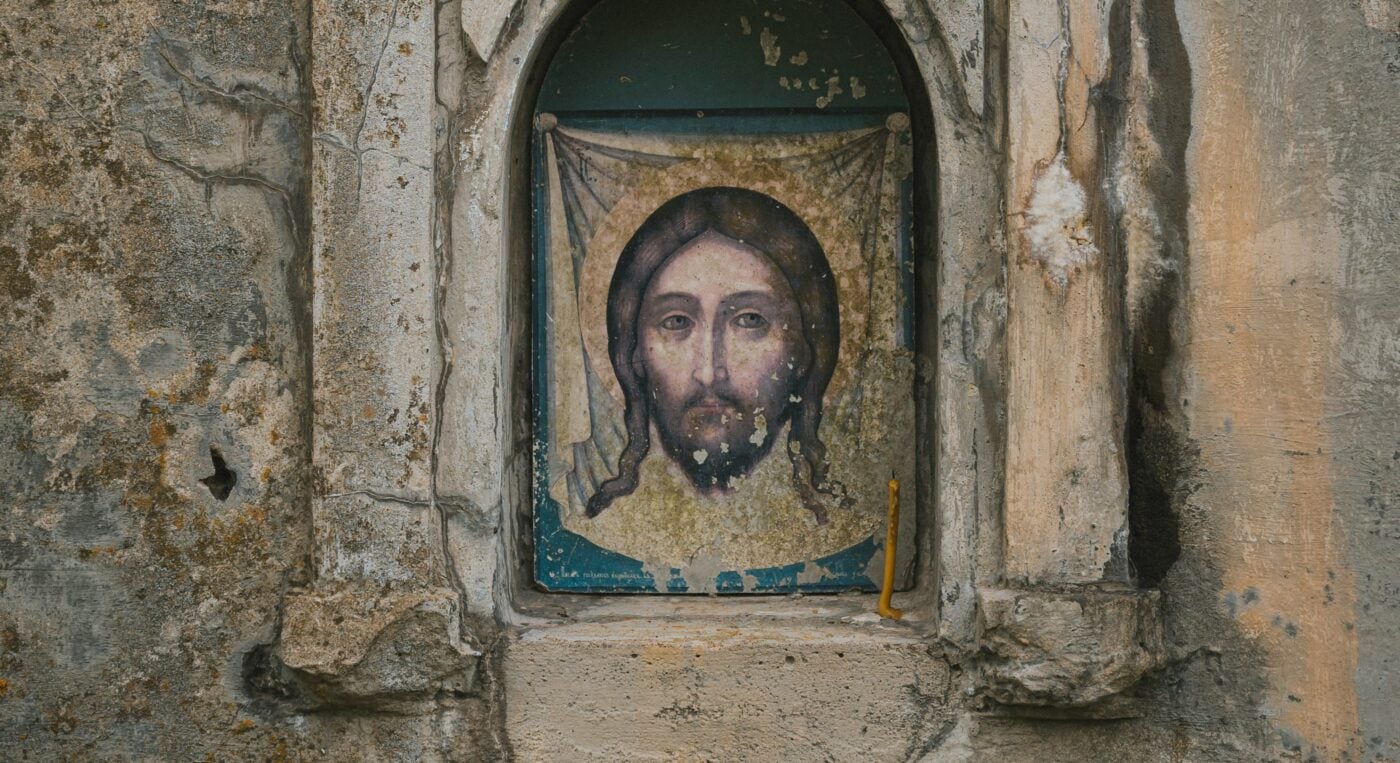
He said that she lived in great poverty. No pictures on the walls, only a little furniture, a complex family life, and her refrigerator and cabinets were usually empty. The only thing hanging in her house was a picture of Jesus. She said to our friend: “I can’t wait to meet Him.” In the mystery of God’s plan, she died a violent death like Jesus, but now she beholds Him face-to-face.
This woman had nothing in this world. She suffered her whole life. The truth is, however, that she had everything. In all her poverty, Jesus was her only possession. He adorned the wall and the altar of her impoverished heart and home. “Blessed are the poor in spirit, for theirs is the kingdom of heaven” (Mt. 5:3). She didn’t understand doctrines and dogmas. She came to Mass on occasion but quickly returned to her corner. She knew and loved Jesus, though.
Her parting gift to all of us is that we can have everything in the world, but our lives and our souls are too cluttered with the things of this world. A Christian must live interior poverty in order to fully welcome Him, and if clutter is taking over our soul, then we need detachment and greater exterior poverty as well. I look at my own life and see too much clutter, worry, and distraction. The only thing we need is Jesus. Kimberly quietly revealed this truth to us.
Please join me in praying for the repose of Kimberly’s soul, for her family, and for the conversion of her murderer.
Love for the Lord, then, is one with love for the poor. (Pope Leo XIV)
Photo by Egor Myznik on Unsplash