|
Forwarded this email? Sign up for free to have it sent directly to your inbox.
|
|
|
Good morning,
Today, we’re looking at why it’s time for a new pandemic playbook, Harvard’s grade inflation problem, sluggish housing development in California, and a new book about French General Marquis de Lafayette.
Write to us at editors@city-journal.org with questions or comments.
|
|
|
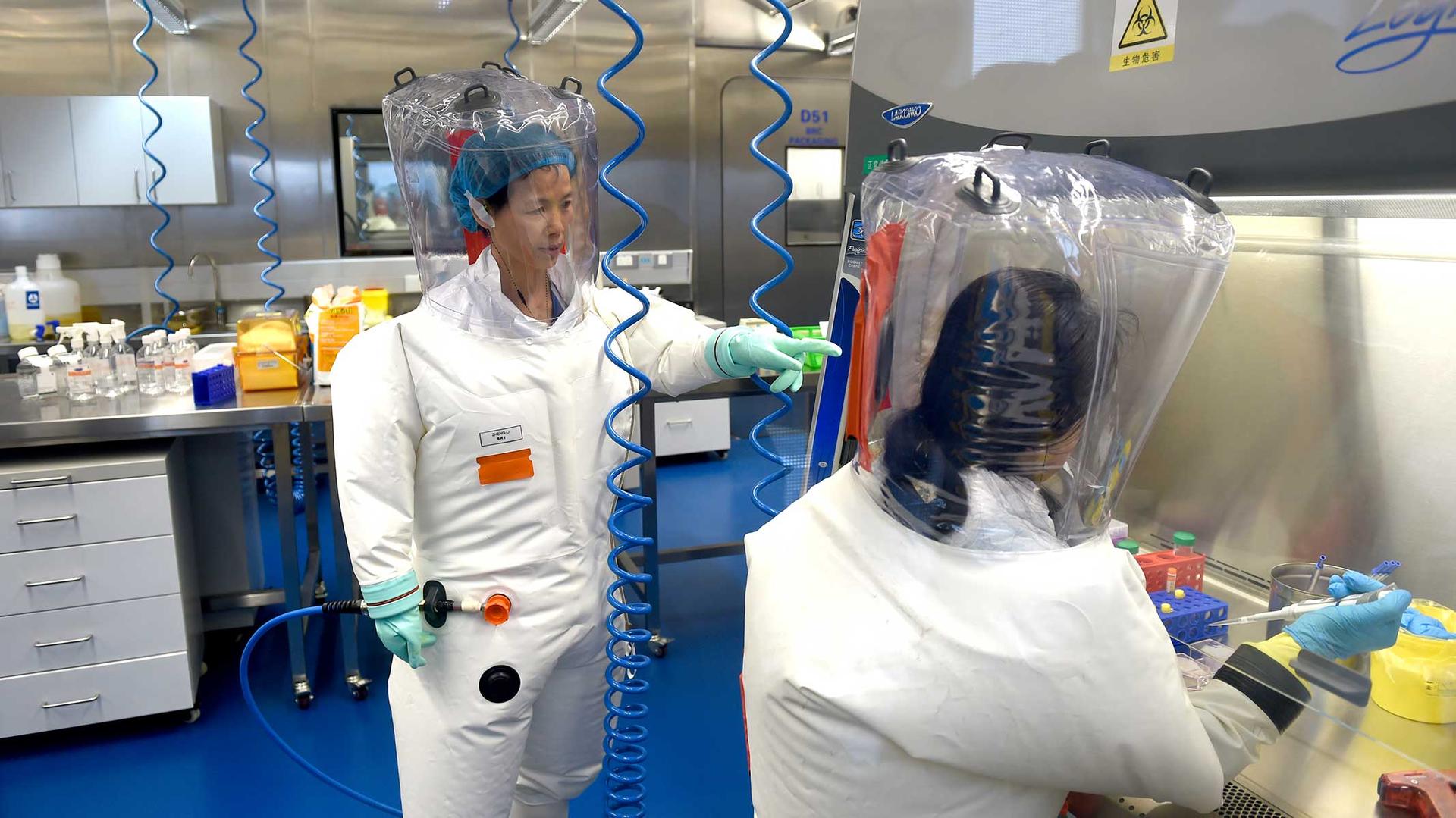
After the 2003 avian influenza and the 2009 swine flu outbreaks, scientists developed a three-step pandemic preparedness playbook. First, catalog every pathogen by collecting biological samples from remote places and bringing them to labs for testing. Second, evaluate the risk of human infection, sometimes by modifying the pathogen to make it more likely. Third, develop vaccines for the pathogens that pose the greatest risk.
“Every step of this agenda is fraught with risk and danger,” National Institutes of Health Director Jay Bhattacharya and Principal Deputy Director Matthew J. Memoli write. “The very act of sending scientists into remote places to collect pathogens risks a spillover of a pathogen that might never have occurred otherwise.”
The lab work is risky, too, they point out, as leaks are common, and “pathogens are often manipulated in relatively low-security environments.” Further, it is extremely difficult to predict evolutionary processes—the version of a pathogen that scientists prepare for will differ significantly from the one that causes the outbreak down the road.
Read their take on how we can better prepare for the next pandemic.
|
|
|
Last month, Amanda Claybaugh, dean of undergraduate education at Harvard University, released a report to students and faculty outlining the incentives that are fueling the school’s problem with grade inflation. She notes that more than 60 percent of the time, Harvard gives top marks, up from just 25 percent in 2005.
To solve the problem, the university needs a new approach, Neetu Arnold argues. “For instance, Harvard suggests expanding the grading scale to include A+, which would be awarded only to a limited number of students in a class,” she writes. “But this merely kicks the can down the road, much like raising the debt ceiling does nothing to tackle the problem of spending growth.”
Read her for how Harvard can begin to address the issue.
|
|
|
Over the past decade, California has passed numerous laws—more than any other state—to encourage housing production, from legalizing lot splits to streamlining multifamily entitlements.
Yet just 38,362 multifamily permits were issued in California last year, down more than 24 percent from the prior year. Dallas, meantime, which has just a fraction of California’s population, issued nearly 18,000 over the past year. How could this be?
Interest rates and development costs have certainly hampered construction in California, but as Brad Hargreaves points out, “the state is increasingly seen as a risky and unfriendly place to build.”
Read his take on why the laws have failed to spark much market response.
|
|
|
In The Last Adieu: Lafayette’s Triumphant Return, the Echoes of Revolution, and the Gratitude of the Republic, Ryan L. Cole writes about the celebrated French General Marquis de Lafayette, his role in the Revolutionary War, and his return to the U.S. decades later. “Ryan Cole does his marvelous theme the justice it deserves by packing it with the four qualities essential to any good history: thorough research, good style, good judgment, and inspired storytelling,” Edward Short writes. Read his review.
|
|
|
“The one common denominator across the spectrum: nastiness.”
|
|
|
Photo credit: Feature China/Future Publishing via Getty Images
|
|
|
A quarterly magazine of urban affairs, published by the Manhattan Institute, edited by Brian C. Anderson.
|
|
|
Copyright © 2025 Manhattan Institute, All rights reserved.
|
|
|
|