Kazakhstan’s recent constitutional referendum underscores the country’s commitment to national development.
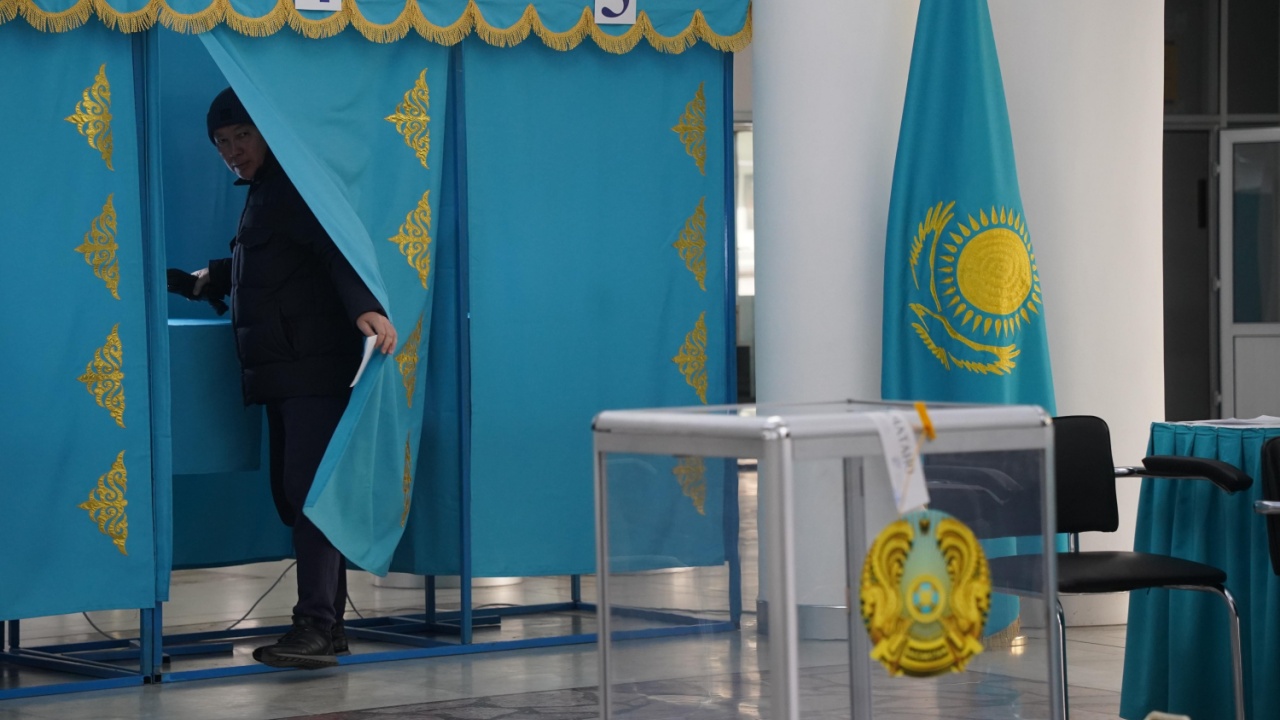
Kazakhstan is entering one of the most pivotal moments of its political transformation, a development that has not yet occurred in 35 years of independence. The recent referendum—the third consecutive nationwide vote—has shown the growing maturity of our political system and the readiness of our citizens to get directly involved in shaping the country’s future. With a record turnout of 73.12 percent, and 87.15 percent voting in favor, the referendum evidently reflected the strong public support for constitutional renewal.
Our citizens approved the new Constitution of the Republic of Kazakhstan that reflects the true aspirations of the Kazakh people to live in a just and fair country based on the principles of law and order, unwavering respect for and protection of basic human rights and freedoms, a modernized society, and a strong commitment to promote education, science, technology, culture, ecology, volunteerism and patriotism. It is important that Kazakhstan was proclaimed as a secular state.
At the same time, it is a huge step forward to meet the expectations of the younger generations to come. That’s why I am confident that the new Constitution will serve as a “road map” for many years ahead for our young people.
This constitution was prepared carefully and with utmost diligence. I personally worked on every word of the text. The Constitutional Commission, with an unprecedented representation of 129 citizens of Kazakhstan, scrutinized every detail, reviewed some 12,000 proposals by various experts and civil society organizations, and oversaw six months of public discussions.
The new constitution creates a solid foundation and further reinforces our strategic vision of “Strong President, Influential Parliament and Accountable Government.”
The abolition of the presidential quota strengthens the independence of the legislative branch. Switching to a single-chamber parliament (the Kurultai) will enable law-making with greater speed and accountability. A new consultative People’s Council (the Khalyk Kenesi) will widen public participation and dialogue.
Institutional reforms under the new constitutional framework also strengthen governance development and ensure regular leadership renewal. Their practical outcomes include the introduction of a vice president position, reflecting the maturity of our governance system and the establishment of term limits for key state officials.
The new constitution is about people, not just a better government. For the first time, the largest section of the Basic Law is dedicated to the protection of human rights and freedoms. The document provides strong guarantees for privacy, personal data, and the inviolability of housing. It also strengthens judicial independence so that every citizen has access to a qualified and independent legal defense. Finally, it requires that future amendments be approved by national referendum so that fundamental decisions remain in the hands of the people.
Beyond this, the new constitution provides a strategic framework for the country’s development, promotes stability, and enhances its global competitiveness. For example, the constitution reinforces property rights, protects intellectual property, and sets clear rules for economic activity. It also introduces special legal regimes for rapidly developing regions to galvanize innovation and industrial growth.
Kazakhstan is already the leading destination for foreign direct investment (FDI) in Central Asia, attracting nearly 70 percent of the region’s FDI. And yet, there is much to do. These reforms were needed to accelerate Kazakhstan’s transition toward a fully digital state and innovation-driven economy.
They also signal to our international investors and partners a constitution-deep, long-term commitment to business, innovation, and partnership.
Three decades on, despite global upheavals, our country is thriving: a top-50 world economy, a top-30 in digital government, a country rich in oil and gas, as well as renewables, critical minerals, and agricultural products. We are a space-faring nation that has chaired the OSCE and served on the UN Security Council. Today, the country is opening new trade routes along the Middle Corridor, working more closely than ever with our Central Asian neighbors, embracing emerging technologies, and using the region’s newest supercomputer to develop our own Kazakh large language models.
It is also home to a young, increasingly educated population that has produced a vibrant workforce of noted artists and performers and even recent Olympic gold medals in skating and judo.
If the 1995 constitution was about independence and survival, then the 2026 constitution is about maturity, renewal, and betting big on the future. From now on, we will mark March 15—the day when our nation made a historic choice—as Constitution Day of Kazakhstan.
In this pivotal moment, we are laying the groundwork for a stronger nation, one that honors its history while advancing justice, technological progress, economic openness, and responsible global partnership.
About the Author: Kassym Jomart Tokayev
Kassym-Jomart Tokayev is the president of the Republic of Kazakhstan.