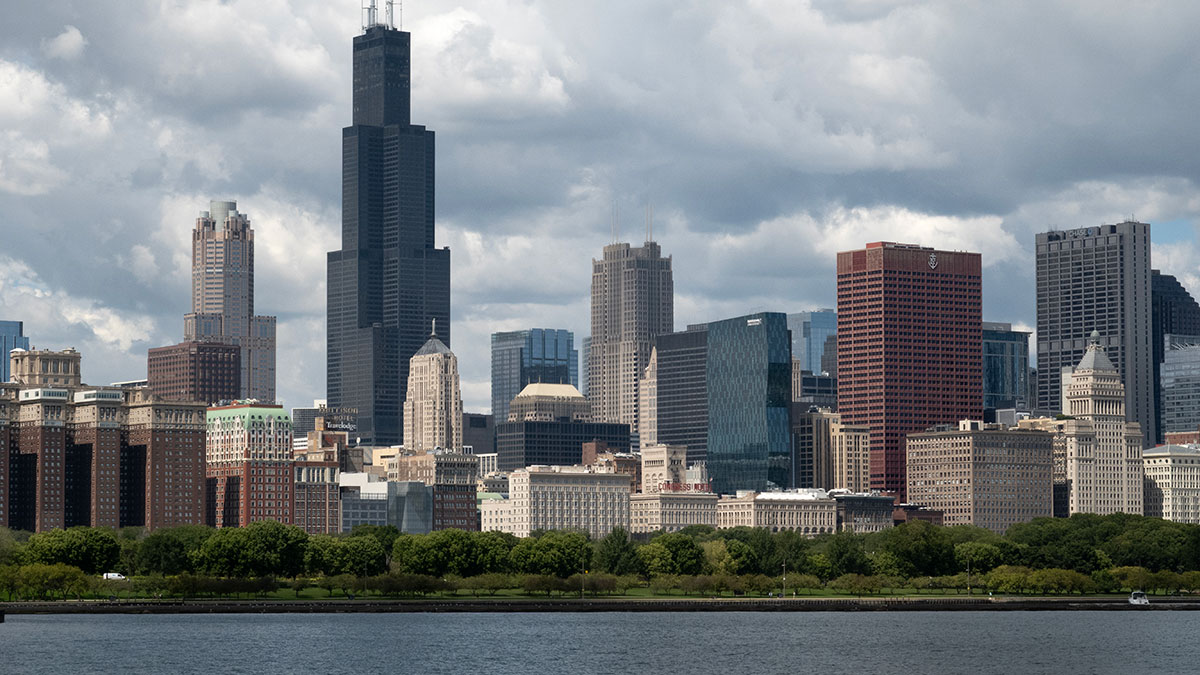
Chicago has seen better days. The city is losing residents and businesses and is digging itself deeper into debt just to maintain the status quo. Yet city officials show no intention of cutting back on spending.
This crisis, however, will have nationwide implications. An unconditional bailout will signal to other fiscally mismanaged cities that their irresponsibility can be rewarded.
Finally, a reason to check your email.
Sign up for our free newsletter today.
At its core, Chicago’s fiscal problems are straightforward. For decades, the city has committed itself to unsustainable spending levels. While its ridership is declining, the Chicago Transit Authority (CTA) is flush with funds thanks to sales tax and driver fees. Chicago Public Schools (CPS) expenditures keep growing despite declining student enrollment. In addition to structural budget deficits, Chicago has some of the nation’s largest unfunded pension liabilities.
Meantime, residents are fleeing both Chicago and the State of Illinois. In the year ending last July 1, Illinois lost over 40,000 residents, many from Chicago and the surrounding suburbs. The Chicagoland area lost more than 35,000 residents either to other counties in Illinois or to other states. Despite an influx of 44,000 international migrants, blunting the effect of net domestic outmigration, government officials can’t conceal the city’s fiscal irresponsibility.
Residents, bond investors, and credit rating agencies see the writing on the wall: the Windy City is headed over the fiscal cliff. Chicago’s credit ratings have been downgraded to BBB+, with rating agencies citing fiscal issues. While Illinois has enjoyed credit-rating upgrades in recent years (thanks to support from federal Covid-19 funds set to expire this year), Illinois still remains the worst-rated state.
It’s worth considering Illinois and Chicago’s financial predicament in a larger context. Detroit’s 2013 bankruptcy is often compared with Chicago’s fiscal crisis since the Motor City suffered from similar problems: massive unfunded pension liabilities, budget shortfalls, and rampant corruption. But at the time of Detroit’s bankruptcy, Michigan was in far better fiscal shape than Illinois is now. Pension reforms in the late 1990s improved Michigan’s solvency, leaving it better positioned (both before and after the Great Recession) than if the reforms had not been made.
Overall, research consistently shows Michigan outperforming Illinois on fiscal strength, even in the period when Detroit was navigating bankruptcy. Illinois, by contrast, is in no position to help Chicago.
Chicago’s fiscal stress more closely resembles that of New York City in the 1970s and Puerto Rico in 2015. As with New York back then, if bond investors remain skeptical of Chicago bonds, it could lead to increased borrowing costs, impaired market access from a lack of willing underwriters, and even default. The scale of such a default could rival that of Puerto Rico’s, with consequences affecting both Chicago and Illinois.
When stimulus funds from the Biden administration’s 2021 American Rescue Plan expire on December 31, Illinois and Chicago will be stuck with billion-dollar deficits. The state and city may turn to Washington, D.C. for a bailout.
Six years ago, Illinois Senate President Don Harmon sent a letter to the Illinois Congressional Delegation detailing a federal bailout request. Most requests in this letter pertained to budgetary issues that long predated Covid-19, including a $15 billion “no-strings-attached block grant.”
While the feds rejected that specific item, Illinois and Chicago received billions of federal dollars through various stimulus programs. Illinois also received a first-of-its-kind loan from the Federal Reserve. Many proponents of the Covid-19 fiscal expansion still defend this massive spending, with former Treasury Secretary Janet Yellen stating last year that the stimulus was necessary.
The door is open, then, for Illinois and Chicago to return to D.C. and ask for federal assistance. If granted, taxpayers nationwide will pay for the Windy City’s fiscal recklessness. And the bailouts likely won’t stop there. Officials in other cities, such as Mayor Zohran Mamdani in New York, will be watching closely. If Chicago can get a bailout, why not the Big Apple?
Rather than properly manage their budgets, city and state officials may scramble to secure the next spot in line at the federal trough. Fiscal responsibility will erode as state and local officials pay more heed to federal policymakers and the terms of federal funding than their obligations to their constituents.
The only constructive way forward is for federal officials to make an explicit warning against bailouts. When fiscally mismanaged states and cities see that Washington won’t enable their behavior, they may finally make the necessary and painful adjustments to restore fiscal solvency.
How Chicago manages its fiscal situation going forward will tell us a lot—both about the city’s financial future and about Washington’s response.
Photo by Scott Olson/Getty Images
City Journal is a publication of the Manhattan Institute for Policy Research (MI), a leading free-market think tank. Are you interested in supporting the magazine? As a 501(c)(3) nonprofit, donations in support of MI and City Journal are fully tax-deductible as provided by law (EIN #13-2912529).
Source link