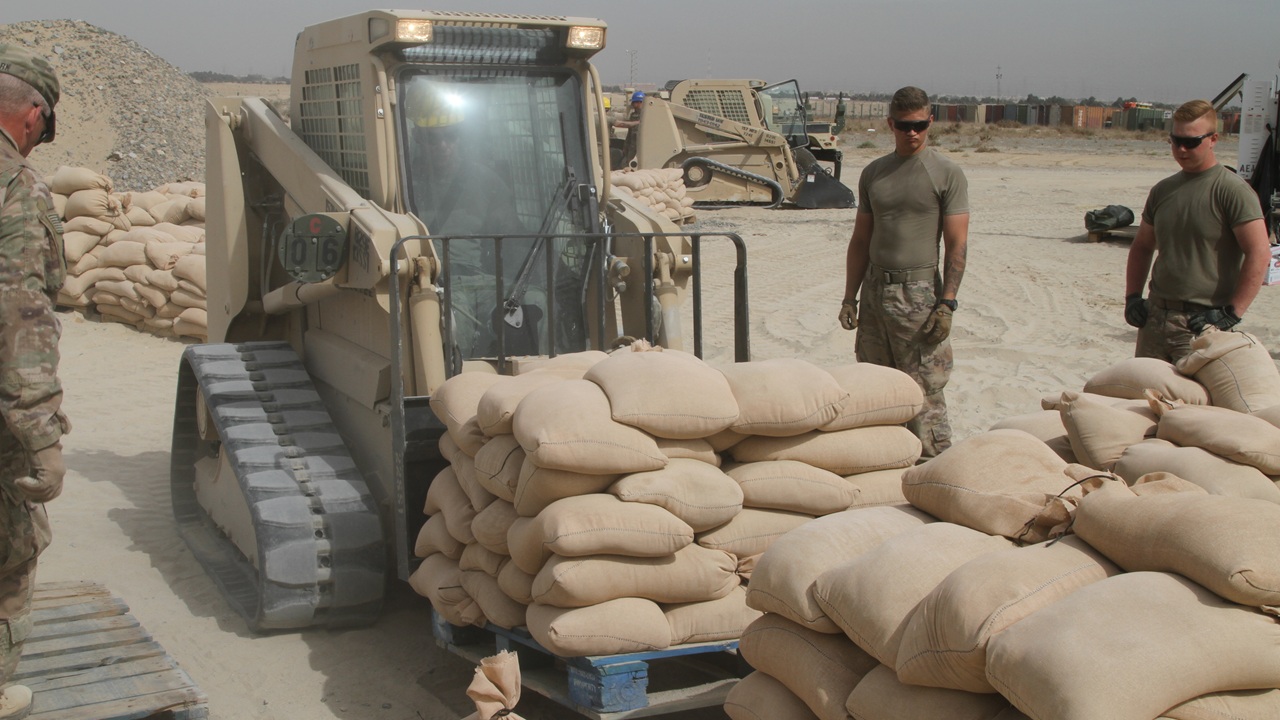
The Pentagon has solicited proposals for prefabricated bunkers to be delivered to its bases in the Middle East, hinting at preparations for a longer-term conflict.
As the United States military begins to mass ground troops for a potential invasion of Iran, including its Kharg Island, there are signs the Pentagon could expect to see personnel deployed to the region for far longer than the weeks that President Donald Trump has so far indicated.
Last week, the Department of Defense (DoD) issued a federal contract notice seeking private contractors to provide “prefabricated, transportable, hardened shelter systems designed to protect personnel from blast and fragmentation threats.”
“All proposed solutions must be deliverable to the Aqaba Air Cargo Terminal at King Hussein International Airport in Aqaba, Jordan,” the request read. It requested that potential vendors submit delivery options with timelines for three days, 15 days, and 30 days, as well as the highest level of protection the bunker could provide.
Protecting US Personnel from Iranian Strikes
Thirteen US military personnel have been killed, and more than 300 wounded, since the start of Operation Epic Fury more than a month ago.
The US military has had a “need for hardened shelters” for years, both for troops and military aircraft, as The War Zone reported. Many of the existing bunkers in the region were first built after the US invasion of Iraq in 2003, and haven’t been upgraded since.
Even as the United States and Israel have pounded Iran, striking its missile launchers, the Islamic Republic has fired back with enormous intensity. The New York Times reported last week that the threat posed by Iranian missiles and drones to US bases “has led many American troops to relocate to hotels and office spaces throughout the region.”
The paper of record added that many of the 13 regional bases have become “all but uninhabitable”—and that US personnel were, in essence, “fighting the war while working remotely.”
The aging infrastructure is only part of the problem. Another is Tehran’s determination to hit back at the American military in any way possible.
“A lot of the hardened shelters really are outdated and could be defeated if enough missiles get through the defense system,” Retired Col. Joe Buccino, former head of communications for Central Command from April 2020 to August 2023, told Task & Purpose—calling the decision to find contractors that could quickly provide pre-fabricated shelters “a good move.”
Pentagon Looks to Beef Up Defenses at Al Udeid Air Base
In addition to the federal notice, last week, the US Air Force Central (AFCENT) also issued a call to vendors to help provide additional protection at the Al Udeid Air Base in Qatar, the largest American military installation in the Middle East.
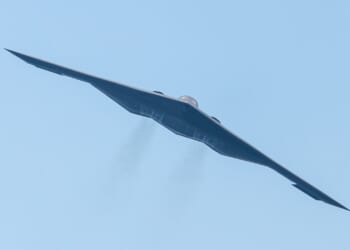
It called for a plant to design “a hardened, underground, secure, Combat Center Building,” as well as additional secure structures to provide “bombers, fighters, and unmanned aircraft systems for intelligence, surveillance, and reconnaissance (ISR).”
Although the US has had a presence at Al Udeid Air Base since 2000 and has an arrangement in place with Qatar for the US military to remain for at least another decade, the calls for bunkers and other hardened structures are a sign that the Pentagon doesn’t expect peace to materialize in the region quickly.
It could also signal that there will be US boots on the ground in the Middle East for the foreseeable future.
About the Author: Peter Suciu
Peter Suciu has contributed to dozens of newspapers, magazines and websites over a 30-year career in journalism. He regularly writes about military hardware, firearms history, cybersecurity, politics, and international affairs. Peter is also a contributing writer for Forbes and Clearance Jobs. He is based in Michigan. You can follow him on Twitter: @PeterSuciu. You can email the author: [email protected].