Switzerland has limited room to negotiate with the United States, as all US arms purchases are paid into the same fund that the Pentagon withdraws from at its own convenience.
Last year, the United States acknowledged that the delivery of the first of five planned MIM-104 Patriot air defense systems to Switzerland had been delayed. The Patriot and the first batch of PAC-3 MSE interceptors were instead diverted to Ukraine.
Bern had first selected the highly-touted anti-aircraft platform as part of its defense modernization effort back in the summer of 2021. Switzerland—a neutral nation for many centuries—is not a member of NATO and must rely on itself for defense.
Swiss officials largely avoided comment on the delay. However, Bern stopped payments for the air defense system in the fall of 2025, reasoning that it should not pay for a system that had not been delivered. As the Swiss-based public broadcaster SRF reported, the non-payment “was intended as leverage” over the United States.
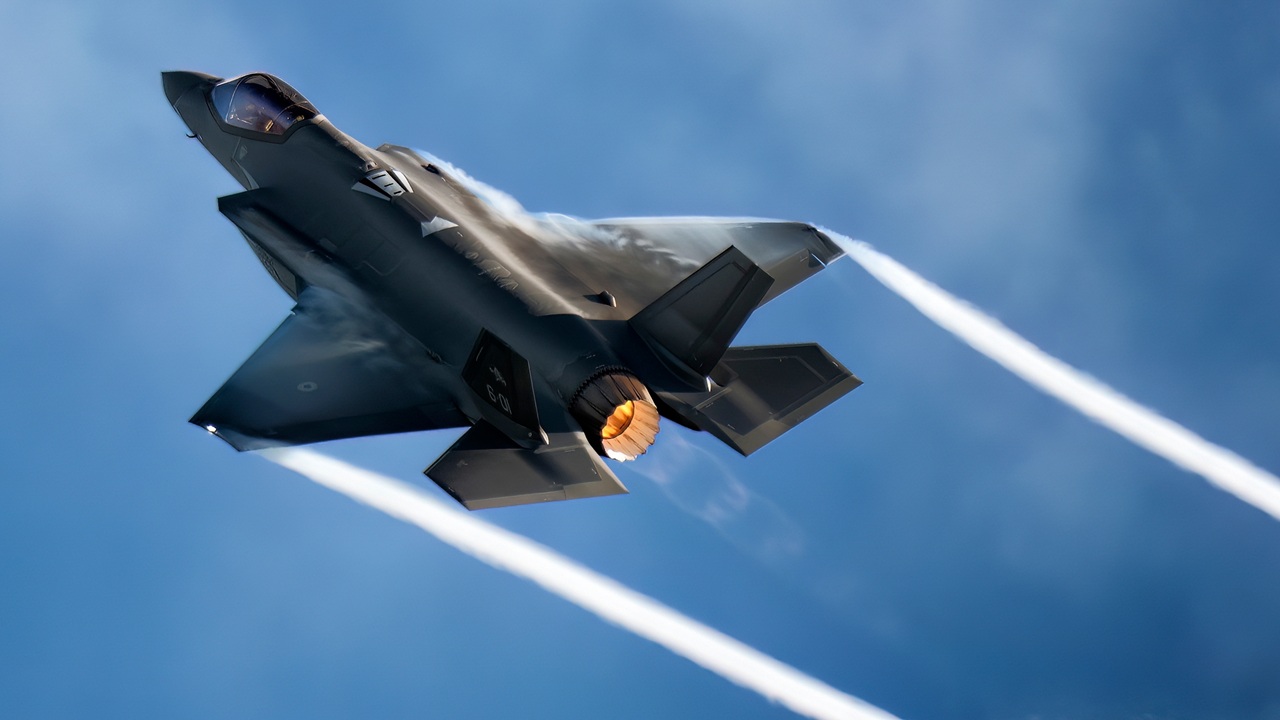
However, Washington responded to the Swiss payment freeze by redirecting funds Bern had paid for its acquisition of the F-35 Lightning II.
Urs Loher, head of armaments at Armasuisse, Switzerland’s federal defense procurement and technology agency, confirmed to SRF that the payments for the fifth-generation stealth fighters had been redirected, with the sums exceeding 100 million Swiss francs ($126 million).
Both the Patriot air defense system and F-35s purchases were made through the Foreign Military Sales (FMS) program, with Switzerland paying into a fund.
“If one project runs short of money, the US is allowed to access funds for other projects. That’s precisely what the US authorities are now doing: fighter jet money is flowing to Patriot,” SRF explained.
The MIM-104 Patriot Air Defense System’s Specifications
- Year Introduced: 1981 (formally 1984)
- Number Built: ~1,300 (batteries); ~10,000 (missiles)
- Price: $1 billion per battery; ~$7 million per missile
- Armament: PAC-2 or PAC-3 Missiles
- Missile Speed:
- PAC-2 GEM+: 5,630 km/h (3,500 mph)
- PAC-3: 6,170 km/h (3,830 mph)
- Radar Range: 60+ miles (+100 km)
- Altitude Ceiling: 75,000 feet
- Crew: 3
Switzerland Is Not Happy with US Procurement Problems
Swiss officials have expressed frustration with both the delays in its Patriots and the way the situation has been handled by the United States.
“From my perspective, this is very unsatisfactory,” Loher said.
The transfer of funds created gaps in the F-35 program, which required the Federal Department of Defense (VBS) to transfer additional funds to the US to fill the gaps.
That isn’t likely to solve the problem and is eroding trust with the United States. This comes after Bern and Washington faced a standoff last summer over the 39 percent tariffs imposed on the alpine nation. At one point, Swiss lawmakers called for canceling the F-35 purchase entirely.
“It’s infuriating when we halt payments, and then the money is simply diverted,” SVP National Councillor and security policy expert Werner Salzmann told SRF. “More and more problems with the interpretation of the FMS contracts are emerging. We need to carefully consider whether we even want to conclude such contracts anymore.”
Patriot Missiles Are in Hot Demand Around the World—and Limited Supply
Even as President Donald Trump has suggested that Iran has been “completely defeated” under Operation Epic Fury, the United States has been considering redirecting Patriots that were slated to head to Ukraine to the Middle East. The conflict has strained US ordnance stockpiles.
As a result of the wars in Ukraine and Iran, Washington warned Switzerland in February that the delay in the Patriots reaching Bern could not only stretch several years, but could also push up the price by as much as 50 percent.
Developed in the 1970s to counter Soviet missiles, the MIM-104 Patriot is a mobile interceptor surface-to-air missile (SAM) system. The long-range, all-weather, all-altitude platform is more than a single unit. The Center for Strategic and International Studies’ (CSIS’s) Missile Threat explains that each “Patriot battery includes a radar set, an engagement control system, power generation and other support vehicles” as well as “several launch stations.”
Since its introduction more than four decades ago, the Patriot’s components have been steadily upgraded in order to keep them relevant on the modern battlefield. These include its advanced air-interceptor missile and high-performance radar systems.
Although the missiles were designed for use against Soviet ballistic missiles, the MIM-104 gained fame during the Gulf War, with the claimed engagement of over 40 Iraqi Scud missiles. More recently, Ukraine has employed the Patriot system to shoot down Russian high-end ballistic missiles, including the air-launched Kh-47M2 Kinzhal and vertical-launched 3M22 Zircon.
Around 1,100 MIM-104 Patriot air defense systems have been produced for the US military, with an additional 200 being exported to various allied and partner nations, including Germany, Israel, Japan, and South Korea.
More than 10,000 missiles have been produced in total, but as the engagements in the Middle East have shown, the ordnance can be used up at an alarming rate. Prior to Russia’s unprovoked invasion of Ukraine, around 500 PAC-3 interceptors were being manufactured in the United States per year. Still, dozens can be fired during drone and missile attacks, such as the ones that have targeted Ukraine or Israel. As a result, efforts are underway to increase PAC-3 production to 650 units or more.
About the Author: Peter Suciu
Peter Suciu has contributed to dozens of newspapers, magazines and websites over a 30-year career in journalism. He regularly writes about military hardware, firearms history, cybersecurity, politics, and international affairs. Peter is also a contributing writer for Forbes and Clearance Jobs. He is based in Michigan. You can follow him on Twitter: @PeterSuciu. You can email the author: [email protected].