“Wild weasel” aircraft have the most dangerous job in the Air Force—flying into hostile airspace and exposing themselves to enemy air defenses in order to identify and destroy them.
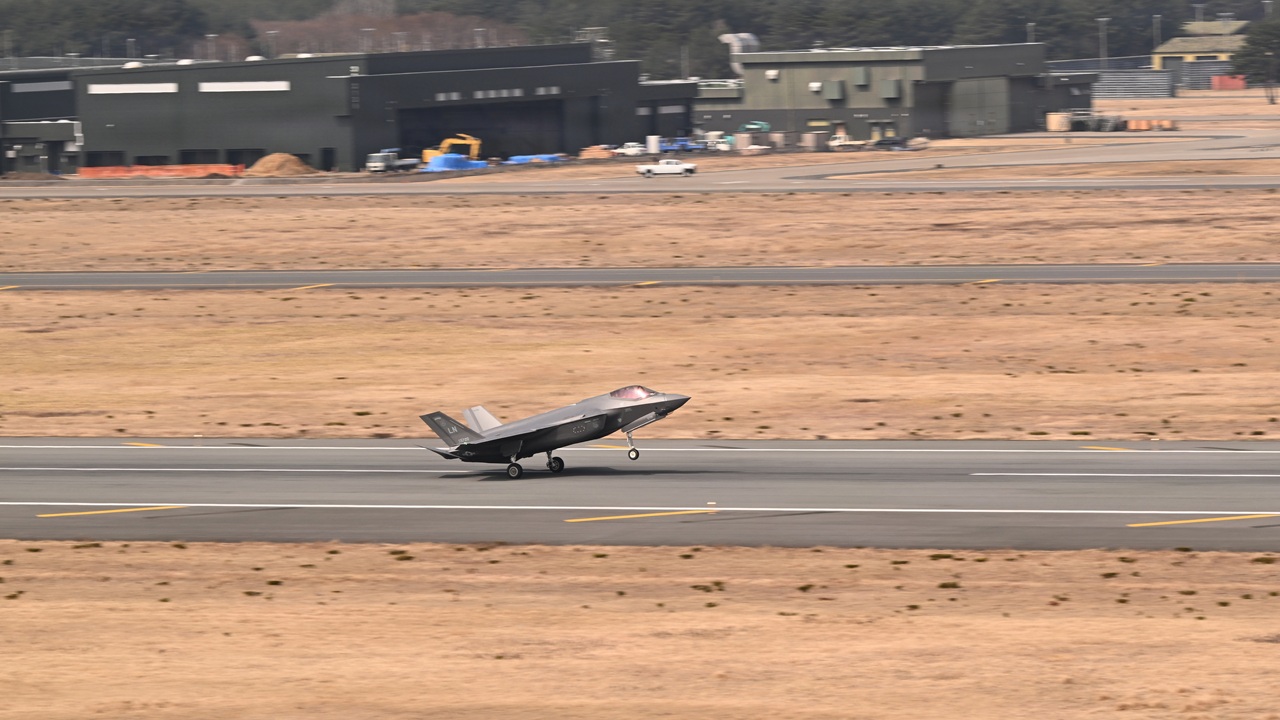
The first United States Air Force F-35 Lightning II fifth-generation stealth fighters are now ready to strike targets from Misawa Air Base, Japan.
The first F-35A, the conventional takeoff and landing variant of the Joint Strike Fighter, arrived at the base on Saturday. The US Air Force announced that their presence would mark “the beginning of the squadron’s transition to fifth-generation airpower and the permanent stationing of the Joint Force’s most advanced tactical aircraft in Northern Japan.”
The arrival further supports the Department of the Air Force’s ongoing modernization effort, which included the retirement of the aging F-16C/Ds previously deployed to the base. The stationing of the multirole fighter further highlights the US military’s “ironclad commitment to the defense of Japan,” and would support US operations throughout the Indo-Pacific region.
“Bringing the F-35 to Misawa underscores our long-standing commitment to Japan and the region,” said US Air Force Col. Paul Davidson, 35th Fighter Wing commander. “It strengthens our ability to respond quickly and operate seamlessly with our Japanese partners.”
The F-35A’s Specifications
- Year Introduced: 2016
- Number Built: ~750 (F-35A only)
- Length: 51.4 ft (15.67 m)
- Wingspan: 35 ft (10.67 m)
- Weight (MTOW): 70,000 lb (31,750 kg)
- Engines: One Pratt & Whitney F135-PW-100 afterburning turbofan (40,000 lbf thrust)
- Top Speed: ~1,200 mph (1,930 km/h) / Mach 1.6
- Range: 1,350+ mi (2,170 km) with internal fuel
- Service Ceiling: 50,000+ ft (15,240 m)
- Loadout: Internal 25 mm GAU-22/A cannon, two AIM-120 AMRAAMs, and two GBU-31 JDAMs
- Aircrew: 1
The New F-35s Are Equipped for “Wild Weasel” Missions
The US Air Force further suggested that the F-35 will be employed as “Wild Weasels,” in which specialized aircrews and aircraft are dedicated to Suppression of Enemy Air Defenses (SEAD) and tasked with locating, identifying, and destroying enemy radar and surface-to-air missiles.
“The Wild Weasels stand ready to defeat any threat in our area of responsibility and beyond,” added Col. Jeromy Guinther, 35th Operations Group commander. “As you lay the foundation for Misawa’s upgrade to a fighter integration wing, remember your Wild Weasel legacy, stay ready and lethal, and continue to contribute to the Panther’s many generations of excellence. Cave Putorium!”
Misawa’s 13th and 14th Fighter Squadrons will continue to fly the SEAD mission, and the F-35As will feature the tail flash “WW” designating the role the aircraft will play.
“The F-35 was tailor-made to be a weasel platform,” said Lt. Col. John Widmer, 13th Fighter Squadron commander. “Where legacy platforms performed the Wild Weasel mission with bolted-on sensors or weapons, the F-35 was built from the ground up as a sensor platform with the sensor fusion and quarterback capability we bring to the fight.”
Forty-eight CTOL Lightning IIs will replace a total of 36 F-16C/D Fighting Falcons.
“As far as transitioning from the F-16 to the F-35, the stealth capability is obviously one of the biggest things,” said Widmer. “The sensor package we bring to the fight allows us to sense the threat and manage the entire spectrum of what the enemy is fielding at us right now. It’s constantly updating, constantly getting upgraded, and as we continue forward, it’s the place I want to be if I need to go to war.”
The Air Force stressed that the “excels at operating and surviving in advanced threat environments,” and that “its aerodynamic performance and fully integrated avionics deliver next-generation stealth, improved situational awareness and reduced vulnerability for US and allied forces.”
Wild Weasels are often the first in and last out, flying ahead of or with strike packages to neutralize threats before they can shoot down other aircraft. The 35th Fighter Wing supports operations in the Pacific and Southwest Asia.
About the Author: Peter Suciu
Peter Suciu has contributed to dozens of newspapers, magazines and websites over a 30-year career in journalism. He regularly writes about military hardware, firearms history, cybersecurity, politics, and international affairs. Peter is also a contributing writer for Forbes and Clearance Jobs. He is based in Michigan. You can follow him on Twitter: @PeterSuciu. You can email the author: [email protected].