The Make America Healthy Again (MAHA) movement has captured a popular mood. The idea that prevention is cheaper than cure is attractive, and social media has created a big market for wellness “hacks.” As a result, enthusiasm is surging for better nutrition, a cleaner environment, and tighter regulations on the drug industry.
But despite generating widespread appeal, MAHA has achieved little impact on public policy. That’s because easy and effective interventions to target its concerns were already enacted many years ago. What remain are initiatives that tend to be trivial, off-base, costly, or fiercely opposed—particularly by more established elements of the Republican coalition.
Finally, a reason to check your email.
Sign up for our free newsletter today.
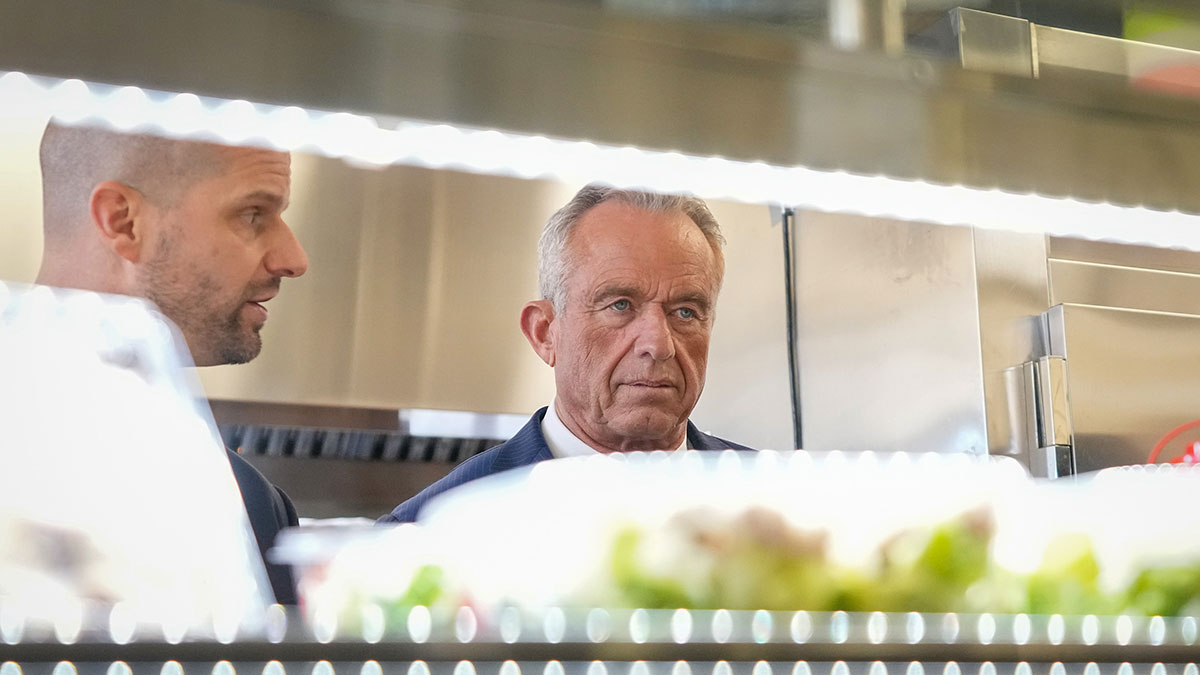
Robert F. Kennedy Jr. is an unusually high-profile secretary of Health and Human Services (HHS). When he is not joining celebrities like Mike Tyson and Kid Rock to urge Americans to “get active and eat real food,” the secretary is often flexing shirtless for social media videos. His official X account has roughly 25 times more followers than that of his predecessor, Xavier Becerra.
Kennedy’s concerns about chronic illness have largely defined his public presence. A MAHA Commission he chaired issued a “MAHA Report” arguing that rising chronic disease among children calls for federal preventive action. It cited a federal study of American kids that found that 32 percent are overweight, 22 percent have allergies, and almost 4 percent have Autism Spectrum Disorder.
The “MAHA Report” suggests several sources of concern. It notes that nearly 70 percent of children’s calories now come from ultra-processed foods, which it blames for “contributing to obesity, diabetes, and other chronic conditions.” It warns of exposure to synthetic chemicals, which it suggests are “linked to developmental issues.” And it complains of overmedicalization “driven by conflicts of interest in medical research, regulation, and practice.”
Many Americans share these concerns. A recent poll found that 78 percent of MAHA-supporting parents and 62 percent of non-MAHA parents see highly processed foods as a major threat to children’s health; 61 percent and 43 percent, respectively, feel the same about overprescription. Interestingly, non-MAHA parents are more likely to view pollution as a major threat, 56 percent vs. 48 percent.
Yet few of these challenges are new. As a result, the bulk of MAHA’s proposals to address them represent the extension of time-worn strategies that have not been terribly effective. HHS proposes expanding research on the causes of chronic disease; new studies on the cumulative impact of environmental toxins; and more regulatory oversight of the pharmaceutical industry.
Additional labeling regulations, for example, are unlikely to reduce significantly the prevalence of chronic disease. People already know that Twinkies are unhealthy, and Americans don’t want to listen to politicians hectoring them to give up junk food—as Michelle Obama and Michael Bloomberg have already discovered. While 32 percent of kids are overweight, less than 7 percent of parents are concerned about their children’s weight being too high.
MAHA is also isolated within the GOP coalition. RFK was a Democrat until 2023, and the bulk of Trump voters supported the president long before any association with the movement. MAHA fits awkwardly within a Republican Party that has long been home to business interests opposed to regulatory activism in the name of environmentalism and public health.
As a result, the movement has struggled to effect policy change. The only new law mentioned on HHS’s “Year One Of MAHA” website is legislation allowing the inclusion of whole milk in the school nutrition program. The Department of Agriculture boasts of its contribution to MAHA that it had “circulated a memorandum reminding and clarifying schools, sponsors, and other institutions participating in child nutrition programs of the many ways to procure local, unprocessed foods including fruits, vegetables, and proteins.”
Nor has MAHA commanded passionate support from the White House. Trump may have appointed Kennedy to HHS because Kennedy’s endorsement in 2024 provided a critical surge in support that helped him get elected. Between 4 percent and 6 percent of former non-Trump voters cited MAHA to explain why they cast their ballots for the GOP candidate. But while embracing MAHA was a successful electoral strategy, Trump is far from an environmentalist, a fitness freak, or a health food obsessive.
Trump ignored MAHA when he issued an executive order to promote the production of the herbicide glyphosate, which RFK had previously identified as “one of the likely culprits in America’s chronic disease epidemic.” The administration cited national security concerns, as well as implications for agricultural productivity, farmers’ welfare, and food prices. The Environmental Protection Agency similarly cited cost concerns to roll back dozens of regulations on water and air quality.
Then there is Kennedy’s opposition to vaccine mandates, with which most Americans disagree, and which has been blamed for an increase in measles cases. That may explain the secretary’s declining popularity: in March 2024, RFK was viewed positively by 45 percent of Americans, and only 36 percent held an unfavorable view. Two years later, his support has declined to 37 percent, and half of Americans disapprove. This has led the White House to tighten oversight on RFK and declare itself “kind of done with the vaccine issue.”
The influence of the MAHA movement within the Trump administration appears to be waning. Yet its core concern for public health remains broadly appealing. If RFK’s voters proved important in 2024, politicians will surely be eager to appeal to them again.
Photo by Jay Janner/The Austin American-Statesman via Getty Images
City Journal is a publication of the Manhattan Institute for Policy Research (MI), a leading free-market think tank. Are you interested in supporting the magazine? As a 501(c)(3) nonprofit, donations in support of MI and City Journal are fully tax-deductible as provided by law (EIN #13-2912529).
Source link