Jean-Louis Berlandier was a French Catholic who journeyed to America and lived in northern Mexico near the Texas border. From the 1820s to the early 1850s, he was the only great savant in the region: a physician, apothecary, botanist, meteorologist, ornithologist, and pious scientist, as his many manuscripts reveal. He served as a surgeon during the Mexican War. As a lay missionary, he worked tirelessly to heal the sick of the Rio Grande Valley.
To Preach to All Creation
St. Mark’s Gospel records Jesus’s commandment to His disciples: “Go into all the world and preach the gospel to the whole creation.” The Greek word ktisis literally means “creature” or “creation.” How does one preach to the whole Creation?
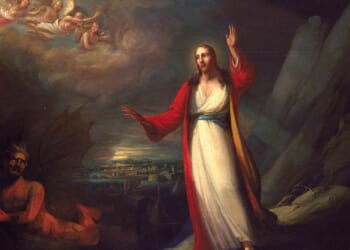
St. Luke records that Jesus told the Pharisees, who were attempting to quiet His followers, that even if they were silent, the surrounding stones of the natural environment would cry out. A legend of St. Francis of Assisi records that at one point he was able to tame a ferocious wolf through his gentle words. St. Anthony of Padua preached to fish eager to hear the Gospel. Of course, these are apocryphal accounts symbolic of the actions of St. Francis and St. Anthony, but they reveal what Pope Francis declared:
Every creature is thus the object of the Father’s tenderness, who gives it its place in the world. Even the fleeting life of the least of beings is the object of his love, and in its few seconds of existence, God enfolds it with his affection.
Pope Francis reflects the wisdom expressed by Pope John Paul II, that all creatures have a spiritual presence. This is in accord with the words of St. John that, through Jesus the Logos, all things are made.
Since Vatican II, there has been a call for lay Catholics to be more active in spreading Christ’s message. Could this activity involve not just spreading the Word to other humans, but to the whole Creation?
Encountering Piety through Creation
We find an example of one who did this in Jean Louis Berlandier. Though overwhelmed with piety for God’s Creation, he started out a skeptic. Berlandier slowly eschewed his skepticism and embraced his role as a lay missionary by using his talents for healing and by discovering and appreciating God’s wonders. In other words, he grew to love the Creation, per Christ’s Commission.
A native of France but trained as an artist and botanist in Geneva, Berlandier was sent by Swiss scientists to Mexico to explore the flora, fauna, and peoples. There he joined the Mexican Boundary Commission to investigate the remote province of Texas, which was under contention with the United States. He settled down in Matamoros, Mexico, on the Rio Grande.
It was during this time that he slowly changed, in part because he found a wife and had children. He became less jaded. He embraced his role as a healer and savant.
Berlandier, as his many surviving documents reveal, was a genuinely good man, someone who illustrates for Christians the Great Commission in that he was fascinated by the natural environment, grew to love all aspects of the Creation, used his talents to discover and appreciate God’s wonders, and became something of a lay missionary, bringing the Gospel to the whole Creation as an apothecary, physician, and surgeon.
Encountering Piety in the Sacraments
Berlandier fell in love and lived with a woman, Beatriz Concepción Villaseñor, for many years, having children with her. She wanted them baptized, which he agreed to, and eventually she convinced him to receive the sacrament of marriage.
An important part of Berlandier’s renewed faith was a visit to a parish church in Tantoyuca, Tamaulipas, and his experience of a Christmas Eve Mass in 1830.
The Scholars’ Rejection of Piety
Science by the time of Berlandier’s life was influenced by the work of great French scholars, including Georges Cuvier, the paleontologist, who was a proponent of the extensive age of the earth and that periodic catastrophes had caused widespread extinctions over the ages. Another French scientist, Jean-Baptiste Lamarck, was a pre-Darwinian proponent of changes in flora and fauna species over time.
These two helped overturn the notion of the Chain of Being, a medieval concept that God had created all things and that the universe is perfect in its plentitude of life that never alters. Thus, scientists began to attack the traditional teachings of the Church, and many were educated to believe that the old Scholasticism of the Church, and the reliance on faith and the Bible, were preventing scientific progress.
Berlandier’s Conversion
Berlandier was educated in such ways, hence his skepticism about the Church and its “superstitions” that kept the people in ignorance. However, as he traveled Mexico, he witnessed the simple faith of the people and their reliance on the advice and teachings of the local padres.
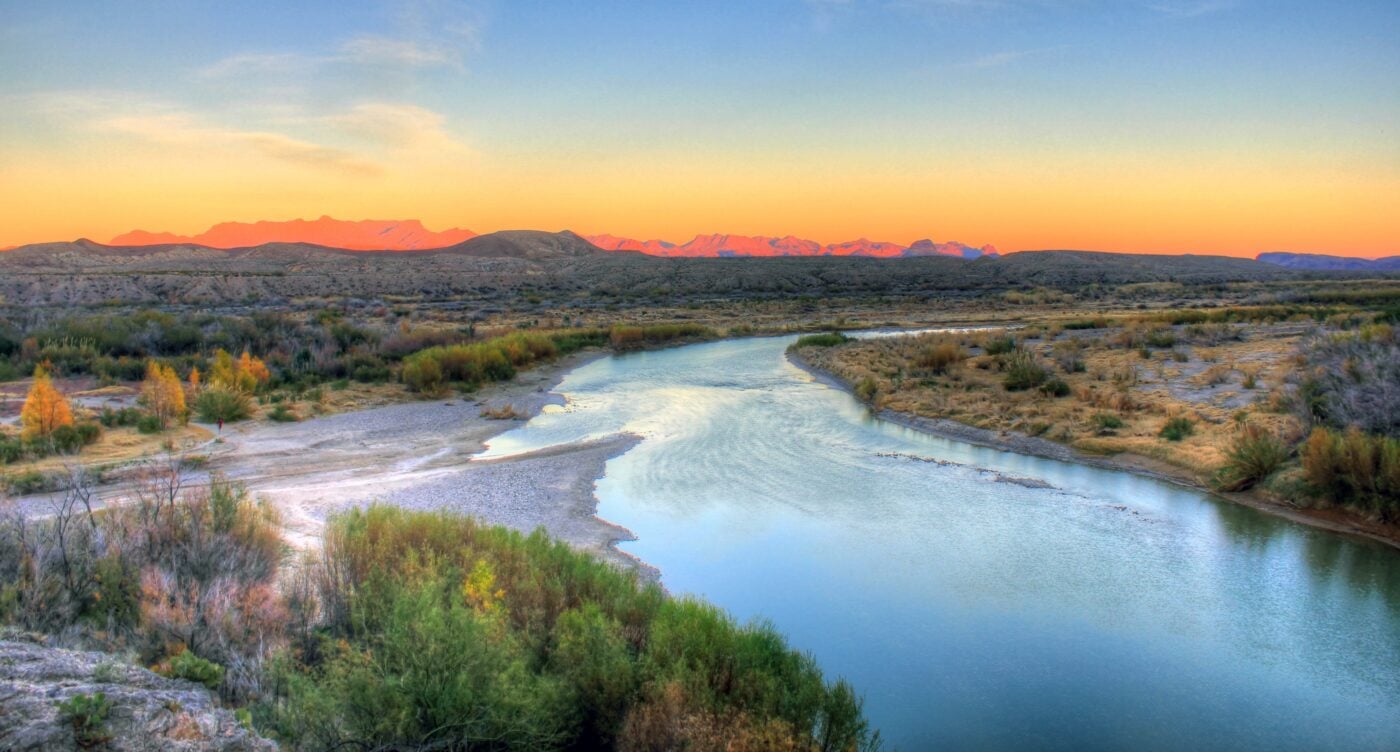
His knowledge of nature grew as well as he traveled across the Sierra Madre Occidental, journeyed along the Gulf Coast, traversed the chief rivers of northern Mexico and Texas, and came to discover new species of fauna and flora, learning their healing properties from locals.
He learned to have an empathetic understanding of the peoples and natural environment of America and had something of a child’s fascination with God’s Creation. He sought knowledge of everything, all fields of study, and made great collections of observations and experiments of natural phenomena. These combined to engender not just a scientist’s search for knowledge but a pious scientist’s search to understand God through understanding nature.
Berlandier’s Service of Creation
Many physicians in the early 19th century, and especially in America, were apothecaries without formal training. Berlandier picked up the physician’s expertise by his travels, his collections of flora, his experiments, and observations. By the time he settled for good in Matamoras, around 1830, he was the most knowledgeable apothecary in the Rio Grande valley.
He learned about the major illnesses of the time—cholera, typhoid, malaria—by trial and error. He became an ad hoc healer. He began to treat the sick and even performed the roles of the surgeon, which often involved bleeding patients, treating serious wounds, and amputating infected bodily parts.
One visitor, who arrived at Matamoras shortly after Berlandier’s death, learned that he “was universally beloved for his kind amiable manner and regard for the sick poor of that city, being always ready to give advice and medicine to such without pay.”
During the Mexican War, Berlandier became a medical officer and operated something like a triage unit, treating both the Mexican and American wounded.
Berlandier had become a lay missionary, although he might have been surprised to learn that. He treated young and old, Indian, Mestizo, Tejano, Anglo-American. He treated others, and hence taught love and goodness to all.
Berlandier befriended a Kickapoo warrior on one of his journeys into Texas. The Kickapoo had arrived at the settlement of San Antonio, seeking his wife who had run off with a new lover, the Kickapoo’s friend. He told Berlandier that he simply wanted to get what had been taken from him, but in actuality, when he found them, he killed them both.
He came to spend much time at Berlandier’s dwelling at Matamoras, staying with him for extensive periods. Eventually, he became ill with a mortal illness. Having resided with Berlandier for so long, he desired to cleanse his soul from evil, detach himself from his old tribal customs and superstitions. Berlandier fetched the local priest and watched as his ill friend was baptized in the Catholic Faith and had the sacrament of divine unction prayed over him. His friend glorified God in his last moments.
Berlandier’s example reveals how most scientists of 19th century America, whether Catholic or Protestant, tended to be pious seekers of God, using their knowledge and wisdom for His service. In this role, these pious scientists became lay missionaries to the peoples, and to all creatures, of North America.
Editor’s Note: Read the previous installments of The Pious Scientist series here.
Image from Wikimedia Commons