Unlike conventional “dumb” landmines, “smart” ones remain inert when friendly or neutral targets are nearby—potentially saving civilian lives long after a conflict ends.
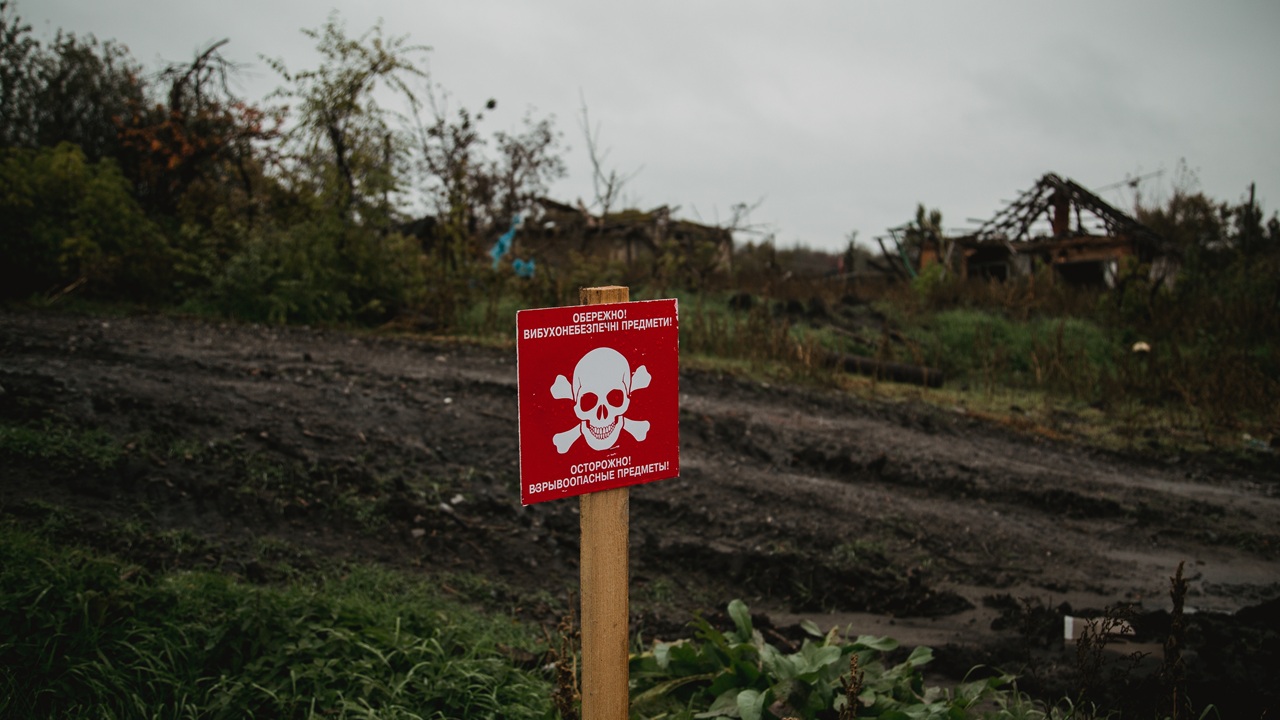
Last year, NATO members Estonia, Latvia, Lithuania, Finland, and Poland each initiated withdrawal from the Ottawa Convention that banned the production and deployment of anti-personnel landmines. The joint move, criticized by Human Rights Watch at the time, was driven by security fears following Russia’s unprovoked invasion of Ukraine.
All of those nations border Russian territory and have indicated that the use of anti-personnel mines was to deter aggression and to fortify NATO’s eastern flank.
“We have no other choice,” Polish Deputy Defense Minister Paweł Bejda said of the country’s decision to deploy anti-personnel mines along its borders with Russia and Belarus, as part of its “Eastern Shield” defenses.
“The situation at the border is serious. I am referring to the Polish-Belarusian and Polish-Russian borders,” Bejda said. “This will be one of the elements of the ‘Eastern Shield.’”
Unlike Russia—which has haphazardly spread anti-personnel landmines along the frontier with Ukraine, resulting in a threat that could remain for decades after the current war ends—the NATO members are seeking to employ a different type of landmine. The Poland-based MBF Group, working with partners in Estonia and supported by Ukraine, is seeking to create a “consortium” to develop “smart minefields.”
MBF Group is now leading the effort to bring together a team of other companies to design and produce minefields that can be deployed, controlled remotely, and even deactivated. Each mine could be outfitted with smart technology similar to what is found in mobile phones and other devices. In this case, it would consist of components “such as seismic and acoustic detection modules, remote activation capabilities, and distributed control systems based on encrypted mesh radio networks,” Ukrainian military news outlet Militarnyi.com reported.
The technology has reached the “Technology Readiness Level 7” (TRL 7), which means that the prototype has already been demonstrated in real-world conditions.
Smart Anti-Tank Mines Are Already in Service
In late 2024, the Lithuanian Armed Forces announced that it had received the initial batch of the Sentry autonomous anti-tank mines. The ordnance, which the Finnish-based Forcit Defence produced, was capable of determining whether a specific armored vehicle was friendly or not—and making a decision on whether or not to detonate accordingly.
The mines were also part of a counter-mobility effort to deter a feared Russian invasion into the Baltic states, and could create anti-access/area denial (A2AD) zones where friendly forces could still move.
“Sentry mines are a next-generation remote-controlled antitank mine system that combines advanced encrypted mesh connectivity and fierce target penetration capacity,” the Lithuanian Ministry of National Defense explained in September 2024. “The equipment recognizes and identifies hostile targets, autonomously sets detonation time, thus causing maximum damage to hostile equipment.”
The US Army has also been developing smart land mines that will eventually replace the old-school, or “dumb,” mines used for more than a century.
“The program actually runs nearly half of all munitions from non-lethals to hand grenades to shoulder-fired rockets and counter-explosive equipment,” according to the Army Times.
It is unclear how much the US efforts have progressed, and last year, the Pentagon revised its policies on how it might employ landmines, including both anti-tank and anti-personnel. However, even as some countries, such as Russia, may not care about collateral damage, smart minefields are likely to be the future of warfare—allowing friendly personnel to pass safely and preventing unnecessary casualties after hostilities end.
About the Author: Peter Suciu
Peter Suciu has contributed to dozens of newspapers, magazines and websites over a 30-year career in journalism. He regularly writes about military hardware, firearms history, cybersecurity, politics, and international affairs. Peter is also a contributing writer for Forbes and Clearance Jobs. He is based in Michigan. You can follow him on Twitter: @PeterSuciu. You can email the author: [email protected].