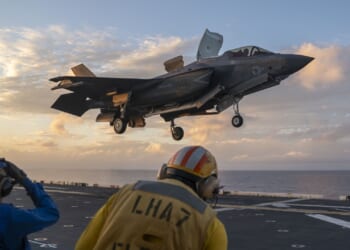
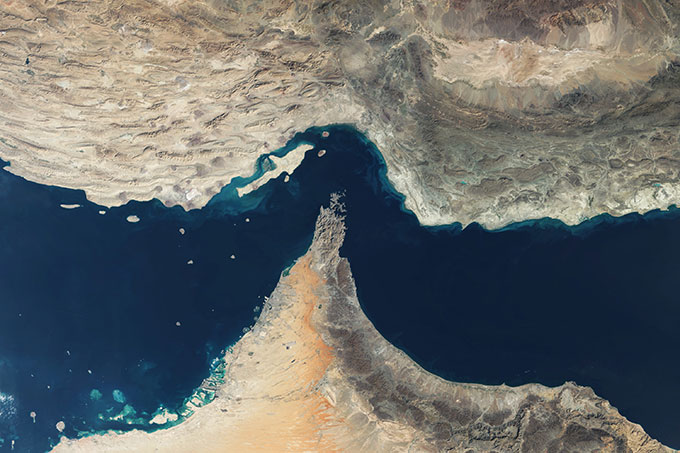
History records the seventeenth-century Battle of Hormuz as one of the biggest naval battles of that era, fought between the dominant powers of Portugal and an Anglo-Dutch alliance. Today’s battle at the Strait of Hormuz, as all observers now know, is at the dominant center of global energy flows. The war with Iran and closure of the strait has, predictably, halted nearly 20 percent of global oil in its tracks, which makes it history’s biggest oil-supply interruption.
For calibration, the Arab oil embargo of 1973–74, triggered by a different Middle East war, resulted in nearly 10 percent of global oil supply being taken off the market for five months. That disruption’s combination of duration and scale eventually led to a tripling of oil prices, a global recession, and in due course, a fusillade of misguided energy policies. If the Strait of Hormuz remains closed long enough, we’ll see similar consequences.
Finally, a reason to check your email.
Sign up for our free newsletter today.
The first energy lesson of this battle should be obvious: oil remains vital to modern civilization. It isn’t just that petroleum is the world’s largest source of energy and most-traded commodity. Oil is essential in the supply chains of everything, from lattes to large language models. It is even critical for building the machines designed to replace oil.
Thus, when oil is expensive, it’s broadly inflationary. Without oil, systems everywhere grind to a halt.
However, advocates of the so-called energy transition are proffering a different lesson. For transitionists, the battle of Hormuz “underscores,” as Microsoft’s global head of energy recently said, the need for renewable energy. We are already hearing loud calls to accelerate or reanimate “quit oil” policies—funding alternative fuels, forcing fuel efficiency or conservation, and even implementing oil rationing or price controls.
There are many uncertainties about how and when the current battle of Hormuz will resolve. But when it comes to the ultimate fallout for energy markets, facts and history point to a different lesson than the transitionists’ “quit oil” nostrums.
Consider the two key results from the more than $10 trillion spent in pursuit of the energy transition over the past two and a half decades. First, per capita global oil use remains unchanged. To be precise, it’s down a statistically irrelevant 2 percent in a world that today has far more people in a far bigger economy. Thus, secondly, total global oil use has risen 30 percent. To put that in context, just the increase in demand is equal to double the European Union’s total oil use.
None of the “quit oil” strategies worked, at least in terms of meaningfully reducing oil demands at any price, never mind at costs economies will tolerate. In short, the world is more dependent on oil now than when the grand and expensive energy-transition experiment began.
At the pinnacle of that experiment, the EV enthusiasms that generated massive subsidies and countless billions of dollars in automotive industry losses resulted in the global automobile fleet having just a 3 percent share that’s all-electric. Even if, one day, one-half of all cars on the planet convert to battery-only propulsion, simple arithmetic shows that this would reduce global oil use by barely 10 percent.
What is the alternative for de-risking economies from the inevitability of another oil price spike in the future? The answer is obvious: economic insulation comes from encouraging greater oil production with greater geographic diversity. And it comes, concurrently, from expanding the size of strategic oil storage, which in turn requires yet more production.
Both strategies entail a philosophy that inverts what policymakers in both Europe and the United States, as well as at the International Energy Agency (IEA), have been fixated on for over two decades. Fortunately for the world’s economies, the momentum is already shifting.
Take, for example, rising development of Argentina’s high-quality shale fields, similarly offshore South America (especially Guyana), and now, perhaps, Venezuela, as well as the offshore production of numerous African nations. Even Canada now seems eager to expand production and exports from its virtually unlimited oil sands.
There are also opportunities to diversify, even rapidly, the delivery paths in the Middle East away from the Strait of Hormuz. How? Build more pipelines to bypass the strait.
At this writing, up to 5 million barrels of oil per day are on track to be re-routed to Saudi Arabia’s 750-mile Petroline pipeline, which will take oil overland away from Persian Gulf ports to one on the Red Sea. The UAE, too, has a 250-mile pipeline that can carry nearly 2 million barrels per day, bypassing the strait. That combination will cover nearly half the trapped crude, but far more is needed, and soon.
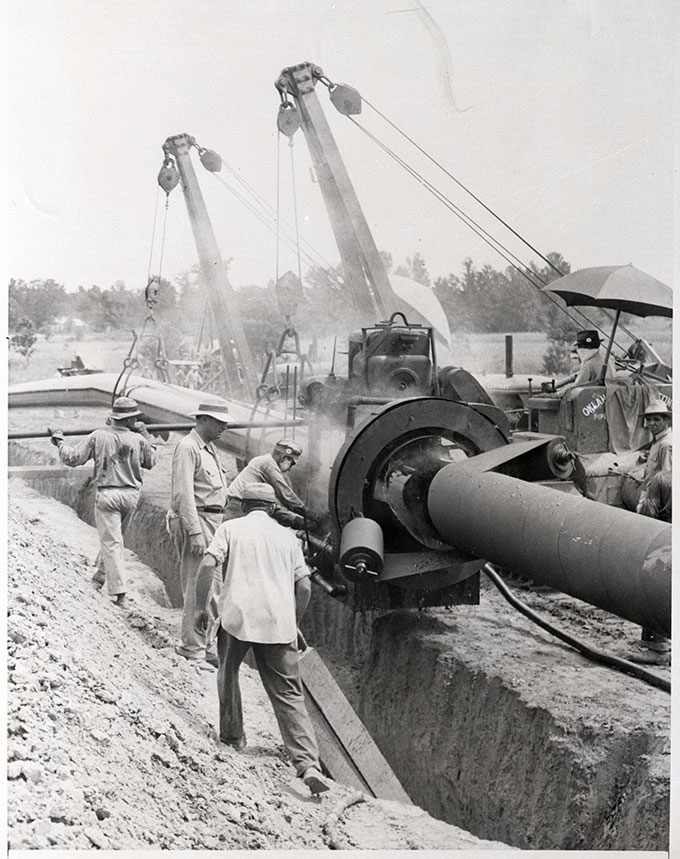
History offers an example of how fast long-distance pipelines can be built. In 1942, immediately after the United States entered World War II, American engineers built the Big Inch pipeline from Texas to New Jersey at a rate approaching 10 miles per day. At that pace—which one can imagine modern engineers matching, especially in the EPA-free zone of the Middle East—it could take just a few months to build another 750-mile pipeline, or even two, bypassing the Strait of Hormuz entirely. One hopes that the construction of new Mideast pipelines is already planned, or even underway.
Storage, the other time-tested insurance against unexpected commodity interruptions, is a budgetary rather than technological issue. Last year, China announced plans to expand its domestic oil strategic storage to 1 billion barrels—roughly three months’ worth of that nation’s imports. The U.S. strategic reserve peaked at 700 million barrels a decade ago, hovering around that level until the Biden administration sold off about half of it to tamp down oil prices triggered by the combination of the Ukraine war and the inflation-inducing Inflation Reduction Act.
In the face of today’s oil crisis, the IEA and its member states (which includes the United States) announced an unprecedented 400-million-barrel reserve drawdown. While that alone can offset only a few weeks of congestion at the Strait of Hormuz, the pipeline bypass noted earlier will boost that to a few months of cushion. Doubtless, many political leaders and businesses would like a longer runway.
Odds are now high that many policymakers will reprioritize energy security over energy transition. That shift comes at the same time as the resurrection of the primacy of “affordability.” Political momentum, combined with engineering realities and market forces, may finally drain inflated enthusiasms for “quit oil” policies.
Top Photo by Elke Scholiers/Getty Images
Source link