Congress would need to approve the proposed $1.5 trillion budget—and seems skeptical of doing so, particularly amid salacious reports of how it spent last year’s budget.
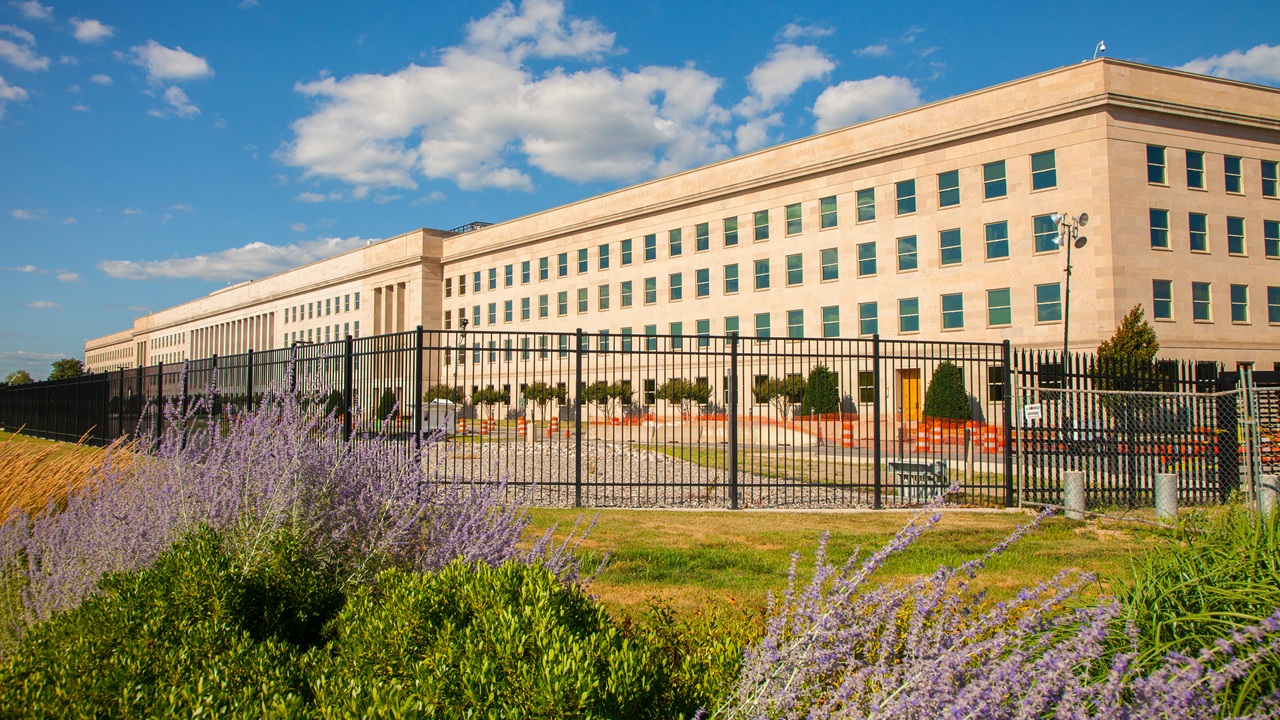
President Donald Trump has proposed increasing the Pentagon’s fiscal year 2027 (FY27) budget to $1.5 trillion, a whopping $500 billion increase from the already record-high 2026 budget. The increase would be necessary to fund high-ticket programs such as the proposed “Golden Fleet,” which would include the Trump-class battleships, and the ambitious “Golden Dome” missile shield.
Crucially, the massive budget would need to be approved by lawmakers, with critics on both sides of the aisle questioning whether such spending is necessary. Then there is the issue of how it would be spent, beyond those high-profile programs.
“I don’t see a $1.5 trillion budget coming through this Congress,” Rep. Adam Smith (D-WA), the top-ranking Democrat on the House Armed Services Committee, said on Tuesday. “If it did, it would set us up for some pretty big failures down the road.”
Smith is hardly alone in raising concerns about how the administration will tackle the national debt and increase defense spending without raising taxes.
The US Military Has No Shortage of Expensive Programs
The Department of Defense’s (DoD’s) wish list programs include:
- New sixth-generation manned fighters for both the US Air Force and US Navy;
- The Northrop Grumman B-21 Raider long-range bomber for the US Air Force;
- Aircraft carriers, frigates, and submarines for the US Navy; and
- The Golden Dome, which critics warn could cost $1 trillion just by itself.
Many of those programs will be funded over years or even decades, making their impact in a single year somewhat less than the full sticker price.
In addition, by some estimates, the ongoing “Operation Epic Fury” against Iran is costing DoD some $900 million per day. Given that it is unclear how long the conflict could last, it remains equally unclear what the final tally for this epic operation will cost.
Before FY27, DoD Must Address Reconciliation
Before the FY27 budget can be debated, the Pentagon is dealing with its reconciliation fund, which was approved last summer.
“Everything except for $1.3 billion in the $153 billion that’s been given to the Department of Defense by the One Big, Beautiful Bill Act has been apportioned and [has] been released to the services and program managers. And so that money is all starting to flow,” said Jules Hurst, the Pentagon comptroller and chief financial officer, at the recent McAleese annual defense programs conference in Arlington, Virginia.
Hurst added that, as the administration has turned to the FY27 budget, the $1.5 trillion may not be the initial request.
“It is not yet clear if that figure will be relegated to the base budget or the total will be reached when the administration delivers a forthcoming supplemental to pay for military operations in Iran,” Breaking Defense reported.
Instead, the White House may take a different course in finalizing its budget request.
“What we’re doing is we’re providing options of leadership, they need to decide if that’s additive or part of the $1.5 [trillion],” Hurst explained.
Congress Alarmed by Pentagon Spending Habits
Lawmakers are likely to be more wary of the massive budget request after it was reported this month that the Pentagon went on a $90 billion spending bender in September 2025, the final month of Fiscal Year 2025 (FY25). Big-ticket items from that spending spree included millions of dollars for crab and lobster meals, luxury office furniture, and a $100,000 grand piano for the Air Force Chief of Staff.
The problem lies in the way the Pentagon is funded. If it fails to spend the money it is appropriated in a certain year, it triggers an automatic funding cut the following year. In other words, the money is literally “use it or lose it”—giving DoD officials an incentive to spend every dollar before Fiscal Year 2026 began on October 1.
About the Author: Peter Suciu
Peter Suciu has contributed to dozens of newspapers, magazines and websites over a 30-year career in journalism. He regularly writes about military hardware, firearms history, cybersecurity, politics, and international affairs. Peter is also a contributing writer for Forbes and Clearance Jobs. He is based in Michigan. You can follow him on Twitter: @PeterSuciu. You can email the author: [email protected].