How will the Iran War impact the long-term strategies and trajectories of the Arab Gulf monarchies?
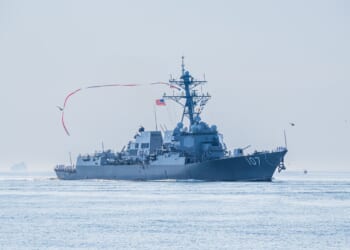
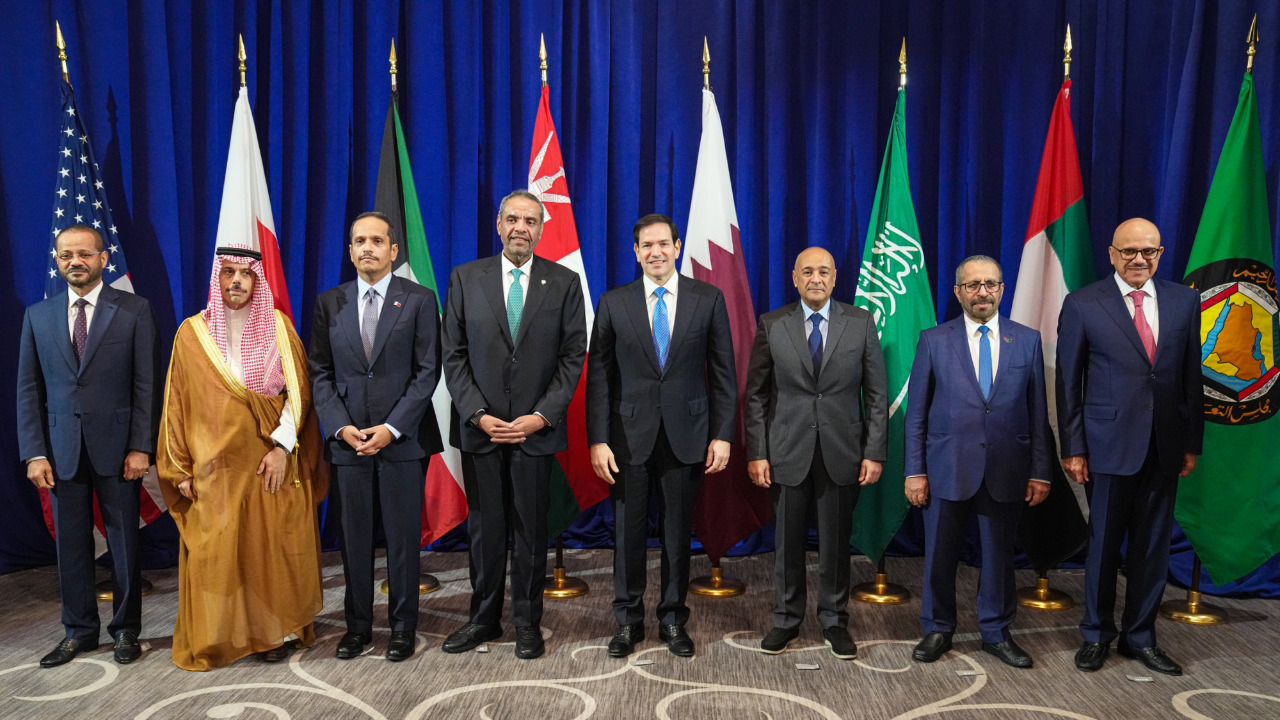
The US-Israeli strikes in Iran have put the Gulf States in Iran’s crosshairs. In an effort to divide the United States, Israel, and the Gulf monarchies, Iran has blockaded the Strait of Hormuz, potentially severing a fifth of the global oil supply, targeted cities like Dubai, Abu Dhabi, and Doha, and, more recently, struck critical oil and natural gas refineries and infrastructure throughout the Gulf. The consequent oil market chaos is raising questions about the long-term viability of the Gulf States as economic powers and US security partners.
How are the Gulf States reacting to the conflict’s escalation? How will the war affect the Gulf states’ view of the United States as a security and economic partner? Is there still a way out of the conflict at this point?
In this episode of Three Questions, CFTNI President Paul Saunders discusses how the Iran War has impacted the Gulf States with Abdulla Al Junaid, a longtime analyst of the region. Mr. Al Junaid is a former official of Bahrain’s National Unity Party.
Listen now on Apple, Spotify, or wherever you get your podcasts.
Read Abdulla Al Junaid’s recent articles for The National Interest here.
About the Speakers: Abdulla Al Junaid and Paul Saunders
Abdulla Al Junaid is a geopolitical columnist and commentator in Middle Eastern and international media. He is the former Department Head for Analysis and Policies at the National Unity Party in Bahrain, the former deputy director of MENA2050, an advisory board member of the German-Arab Friendship Association (DAFG), and a permanent committee member of the Germany-GCC Annual Conference on Security and Cooperation. He was a guest speaker at the German-GCC Annual Conference on Security & Cooperation, the Herzliya Conference, and the Abu Dhabi Strategic Forum. He is also an executive partner at INTERMID Consultancy (Bahrain).
Paul J. Saunders is president of the Center for the National Interest and publisher of The National Interest. His expertise spans US foreign and security policy, energy security and climate change, US-Russia relations and Russian foreign policy, and US relations with Japan and South Korea. Saunders is a senior advisor at the Energy Innovation Reform Project, where he served as president from 2019 to 2024. He has been a member of EIRP’s board of directors since 2013 and served as chairman from 2014 to 2019. At EIRP, Saunders has focused on the collision between great-power competition and the energy transition, including issues such as energy security, energy technology competition, and climate policy in a divided world. His recent projects at EIRP have included an assessment of Russia’s evolving role in the global energy system and a study of the linkages between China’s energy, climate, and national security policies.