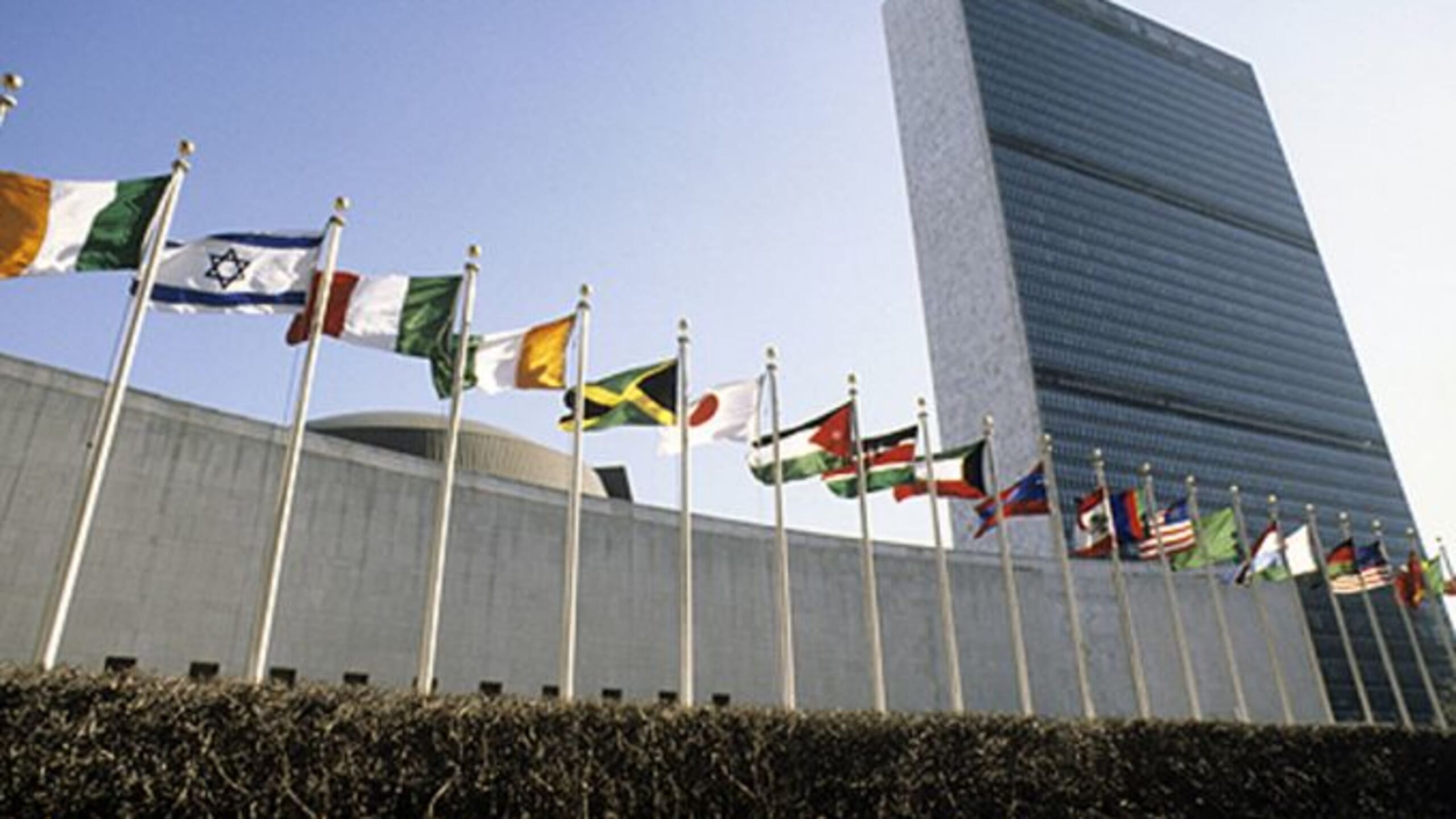
The Holy See urged a “holistic approach” to justice for women and girls centered on human dignity as the U.N. gender debate deepens.
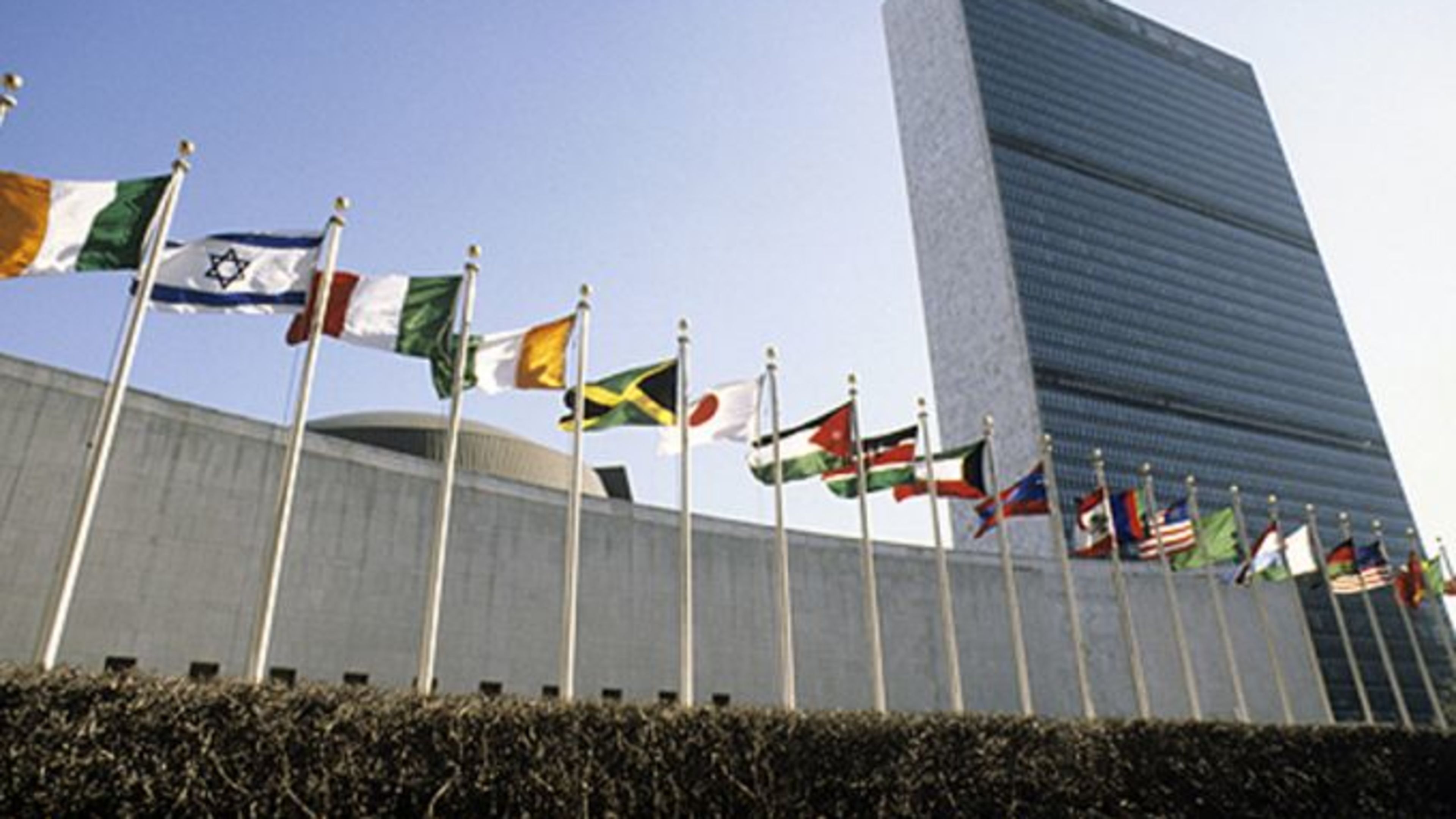
The 70th annual session of the United Nations Commission on the Status of Women (CSW) concluded March 19 in New York City amid significant disagreement over the definition of “woman.”
The commission adopted a text on “women, the girl child, and HIV/AIDS” but set aside a U.S.-sponsored resolution titled “Protection of Women and Girls Through Appropriate Terminology.” The proposal sought to define men and women according to biological sex, drawing on the 1994 Beijing Declaration and Platform for Action, which defined “gender” as “its ordinary, generally accepted usage, as referring to men and women.”
On March 19, 23 nations voted to table the U.S. resolution, 17 abstained, and only the United States, Chile, and Pakistan voted to advance it. The U.S.-sponsored measure would have rejected what it described as “subjective and ideological terminology.”
Earlier in the session, which ran from March 9–19, the CSW held an unprecedented recorded vote, requested by the U.S., on its Agreed Conclusions, a negotiated document typically adopted by consensus at the outset of each annual session.
The U.S. called for language acceptable to all participating nations and introduced amendments reflecting the policy of the Trump administration opposing “ambiguous language promoting gender ideology” as well as references to “sexual and reproductive health and rights,” which the U.N. uses to promote abortion and transgenderism.
The U.S. cast the sole vote against the Agreed Conclusions on March 9. Côte d’Ivoire, the Democratic Republic of Congo, Egypt, Mali, Mauritania, and Saudi Arabia abstained, while the remaining countries voted in favor. The U.S. amendments were not brought to a vote.
The Agreed Conclusions do not refer to motherhood or experiences unique to women and girls but include language on “universal access to sexual and reproductive health and reproductive rights,” widely understood to include abortion and contraception. In contrast, the Trump administration, citing a 2025 executive order, has sought to define women based on biological sex while opposing transgender medical interventions and policies allowing biological males in female-designated spaces.
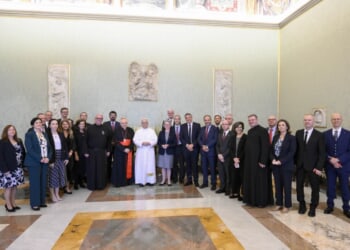
Addressing the commission on March 17, Archbishop Gabriele Caccia, the Holy See’s permanent observer to the United Nations, called for a “holistic approach” to justice for women and girls.
“It also involves addressing the root causes that put them at risk, prevent them from seeking justice, and ultimately undermine their God-given human dignity,” he said.
Stefano Gennarini of the Center for Family and Human Rights (C-FAM) told EWTN News that the European Union used procedural tactics to block U.S. efforts to define “woman” and exclude abortion-related language.
U.S. Ambassador Dan Negrea, who serves as the representative of the United States to the United Nations Economic and Social Council, said: “The United States cannot in any way consider the document presently submitted to the commission as if it were agreed conclusions.”
He criticized what he called “ambiguous language promoting gender ideology,” adding that undefined references to “sexual and reproductive health” imply abortion.
“How do we entrust the women and girls of the world to an agency that denies the biological realities of a woman?” Negrea asked. He proposed that “gender” be understood solely as referring to men and women based on biological sex rather than subjective gender identity.
During the conference, several nations raised concerns about the wording of the Agreed Conclusions, noting unprecedented disagreement over gender-related language.
On March 19, Bethany Kozma of the U.S. Department of Health and Human Services told delegates: “We are disappointed that the commission did not adopt the Agreed Conclusions by consensus this year. … We will not stand by as malicious forces use multilateral organizations to promote their ideologies and social agendas, obstructing nations’ ability to exercise their national sovereignty.”
“It’s the policy of the U.S. to recognize two biological sexes — male and female. To achieve this, we use clear and accurate language that recognizes that women are biologically female and men are biologically male. Sex isn’t interchangeable; it is, rather, irreplaceable. The differences should be celebrated, appreciated, and respected,” she said.
Kozma added that the administration is committed to families, women’s health, and protecting children “at all stages of life and reaffirms there is no international right to abortion.”
Malaysia and Namibia also expressed regret over the lack of consensus. At times during the session, delegates responded with both applause and audible booing.
For decades, the U.N. has expanded the use of the term “gender” in its documents while promoting global access to abortion and contraception.
In its own summary of the final day, the U.N. stated: “The erosion of consensus signals a willingness to break with foundational language agreed at the historic 1995 Fourth World Conference on Women, which saw the adoption of the Beijing Declaration and Platform for Action, considered the most comprehensive global framework for women’s empowerment and gender equality.”
Daniela Garcia of CitizenGo told EWTN News that the recorded vote marked a break with past global consensus on gender. While the Agreed Conclusions are not binding, she warned: “They remain very dangerous because these dictate where the money goes to U.N. agencies to promote abortion and contraception.”
Groups supporting the Agreed Conclusions included the International Planned Parenthood Federation; Amnesty International; Fos Feminista; Global Trade Unions Caucus; and the Lesbian, Bisexual, Trans, and Intersex Caucus.
Gennarini said: “The Commission on the Status of Women is where the fight against gender ideology will be won or lost.” He added that international engagement is essential, arguing that U.N. policy discussions influence national laws and priorities.
Grace Melton of The Heritage Foundation told EWTN News that debates over language have practical consequences.
“We’ve seen concrete examples in what happens to women’s private spaces. When access is based on gender identity, men and boys can enter women’s locker rooms, bathrooms, and domestic abuse shelters,” she said.
She added that courts in the United States and elsewhere sometimes cite U.N. positions, including in legal arguments related to abortion.
Rebecca Oas of C-FAM said countries at the commission faced pressure from the European Union, which funds programs related to abortion, contraception, and development.
“The presence of serious disagreement undermines any claim of universal agreement,” she said, adding: “Even if they win this vote, they have ultimately lost the issue.”
Anna Derbyshire of CitizenGo told EWTN News that, although the conclusions are nonbinding, they can still influence policy debates.
The outcome of this year’s session highlighted growing divisions among member states and marked a departure from the consensus that has long characterized the commission’s work.
If you value the news and views Catholic World Report provides, please consider donating to support our efforts. Your contribution will help us continue to make CWR available to all readers worldwide for free, without a subscription. Thank you for your generosity!
Click here for more information on donating to CWR. Click here to sign up for our newsletter.