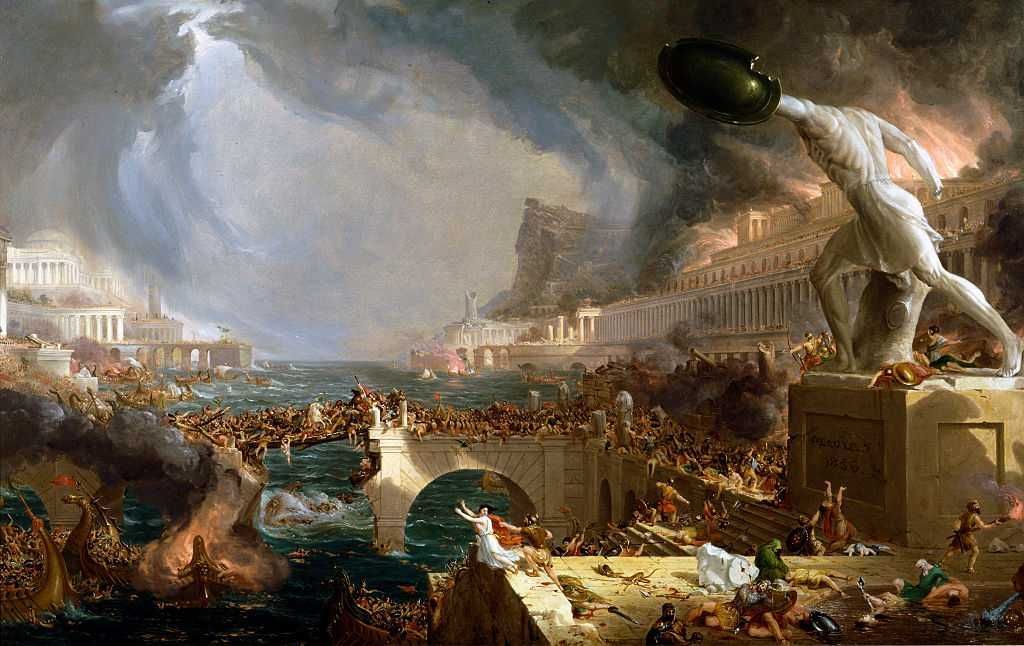
Radical progressives love to say the United States has no culture of its own — only whatever happens to be popular at the moment. If America amounts to little more than a consumer brand, then why do so many anti-American activists talk less about tweaking our politics and more about erasing Western civilization altogether?
America isn’t distilled water. It carries a civilizational inheritance. That fact explains why the people who hate the American project so often hate Western civilization writ large.
A country can’t treat open hostility to its civilizational foundations as harmless expression while expecting those foundations to survive.
A case in point: Mahmoud Khalil, the pro-Palestinian activist and apologist for Islamic jihad who led a coalition at Columbia University called Columbia University Apartheid Divest. The group’s stated goal is the “total eradication of Western civilization.” That goal raises the obvious question: Why the West? Why not simply “America”?
Because, for many activists in this mold, America represents the West at full strength — the most successful expression of the Western tradition.
America as the West’s culmination
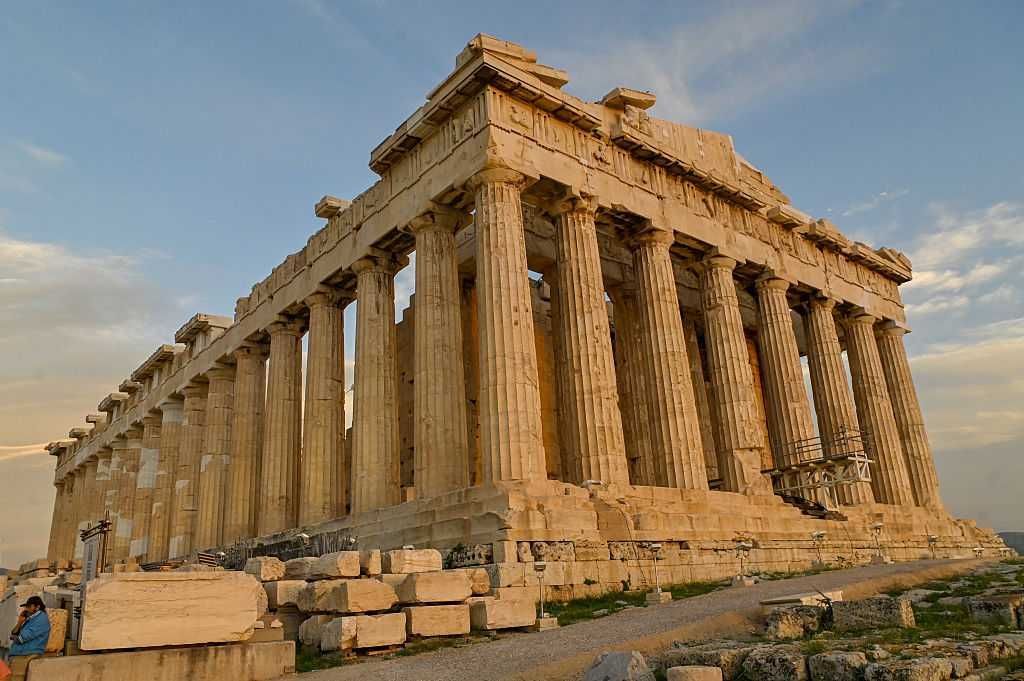
In “The Roots of American Order,” Russell Kirk argued that the United States fused traditions from key centers of Western thought and life: Jerusalem gave us a Judeo-Christian moral order and the idea of covenant under God. Athens bequeathed reasoned inquiry and ordered thought. Rome passed down republican government and the rule of law. London developed parliamentary practice and secure property rights under the common law.
In Philadelphia, America’s founders combined those inheritances into a constitutional republic built around Judeo-Christian concepts of contract, incorporation, property, and ordered liberty. Put simply, America did not emerge from nothing. It grew out of a specific civilizational soil.
Why the West wins — and gets blamed
Many non-Western societies struggle under political and economic systems that concentrate power, block opportunity, and punish initiative. When institutions work well in those places, they often resemble Western inheritances: stable law, predictable property rights, accountable governance.
Daron Acemoglu and James A. Robinson, the authors of “Why Nations Fail: The Origins of Power, Prosperity, and Poverty,” summarized the phenomenon in more politically correct terms, arguing:
Nations fail primarily because of extractive political and economic institutions that concentrate power and wealth in the hands of a few elites, stifling innovation, incentives, and broad-based economic growth. Unlike inclusive systems that foster prosperity, extractive regimes discourage investment and education, creating a “vicious cycle” of poverty and political instability.
That reality should invite honesty. Instead, it often produces resentment.
Under the reigning narrative, Western culture becomes “colonization,” “genocide,” and “taking” — a catch-all scapegoat for failures at home. That story also ignores inconvenient facts, including that Western colonialism had a relatively brief modern run and that many Western countries ultimately divested themselves of empires while insisting — at least in principle — on freedom and sovereignty.
So the West gets blamed for the world’s troubles, while the West remains the place millions still want to move to.
RELATED: What will replace the old world order?
 Milos Bicanski/Getty Images
Importing anti-Western radicalism
That leaves America with a growing problem: activists and migrants who embrace America’s freedoms while rejecting the civilization that produced them.
The Trump administration sought to remove Khalil, arguing that his presence created “adverse foreign policy consequences.” An activist judge later ordered his release from detention, and the useful idiot New York City Mayor Zohran Mamdani (D) publicly celebrated him at Gracie Mansion.
Whatever one thinks of that specific case, the larger principle holds: A country can’t treat open hostility to its civilizational foundations as harmless expression while expecting those foundations to survive.
A nation that loses confidence in its roots will not protect them — and a nation that refuses to protect them will not keep them.
If the United States wants to survive beyond President Trump’s current term, it needs to recover a healthy pride in its Western inheritance and shape immigration policy with that reality in mind. A society that invites people who openly seek its destruction invites its own decline.