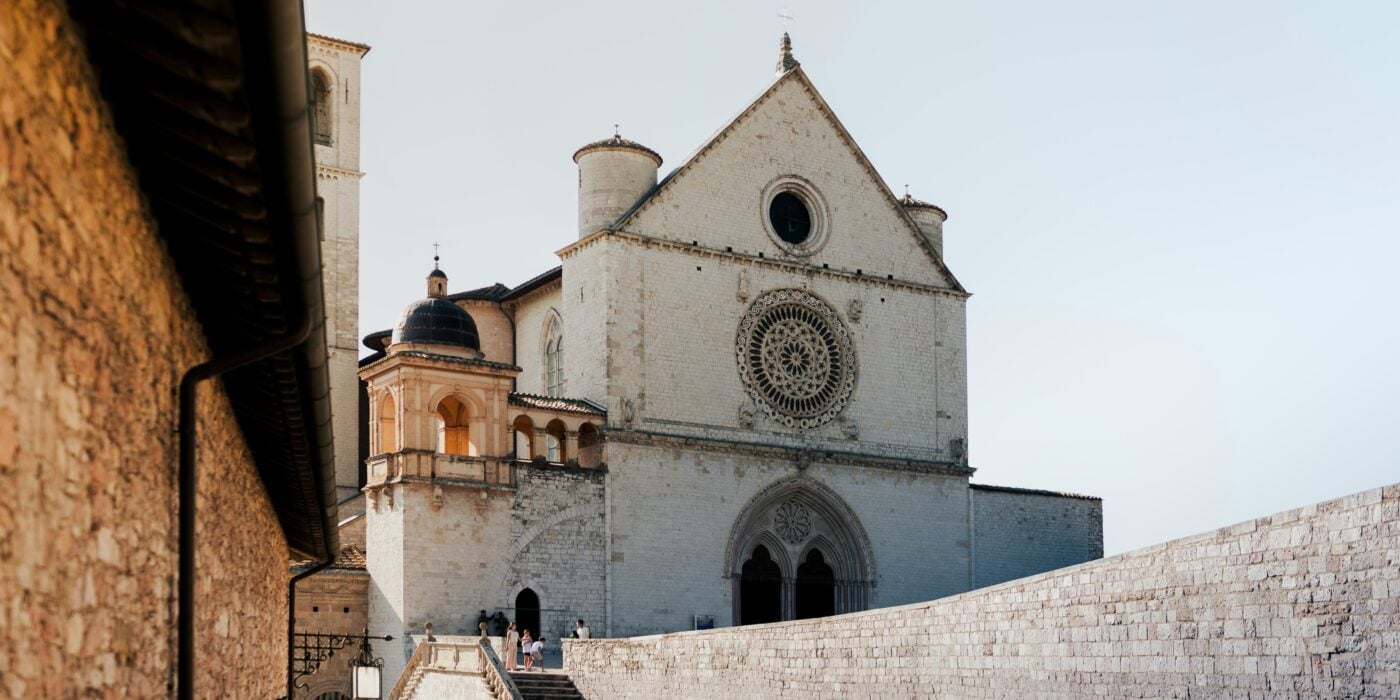
St. Francis’ Relics Remind Pilgrims the Importance of Dying to Self During Lent and Beyond
Amen, amen, I say to you, unless a grain of wheat falls to the ground and dies, it remains just a grain of wheat, but if it dies, it produces much fruit. (Jn. 12:24)
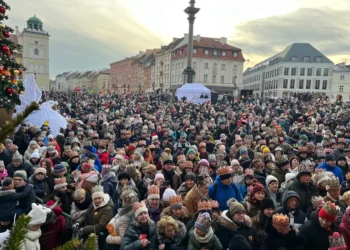
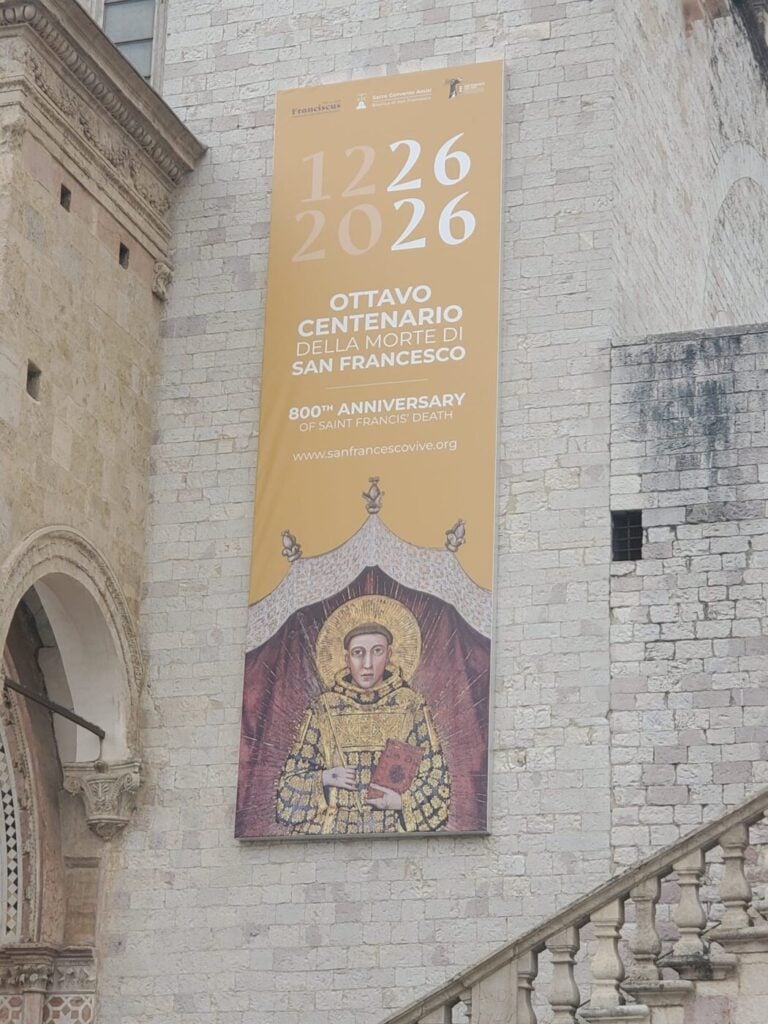
Humility, awe, and reverence. Those are three words that come to mind after having the once-in-a-lifetime opportunity to venerate the relics of St. Francis of Assisi. His remains have been on display for the first time since his death 800 years ago, beginning on February 22nd. Pope Leo XIV has requested these relics be on display and has declared this year as the Jubilee Year of St. Francis. Over the past four weeks, in honor of the upcoming anniversary of his death in October, more than 400 thousand pilgrims have passed slowly through the lower basilica of San Francesco in his beloved hometown in the central Italian region of Umbria. This Sunday, the special event will end, and the saint’s bones will be placed back in the lower crypt.
Humility
You’re humbled when you realize you are standing before the bones of a spiritual giant, who was small in stature, even according to 13th century standards, when men were on average just over five feet tall. Humility was also a key character trait of Francis, who, despite his holiness, did not feel worthy of being a priest, so he remained a deacon servant.
This saint, also known as il poverello or “little poor man,” had such a huge heart bursting with a radical love for God, His Church, and all of His creatures. It was a heart that changed the world eight centuries ago and continues to impact Catholics and non-Catholics alike in the 21st century. How else can you explain the response of the public with hundreds of thousands of people making the effort to venerate the relics? Among them are Trisha and David Rahner of Cincinnati, members of St. Gertrude Parish.
“I was struck by his small stature and his humility, and to think that the very person we were viewing walked in all the places that we were walking,” Trisha said.
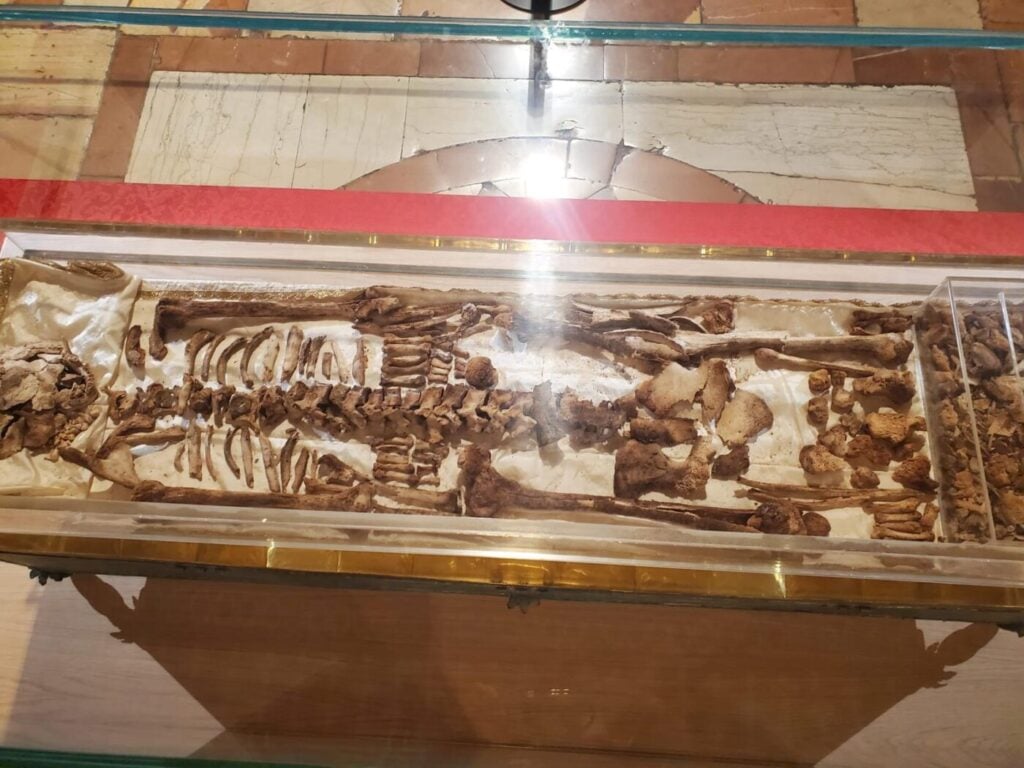
David Rahner added that viewing the bones of St. Francis makes you appreciate how he gave of himself not only when he walked the earth in medieval times, but how he is still pouring himself out, reminding us that we can’t find ourselves truly until we lose ourselves in Christ.
“It’s beyond the bones. It’s his whole life that really captures you. His unreserved giving of self.”
The theme of humility grabs your attention as you enter the basilica. Pilgrims could either register to venerate the relics on their own or experience the viewing with the assistance of one of many Franciscan priests, which is done with a larger group. Groups are taken first to a large side chapel where a priest gives a short sermon encouraging the faithful to emulate St. Francis. He was a seed who allowed himself to be buried in order to bring faith to life in new and great ways. My husband, Deacon Dominick, and I were blessed to hear that message from a wonderful priest from Zambia, Fr. Linus Mulenga.
“Francis of Assisi was like a grain of wheat for the Gospel,” Father said. “He did not give into the fear of holding on to people, to roles, to things, or to himself. Rather, he stripped himself and detached himself for the glory of God. He was consumed by God.”
After the message, you’re taken through the main aisle of the church toward the altar where you find the reliquary placed. Along the way, temporary video screens provide reminders of John 12:24, a powerful verse where Jesus tell us that a seed cannot sprout forth and grow unless it is first planted and deeply rooted in Him.
After venerating the relics, pilgrim groups are taken to a room just behind the basilica where they receive a special blessing from the priest, renew their baptismal vows, and have the opportunity for the Sacrament of Reconciliation. If that’s not enough, in addition to receiving so many spiritual blessings, you’re given other gifts as well. As you leave, you are handed a beautiful pilgrim prayer and even a small packet of seeds so we never forget the true victory that grows from total surrender.
Awe
It was not only the ability to view the actual remains of St. Francis that left two faithful Catholics from America, Don Fischbeck and his wife Monica Nelson, who have lived in Assisi full time since 2018, with many awe-inspiring moments. It was also the sheer number of people who came to their hometown that greatly impacted Don and Monica.
“As followers of St. Francis, who moved to Assisi to be close to his spirit, it is inspiring to witness so many pilgrims coming to our city to experience his holiness in the form of his mortal remains,” Don Fischbeck said.
For me and my husband Deacon Dom, God’s timing still leaves us awestruck. Assisi is known as “The City of Peace.” The timing of the veneration during Lent is significant enough on its own, as it is the season where we are called to be more peaceful, to find peace in our own hearts, in our families, and wherever we encounter others. But who knew that this focus on the city and saint of peace would be the focus as additional conflict would break out in the Middle East? It provided a unique chance to ask for the intercession of St. Francis in the midst of so much unrest in the world.
Reverence
Finally, another extremely moving aspect of this momentous occasion was the reverence shown by the thousands of faithful people inside the basilica. As someone who leads Catholic pilgrimages across Italy several times a year, it can be very frustrating and disheartening to see travelers treat major religious sites, such as the magnificent cathedrals and basilicas, as items to check off their Italy bucket list. In order to impress family and friends, the no-photo rules as well as the insistence on silence inside these holy places is treated as a mere suggestion. Many people, for example, have had this experience in the famous Sistine Chapel. It is a chapel after all—Mass is celebrated there, and other Sacraments as well, including Baptisms with the pope each year. And of course, this is the place where the new Vicar of Christ is elected. Yet how many times on your visit did you hear the guards clapping their hands calling for silence or reminding a visitor to put away their cameras and cell phones?
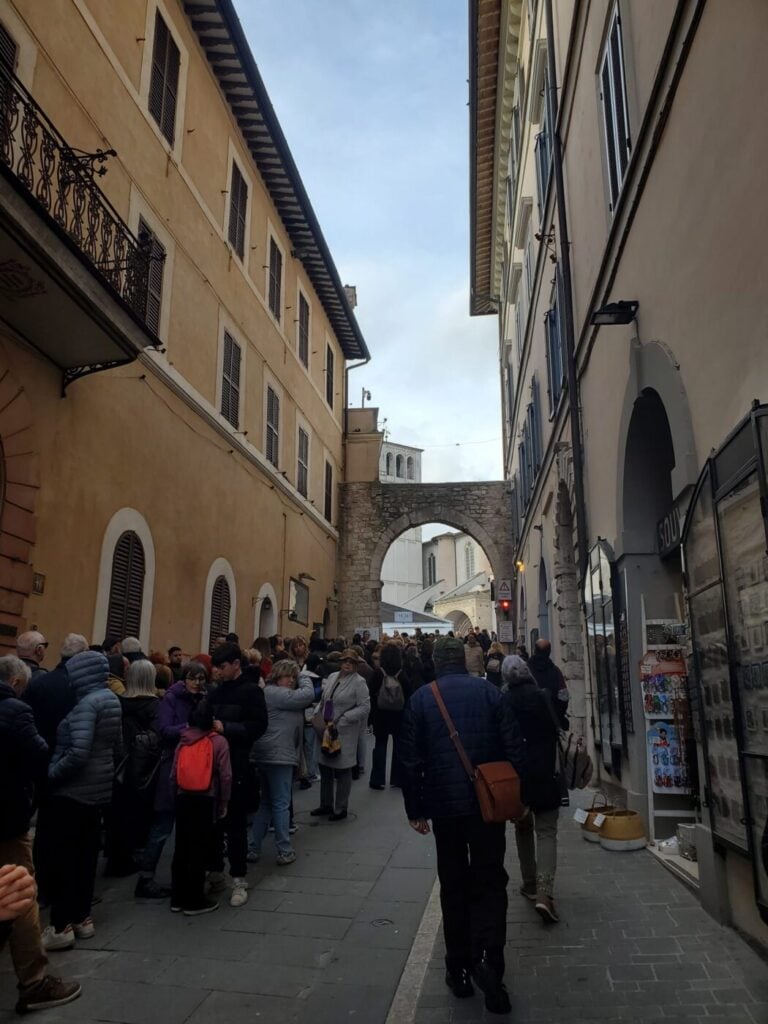
The veneration of St. Francis’ relics was different. The reverence and respect shown by pilgrims was palatable. Outside the church there was plenty of joyful chatter, even singing in several languages, especially Italian. Once we moved through the doors of the church and into the sanctuary, however, there was an immediate and beautiful hush that came over the crowd. I looked around to see if anyone in line with us—and hundreds are let in at any given time—were trying to sneak photos. Thanks be to God, no one showed any disrespect. What a joy to see so much reverence, a sign of appreciation for the saint they were about to meet. You could sense that all of us understood the importance and sacredness of the moment. It is one of those incredible times that will be fixed forever in our minds and on our hearts.
The Pilgrim Prayer we received as we left the Basilica of St. Francis in Assisi really says it all, expressing profound gratitude for the love of this great saint, who continually, even 800 years after his death, points us to Christ.
Pilgrim Prayer
Francis, my brother,
I look upon you in this glory and I understand:
the one who gives all for love
never truly fades away.
You lived as the seed that must die to give life.
You let go of all,
You ceased to seek yourself,
You became small, hidden,
And yet you blossomed, and even now you live.
Teach me to live this way.
Grant that I too may learn to let go, without fear of losing,
trusting that from emptiness comes fullness,
from the gift joy, and that every ending opens a beginning.
I do not wish to seem but to be true.
I do not wish to own but to give,
I do not wish merely to endure but to live.
You who now live forever, pray for me.
Help me carry the seed into the world.
Amen.
Photo by Nikhil Mitra on Unsplash