The war in Iran will force Europe to pursue a more resilient, flexible, and protected energy system.
The war in Iran is not just another energy shock. It is arriving at a moment when Europe is already under cumulative strain: a war on its eastern border, the lingering aftershocks of the 2022 energy crisis, industrial decline, political fragmentation, fiscal limits, and a widening debate over how much of its own security it must now provide. This is why the shock matters. It tests not only Europe’s energy system, but the broader strategic model on which Europe has relied for decades.
Europe’s decline has been predicted many times before, and often too early. The continent has repeatedly found the institutional capacity to recover from deep crises. But reinvention now will be harder, and call for more strategy and less naivety. Europe no longer has the luxury of treating climate policy, energy security, industrial competitiveness, and geopolitical power as separate domains. They are becoming one problem: preserving European agency in a more fragmented world where external shocks travel fast, and the margin for policy error is small.
That is the real significance of the Iran War. It is not simply a question of whether oil prices spike, LNG cargoes are redirected, or inflation rises again; it is a question of whether Europe can still act in its interests rather than merely react to events. Within this question lies another: whether Europe can build an energy system that supports strategic autonomy rather than one that leaves it dependent and vulnerable.
Why Europe Cannot Stop Its Energy Transition
A continent still heavily dependent on imported hydrocarbons (88 percent of gas and 93 percent of oil are imported) will remain strategically exposed. That was the core lesson of 2022, and it has not changed. If Europe were to slow-walk the transition now, it would remain reliant on imported molecules, external price shocks, geopolitical coercion, and the slow erosion of industrial competitiveness.
But Europe cannot afford a dream version of decarbonization either—a dream that cuts emissions while hollowing out industrial capacity, weakening innovation, and deepening dependence on outside suppliers. That is the central tension. The choice is not between climate ambition and realism. The choice is between a transition that strengthens Europe and a transition that leaves it greener but weaker.
There is real progress to build on. Europe has decarbonized its electric grid at a heady pace. In 2024, renewables accounted for 47.5 percent of the EU’s gross electricity consumption. But that success can also mislead. Across the European Union’s energy system, renewables accounted for only a quarter of energy consumed in 2024. Renewables provided approximately the same share of the energy for the continent’s heating and cooling, and just 11 percent of its transport. Europe has advanced significantly in power generation; it has moved much less in the sectors that still anchor its fossil dependence.
That distinction matters. The easiest part of the transition is no longer the real bottleneck. Europe has made real progress where electrons already dominate. The harder task now lies in those parts of the economy still anchored to imported hydrocarbons.
From Russian Oil Pipelines to LNG and Clean-Tech Imports
Since 2022, Europe has reduced one vulnerability, but not its energy vulnerability as such. It has cut back dependence on Russian pipeline gas, diversified supplies, and expanded LNG infrastructure. That is a real achievement. But in doing so, it has become more exposed to global LNG markets and seaborne trade. LNG’s share of total EU gas imports rose from 20 percent in 2021 to 45 percent in 2025. But it has not produced sovereignty. It has produced a new configuration of dependence: less pipeline exposure to Russia, more seaborne exposure to global LNG, shipping risk, insurance costs, and Asian competition for cargoes. Europe did not escape dependence. It reconfigured it.
That reconfiguration sits inside a larger shift in global power. Europe increasingly finds itself squeezed between two systems: the world of “petrostates” and the world of “electrostates.” In the first, leverage comes from hydrocarbons, export routes, and physical supply. In the second, it comes from clean technologies, manufacturing ecosystems, critical minerals, and control over electrified value chains. Europe remains exposed to both.
It still depends on imported oil and gas, but it also imports far more green-energy products than it exports overall. In 2024, the EU imported €11.1 billion ($12.7 billion) worth of solar panels; China alone accounted for 98 percent of extra-EU solar-panel imports. By contrast, Europe still retains real strength in wind: it exported €2.8 billion ($3.2 billion) worth of wind turbines in 2024, far more than it imported. That is the point. Europe is not simply weak, but it is uneven—and strategic dependence can emerge in very different ways across the clean-energy system.
This is why the Iran War should not be read as a simple morality tale in which high fossil-fuel prices automatically save the green transition. In theory, a shock that disrupts petro-flows should strengthen the case for domestically produced electricity. That intuition is not new. Solar, wind, and nuclear all owe part of their political rise to the oil shocks of the 1970s, when security—not environmental idealism—was often the main driver. The same instinct is resurfacing now: if trade routes and chokepoints are vulnerable, then home-generated electricity will become more attractive than imported molecules. But that logic is only half the story.
Why the Iran War Makes Renewables More Strategic, But More Expensive
The geopolitics of war strengthens the case for renewables, but the economics of war complicates their deployment because clean-energy systems are capital-intensive. Fossil-fuel shocks can increase the relative attractiveness of renewables by raising the cost of imported hydrocarbons. But the same shocks also raise inflation, tighten monetary policy, and widen risk premiums, making investment less likely. This is one of the central paradoxes Europe now faces. In theory, war should accelerate the move toward domestic electricity. In practice, war can slow the investment cycle required to deliver it.
The problem is also larger than the cost of generation alone. Europe’s challenge is not merely to add more renewable capacity. It is to build and operate a power system capable of weakening the gas-price linkage. As long as gas remains the marginal price setter much of the time, spikes in gas prices can continue to send electricity prices sharply higher even in systems with growing renewable shares. This is why the transition does not automatically deliver short-run affordability.
Europe must first pay the system costs: transmission, distribution, storage, balancing, digital optimization, flexible demand, and interconnection. Those system costs are not abstract. The European Commission estimates that by 2040, the EU will need €730 billion ($838 billion) for distribution-grid development and €477 billion ($547 billion) for transmission. Without those investments, the continent risks the worst of both worlds: more renewables on paper, but more curtailment, more congestion, and a longer period in which electricity prices remain tethered to imported gas.
There is another economic layer as well. The move away from fuel intensity increases exposure to material intensity. A decarbonized energy system is less dependent on a continuous fossil-fuel supply, but more dependent on copper, aluminum, steel, rare earths, batteries, inverters, and power electronics. War-driven inflation, shipping disruptions, and supply-chain stress, therefore, directly raise transition costs. Europe does not escape dependency by electrifying. It changes the form of dependency and, if it is not careful, simply relocates vulnerability from molecules to materials and manufactured components.
This is why the usual formula—more renewables equals lower prices—needs refinement. Over time, more domestic low-carbon generation can indeed reduce volatility and weaken the link to global gas markets. If European countries meet their solar and wind targets, electricity prices could fall by more than a quarter by 2030 and become less volatile as the link to gas weakens. Each euro invested in grid upgrades can save more than €2 ($2.30) in system costs, and deeper cross-border integration can cut overall system costs by about 9 percent, or roughly €26 billion ($30 billion) annually. But in the medium term, affordability depends on whether Europe can finance and build the system fast enough. It is not enough to deploy more renewables. Europe must deploy them in a way that actually produces resilience.
Which Parts of the Energy Transition Accelerate—and Which Stall
These pressures will not affect all clean technologies equally.
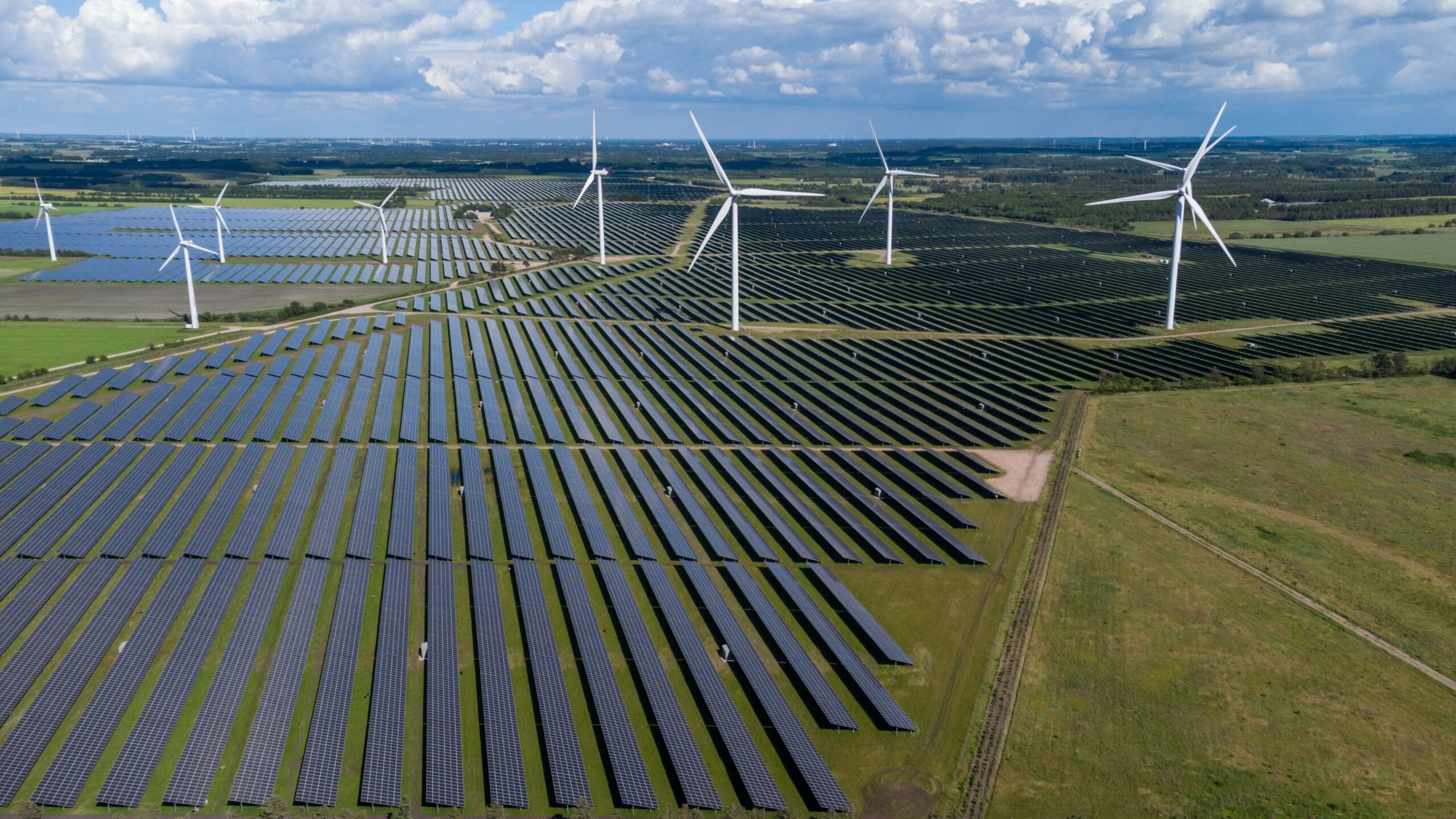
Solar is the clearest short-term winner, especially in Southern Europe. It is modular, relatively fast to deploy, and directly useful in countries such as Spain, Portugal, Italy, and Greece, where domestic generation can increasingly substitute for imported fuels. In that part of Europe, solar is also a hedge against imported volatility and a potential foundation for more competitive electricity prices.
Storage and flexibility are the quiet winners. Batteries, demand response, smarter networks, and load shifting all become more valuable as volatility rises. If the Iran War highlights the strategic case for domestic power, it also underscores the need for systems that can withstand intermittency and price swings. Europe’s challenge is not simply to build more renewable generation. It is to build an electricity system capable of absorbing and using it intelligently.
Wind presents a more mixed picture. Offshore wind remains strategically central to Northern Europe and the North Sea basin, but it is also among the technologies most exposed to steel inflation, capex pressure, and financing costs. Onshore wind remains economically compelling in many markets, yet the binding constraints are often permitting, local acceptance, and policy design rather than raw economics. Some parts of the transition will accelerate conceptually while slowing operationally.
Demand-side electrification matters just as much. Electric vehicles reduce oil exposure in transport. Heat pumps reduce dependence on gas in buildings. Industrial electrification, where technically and economically feasible, makes energy demand more domestically oriented. But here too, strategic logic is running ahead of political economy. Consumers and firms respond not only to long-term security arguments but also to upfront costs, relative price signals, infrastructure availability, and policy stability.
Europe is now learning that what is strategically rational for the system may still be financially difficult for households, installers, and manufacturers. EVs displaced more than 1.3 million barrels per day of oil demand globally in 2024, yet electric-car sales in Europe stagnated that same year as policy support weakened in major markets. Heat pumps could lower Europe’s gas demand for heating in buildings by at least 21 bcm by 2030. Still, actual installations slowed from 2.8 million units in 2022 to 2.7 million in 2023 and 2 million in 2024, with high electricity prices, installer shortages, unstable financing, and poor policy design all playing a role.
Efficiency belongs in the same category. It is often treated as a secondary climate tool, but in strategic terms, it may be one of Europe’s most reliable sources of autonomy. The fuel not imported is the exposure not incurred. It lowers bills, increases resilience, and buys time. In an era of external shocks, efficiency should be treated less as a technocratic add-on and more as a core instrument of sovereignty.
Regional differentiation matters too. Southern Europe is best positioned to turn solar abundance into cheaper power and selective reindustrialization. Northern Europe’s future depends more heavily on offshore wind, interconnectors, and system integration. Central and Eastern Europe increasingly frames the transition through a security-first lens, which makes resilience and, in many cases, nuclear power more politically attractive than abstract climate narratives. France remains a distinctive case: not immune to the broader crisis, but already closer than most to a sovereignty-based electricity model.
Nuclear, therefore, deserves a more sober place in the debate. It is strategically more valuable than before, but it is not a uniform European answer. European Commission President Ursula von der Leyen recently called Europe’s turn away from nuclear a “strategic mistake.” But the politics remain uneven, and Europe will not converge on a single nuclear model.
Europe’s hydrogen strategy, meanwhile, should become less romantic and more selective. Large-scale imports of low-carbon molecules from unstable neighborhoods can no longer be treated as a frictionless long-term solution.
An Energy Transition Without Industrial Power Is a Strategic Weakness
High energy costs do not merely hurt consumers. They compress industrial margins, reduce investment, weaken innovation, and shape location decisions. That is the mechanism through which deindustrialization becomes self-reinforcing: higher energy costs reduce profits; reduced profits weaken capital spending and research; weaker investment erodes ecosystems of engineering, manufacturing, and scale; and that erosion then undermines the very industrial base needed to execute the transition itself.
This is especially acute in energy-intensive sectors, where energy is not just an input cost but a decisive factor in competitiveness. If Europe becomes a premium market that imports both its fuels and its clean-energy hardware while losing its industrial base in between, it may become greener but weaker. A decarbonized Europe that no longer makes, scales, or controls key technologies would not be a strategic success. It would be a dependent transition.
Europe’s own political habits amplify that risk. The continent has too often treated vulnerabilities as manageable until a crisis proved otherwise. Russia was one version of that lesson. Iran is another. Europe often reacts intelligently—but late, and at high cost. This does not mean decline is inevitable. But it does mean there is no simple route back to agency. Too much industrial capacity has already eroded. Too many dependencies have already been externalized. Too much strategic room for maneuver has been traded for cheap imports, procedural comfort, and the assumption that markets alone would solve power problems.
Five False Paths for Europe’s Energy Future
That is why Europe now faces a series of seductive false exits.
The first is petro-restoration masquerading as pragmatism: the call to go back to Russian gas and stop trying to re-engineer the system. The temptation exists because it contains a partial truth. Europe cannot eliminate hydrocarbon demand overnight. The mistake is to turn that reality into an argument for restoration rather than for safer diversification. Returning to Russian dependence would not solve Europe’s problem. It would simply restore it.
The second temptation is to call deeper reliance on American oil and LNG “security.” This too contains a partial truth. The United States is an ally, and transatlantic energy ties remain indispensable in the medium term. But strategic alignment is not the same as strategic autonomy. By 2025, the United States alone supplied 58 percent of EU LNG imports. If one external supplier becomes too dominant, Europe merely replaces one vulnerability with another.
The third temptation is to accelerate green deployment while accepting full technological dependence on China. This also contains a partial truth. Europe will need access to globally competitive clean-tech supply chains while it rebuilds domestic capability. But it carries its own strategic price. China dominates global solar-PV supply chains, with more than 80 percent share across all main manufacturing stages, and in 2024, it was the source of 98 percent of extra-EU solar-panel imports. Dependence is not solved by changing its color from fossil to green. A rapid transition built on imported electro-dependence may cut emissions while deepening strategic weakness.
The fourth temptation is bureaucratic paralysis: to regulate endlessly, sequence endlessly, and confuse procedure with strategy.
The fifth is conceptual fragmentation: continuing to treat decarbonization, energy security, and industrial policy as separate agendas managed in separate silos. In the world now taking shape, that may be the costliest mistake of all.
Europe Needs a Harder Synthesis
What, then, is the alternative? There is not one elegant solution, but a layered strategy.
Europe cannot electrify everything overnight, and it cannot wish away its remaining need for imported hydrocarbons. For a transition period, it will still need a more diversified and better-protected hydrocarbon import mix—one that reduces vulnerability without sliding back into Russian dependence or replacing one dominant supplier with another. That hydrocarbon cushion is not a betrayal of transition. It is part of managing transition responsibly.
At the same time, Europe must accelerate the parts of the transition that genuinely reduce exposure: domestic low-carbon power, grids, storage, flexibility, efficiency, and electrification where the economics are strongest. Green energy is a decisive part of this shift—but only if introduced smartly, embedded in industrial strategy, financing capacity, and system integration. Europe does not need a merely fast transition. It needs a structurally sound and secure transition.
That means both/and rather than either/or: diversified molecules for the transition period, more domestic electrons over time; pragmatic use of global supply chains, but less strategic dependence on any single external power center; more ambitious deployment, but also more attention to wires, balance, finance, market design, and industrial ecosystems. It also means a different definition of success. The goal should not be the fastest green transition on paper. It should be the fastest transition toward a more complex, flexible, and protected energy system—one able to absorb shocks, support industry, and steadily reduce dependence on fossil fuels without replacing it with equally dangerous technological dependence.
In other words, the first three temptations take one partial truth with the appearance of a complete strategy. Europe does need a safer hydrocarbon cushion in the medium term. It does need strong transatlantic energy ties. It does need access to globally competitive clean technologies. But none of these can serve as a strategic anchor on its own. Europe’s answer will have to combine them while building something stronger at home.
Europe’s Transition Won’t Be Quick, But It Can Be Secure
The war in Iran should end the illusion that the transition can remain politically easy, economically linear, or strategically innocent.
Europe cannot stop because dependence on fossil fuel imports would keep it trapped in external vulnerability. But it also cannot afford a version of transition that swaps one dependence for another—Russian gas for permanent dependence on clean tech abroad. The real strategic failure for Europe is not a failed transition. It is a dependent one.
In the harsher world now emerging, Europe will be judged not by how quickly it proclaims decarbonization, but by whether it can build an energy system resilient enough to withstand shocks, flexible enough to integrate new technologies, and strong enough to preserve industrial and strategic agency while the transition unfolds. That is the real task after Iran: not the fastest possible green transition in the abstract, but the fastest possible transition to a secure, adaptive, and durable European energy order.
About the Author: Tatiana Mitrova
Dr. Tatiana Mitrova is a research fellow at Columbia University’s Center on Global Energy Policy and director of the New Energy Advancement Hub. She specializes in Russian, FSU, and global energy markets, including production, transportation, demand, energy policy, pricing, and market restructuring. She was the executive director of the Energy Centre of the Moscow School of Management SKOLKOVO, a graduate business school. From 2006 to 2011, she was also the head of research in the Oil and Gas Department in the Energy Research Institute of the Russian Academy of Sciences. Dr. Mitrova is a graduate of Moscow State University’s Economics Department (BSc.) and Gubkin Russian State University of Oil and Gas (PhD).