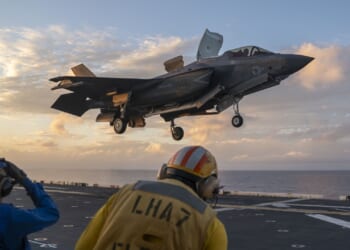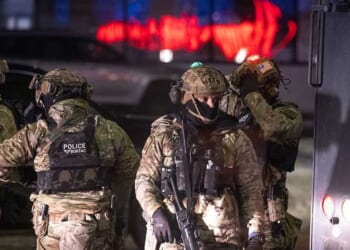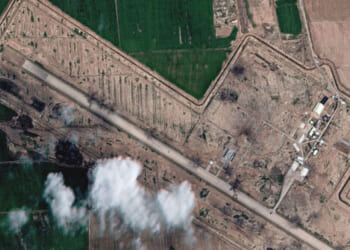
Operation Epic Fury has exposed shortcomings with the US Army’s readiness for combat, particularly its lack of sufficient magazine depth.
The US Army has a readiness issue, according to the service’s No. 2 civilian leader.
Army Undersecretary Michael Obadal acknowledged that the Army is not where it should be in terms of readiness and is having serious issues with major weapon systems and platform availability.
“To say we’re satisfied with our readiness rates, I think would be disingenuous,” the Army Undersecretary said recently during the annual McAleese Defense Programs Conference.
“We have real problems with our major weapons systems, both aircraft and ground, and we have to address those things, and we’re doing so through a number of different ways,” Obadal added.
What Exactly Is Military “Readiness”?
The concept of readiness is open to interpretation, and can sometimes result in ambiguity. The current Army leadership measures readiness using a three-prong test:
- How can the Army respond to a contingency right now;
- What resources does the Army have to respond to a contingency within the next month; and
- What sort of operations is the Army able to sustain for the next year of combat.
According to this model, the Army has an issue with both major weapon systems and magazine depth. Obadal did not specify which weapons systems in particular are an issue.
A recent Government Accountability Office (GAO) report highlighted similar issues with regard to readiness.
Obadal also acknowledged that the ongoing conflict in the Middle East is further pressuring Army stocks. Although the Navy and Air Force lead operations against Iran, the Army is providing important air defense, early warning, and precision strike capabilities to the joint force.
The senior Army leader went on to say that a way forward from the current situation is to work more closely with the defense industry and forge public-private partnerships in an organic industrial base.
“We have to be very narrow on what we’re asking for. So how many repetitions, how many units, how many years before we have IP [intellectual property], and there’s some IP that we don’t want commercial software and other things,” Obadal said. “We want companies to keep that because we want them to be responsible for the updates, the security patches and all that, but we want to be able to change things out as the environment demands.”
But streamlining acquisition is not the only solution. Another way to improve readiness, according to Obadal, is to work with the original equipment manufacturers and increase the turnover of weapon systems and equipment.
Sustained Combat Operations Require a Deep Bench
The ongoing Operation Epic Fury is a stark reminder of the need to account for sustained, high-intensity combat operations even if victory seems certain from the outset.
The tab for the military action against Iran is quickly approaching $20 billion, according to some estimates. The US military has expended thousands of munitions, while Air Force, Navy, and Marine Corps aircraft have each conducted nearly 7,000 combat sorties. Iran’s closure of the Strait of Hormuz, one of the most important sea lanes in the world, necessitated the deployment of additional resources in the region, including early warning aircraft and a Marine expeditionary force. This is what sustained operations look like and what the Army should aspire to in a conventional conflict with China or Russia.
Conventional operations require a deep bench in both troops and munition stocks.
About the Author: Stavros Atlamazoglou
Stavros Atlamazoglouis a seasoned defense journalist specializing in special operationsand a Hellenic Army veteran (national service with the 575th Marine Battalion and Army HQ). He holds a BA from the Johns Hopkins University and an MA from the Johns Hopkins’ School of Advanced International Studies (SAIS). His work has been featured in Business Insider, Sandboxx, and SOFREP.