The Arab nations of the Gulf Cooperation Council are realizing that Iran is not a true diplomatic partner, but a long-term strategic threat requiring closer coordination with America and Israel.
Three weeks ago, it would have been unthinkable for Al Jazeera to run an op-ed arguing that the US-Israeli military campaign against Iran was working. The Qatari state-funded outlet has been at the vanguard of the information war against Israel since the Hamas terror attacks of October 7, 2023. Indeed, it employed at least six journalists who simultaneously served as operatives in Hamas’ military wing and Palestinian Islamic Jihad, giving terrorist fighters cover as credentialed press.
Yet on March 16, Al Jazeera published exactly that article—written from Doha by an academic living under Iranian missile alerts. When the house organ of Qatari soft power begins making the case for American and Israeli war aims, something fundamental has shifted.
What shifted was Iranian ordnance falling on the Gulf Cooperation Council (GCC) states—Kuwait, Qatar, Bahrain, Saudi Arabia, the United Arab Emirates, and Oman. The ensuing outrage across the Gulf has created the most significant opportunity for American strategic interests in the Middle East since the Abraham Accords: the chance to bring the GCC states decisively into a formalized security architecture with the United States and Israel. For the first time in decades, the countries of the Persian Gulf are not hedging between Washington and Tehran. They are choosing—and more specifically, they are choosing America.
Iran Shot Missiles at Its Arab Neighbors—and Itself in the Foot
For nearly half a century, the Islamic Republic sought to unite the Muslim world in antithesis to the United States and Israel. Through proxy networks, nuclear ambiguity, and rhetorical positioning as defender of Palestinian and Shia causes, Tehran cultivated a regional order that even regional American allies found it prudent to accommodate. Saudi Arabia pursued a Chinese-brokered rapprochement with Iran in 2023. The UAE maintained back channels. Qatar bet that playing both sides would insulate it. Oman wagered that its neutrality would make it useful to everyone.
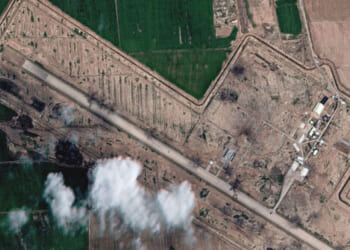
Winston Churchill once observed that an appeaser is one who feeds a crocodile in the hopes that it will eat him last. The Gulf states fed the Iranian crocodile for years, to no avail. In early March, Iran launched missiles and drones at every GCC member state—countries that had given Tehran ironclad assurances their territory would not be used to attack Iran. The UAE absorbed 174 ballistic missiles, 689 drones, and 8 cruise missiles, with strikes hitting Dubai International Airport, the Burj Al Arab, and the Ruwais industrial complex. Qatar detected over 100 ballistic missiles and shot down two Iranian Su-24 bombers—the first time any nation has downed an Iranian aircraft in combat. Iranian drones struck Saudi Aramco’s Ras Tanura refinery, curtailing 550,000 barrels of oil production per day. Kuwait’s international airport was hit. Even Oman—the country that had spent weeks brokering negotiations between the US and Iran—was not spared. In total, Iran has fired over 3,000 projectiles—missiles and drones—at GCC countries in less than three weeks, the most sustained state-on-state aerial assault in the Middle East since the Gulf War.
Then Tehran escalated further. On March 18, after Israel struck Iran’s South Pars gas field, Iran made good on explicit threats to target Gulf energy infrastructure. Iranian missiles struck Qatar’s Ras Laffan Industrial City—one of the world’s most critical gas processing and export hubs and the source of 80 percent of Qatari government revenue—causing significant damage and forcing a halt to all Qatari gas production. Missiles and drones simultaneously targeted Saudi Arabia’s SAMREF refinery and Jubail petrochemical complex, the UAE’s Al Hosn gas field, and Kuwait’s Mina Al-Ahmadi refinery, one of the largest in the Middle East. Saudi air defenses intercepted four ballistic missiles over Riyadh and two more over the Eastern Province. The UAE dealt with 13 ballistic missiles and 27 drones in a single engagement. The Gulf saw the move for what it was: deliberate economic warfare against the region’s most vital assets.
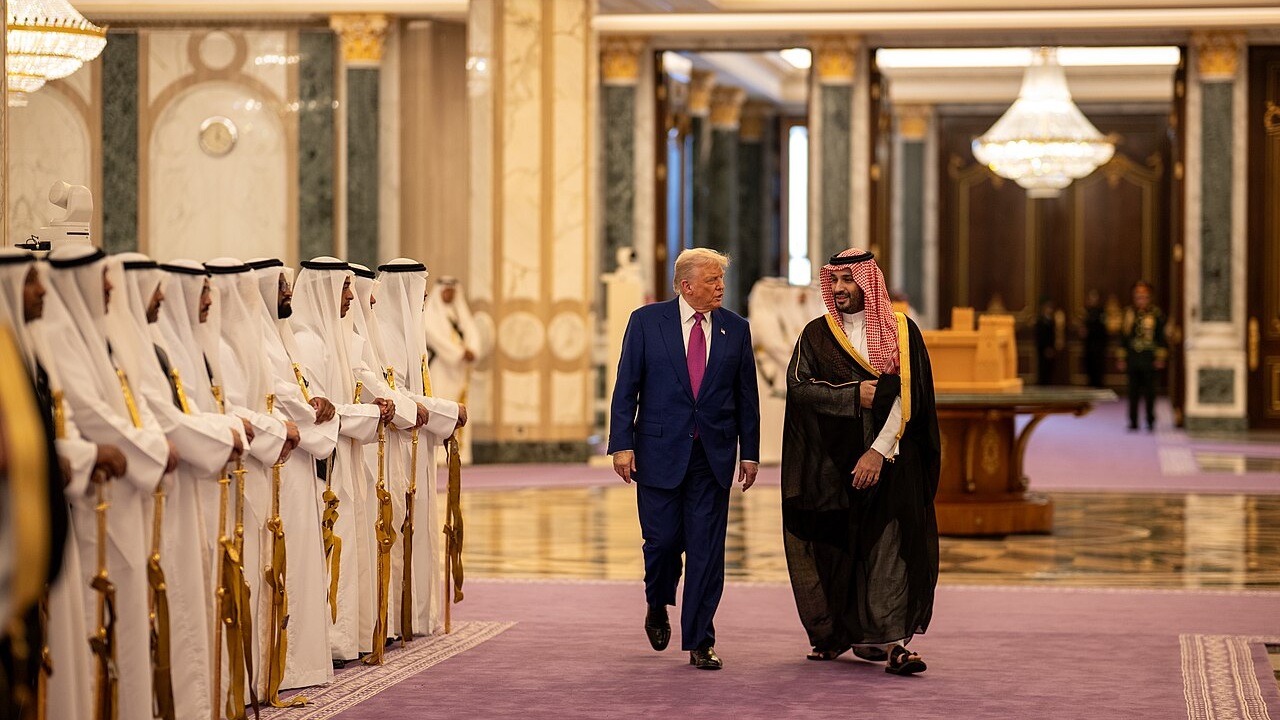
The transformation in Gulf attitudes has been swift. Qatar, which in June 2025 expressed “regret” over American “attacks on the sisterly Islamic Republic of Iran” during the US-led Operation Midnight Hammer, issued its strongest condemnation in the country’s history and is now arresting IRGC operatives on its soil. Saudi Crown Prince Mohammed bin Salman described the Iranian strikes as “cowardly” and offered to use “all Saudi capabilities” to defend its neighbors. The UAE recalled its ambassador from Tehran. The GCC issued an unprecedented joint statement with Washington condemning Iran’s “indiscriminate and reckless” attacks—language that would have been diplomatically impossible a month ago. President Donald Trump told CNN that Gulf countries “were going to be very little involved, and now they insist on being involved.”
Trump was right. Iran intended its strikes to coerce the US-Israeli operation into stopping. Instead, Tehran created the conditions for the Gulf to join it. When Iranian drones are striking your airports and oil infrastructure—when your citizens are receiving evacuation orders in the middle of the night—the abstraction of strategic hedging collides with the concrete reality of state-on-state warfare.
How the United States Can Gain from Iran’s Blunder
Even if the Islamic Republic survives in diminished form, the damage it has inflicted on its own regional position will not soon be forgotten. The question for Washington is what comes after—and the answer should be ambitious.
First, the United States should propose a mutual defense framework for the Gulf. The absurdity of the current arrangement was exposed on February 28: the UAE, Qatar, Saudi Arabia, and Kuwait each intercepted Iranian missiles in the same 48-hour window, fighting the same war with no coordination. A formalized architecture—integrated air and missile defense linking American, Israeli, and GCC systems, permanent forward-deployed THAAD and Patriot batteries, and joint naval patrols in the Strait of Hormuz—would replace the ad hoc arrangements that leave Gulf states exposed every time Washington’s attention shifts.
Second, the Abraham Accords framework should be expanded with a hard security component, with Saudi Arabia as its centerpiece. Before February 28, Saudi normalization with Israel was framed as a diplomatic concession to Washington—politically costly and strategically optional. Iranian missiles changed that calculus. The country that offered to place all its capabilities at the region’s disposal and the country whose missile defense technology helped intercept the barrage are natural partners. An expanded Abraham Accords should include intelligence sharing on Iranian proxy networks, coordinated sanctions enforcement, and a joint commitment to preventing Tehran from reconstituting the capabilities now being destroyed. The political conditions for such an arrangement may not exist six months from now, but they exist today. The United States must strike while the iron is hot.
Wars clarify. The aftermath of wars, if mismanaged, obscures. The Islamic Republic handed the United States and Israel a strategic gift. America’s task now is to make it permanent.
About the Author: Joseph Epstein
Joseph Epstein is the director of the Turan Research Center, a senior fellow at the Yorktown Institute, an expert at the N7 Foundation, and a research fellow at the Begin Sadat Center for Strategic Studies at Bar Ilan University. He also sits on the advisory board of the Alekain Foundation, a nonprofit dedicated to providing education to women and girls in Taliban-controlled Afghanistan. He specializes in Eurasia and the Middle East, and his work has been featured in various outlets such as Newsweek, The Wall Street Journal, The Hill, the Atlantic Council, Novaya Gazeta, RFE/RL, Foreign Policy, and others.