The US’ tactical successes against Iran would have a greater effect if they served broader objectives.
The US military campaign against Iran is both long overdue and impressive. Washington is finally striking back wholeheartedly against a regime that’s been at war with the United States since the Islamic Revolution of 1979.
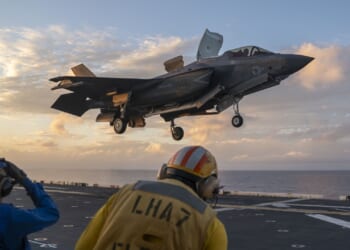
In close collaboration with Israel, the United States is severely setting back Tehran’s nuclear ambitions, degrading its ballistic missile capabilities, destroying its navy, and wiping out its weapons, greatly reducing the threat Iran has long posed to America and its allies in the region and beyond.
Unfortunately, Washington is complicating these efforts through its strategic and rhetorical incoherence, costing it vital support among Americans and undermining its posture around the world.
The White House desperately needs to set a clear goal in Iran, enunciate it consistently to its audiences at home and abroad, and tailor its military, diplomatic, and economic strategies to achieve it.
President Donald Trump has enunciated several goals since the war began in late February, some of which contradict one another. In the spirit of regime change, he urged Iranians to topple their government and then demanded that he be “involved” in choosing a successor to Supreme Leader Ali Khamenei.
But he’s also suggested that he could live with the regime after sufficiently degrading its weaponry. After vowing to seek “unconditional surrender,” he more recently said he’s open to cutting a deal with the regime (although it would have to include Tehran’s commitment to abandon its nuclear pursuits and “the terms” for such a deal are not yet “good enough”).
Unclear about its goal, Washington is sending mixed signals about its timetable for ending US action, raising further questions about its strategic objectives. In recent days, Trump has said the war will end “soon” because the US military has “practically nothing left to target.” Still, he also said that it will end “when I feel it in my bones,” that “we haven’t won enough,” and that while US strikes had “totally demolished” Iran’s Kharg Island, he might strike it a few more times “just for fun.”
Meanwhile, Washington is sending further mixed signals about its seriousness of purpose due to concerns over oil prices (which have risen 40 percent since the war began), a battered stock market, and a shaky economy—all with congressional elections approaching this fall.
The more Washington seeks to address those concerns, the more it undercuts whatever goals it has in mind. To contain oil prices and ensure adequate supplies, the administration eased oil sanctions on Russia even though Moscow is reportedly providing both drones and intelligence to help Tehran target US interests. The administration is also letting Iranian oil tankers transit the Strait of Hormuz even as Tehran attacks the vessels of other nations, causing “the largest supply disruption in the history of the global oil market.”
Russia now has more money to prosecute its war against Ukraine and threaten Europe (to the dismay of America’s NATO allies), while Iran is reportedly earning $140 million a day from oil sales at a time of higher prices, and is estimated to have sent 24 million barrels of oil through the Strait since the war began.
In January, Trump encouraged Iranians to sustain their nationwide protests and “take over your institutions,” and he promised that “help is on its way.” When the president then decided not to take military action in the ensuing weeks to help the protestors, the regime slaughtered many thousands of them. Trump now admits that Iranians face a “very big hurdle” in toppling the regime, leaving many of them feeling deeply betrayed and surely reluctant again to risk their lives amid promises of US support.
America’s European allies are predictably reluctant to answer the US call for help in opening the strait, given that Trump has tariffed them, sparred publicly with several of their leaders, derided the Western alliance in general, withheld more US aid to Ukraine, threatened to seize Greenland, and failed to consult with these allies before attacking Iran.
Trump’s call for China’s help to open the strait, at a time when China and Iran are strategizing to weaken the United States in the oil market, makes Washington look confused about geopolitics and desperate for help.
We have a clear choice of goals in Iran. They include: (1) containing the regime in the region, which would require a large US military presence to protect the Strait; (2) containing Iran’s weaponry, which would require episodic attacks on its nuclear, missile, and other sites; and (3) regime change, which would require pressure on the regime and outreach to the Iranian people in hopes of a revolution at some point.
Whatever it chooses, Washington would benefit greatly by setting a clear goal, making a compelling case for it, and acting accordingly on the military, diplomatic, and economic fronts.
About the Author: Lawrence Haas
Lawrence J. Haas is a senior fellow at the American Foreign Policy Council. Previously, he was communications director for Vice President Al Gore and, before that, for the Office of Management and Budget. Haas is a frequent public commentator. His work has appeared in The New York Times, The Wall Street Journal, USA Today, The Los Angeles Times, and scores of other newspapers. He is the author of, among other books, Harry and Arthur: Truman, Vandenberg, and the Partnership That Created the Free World.