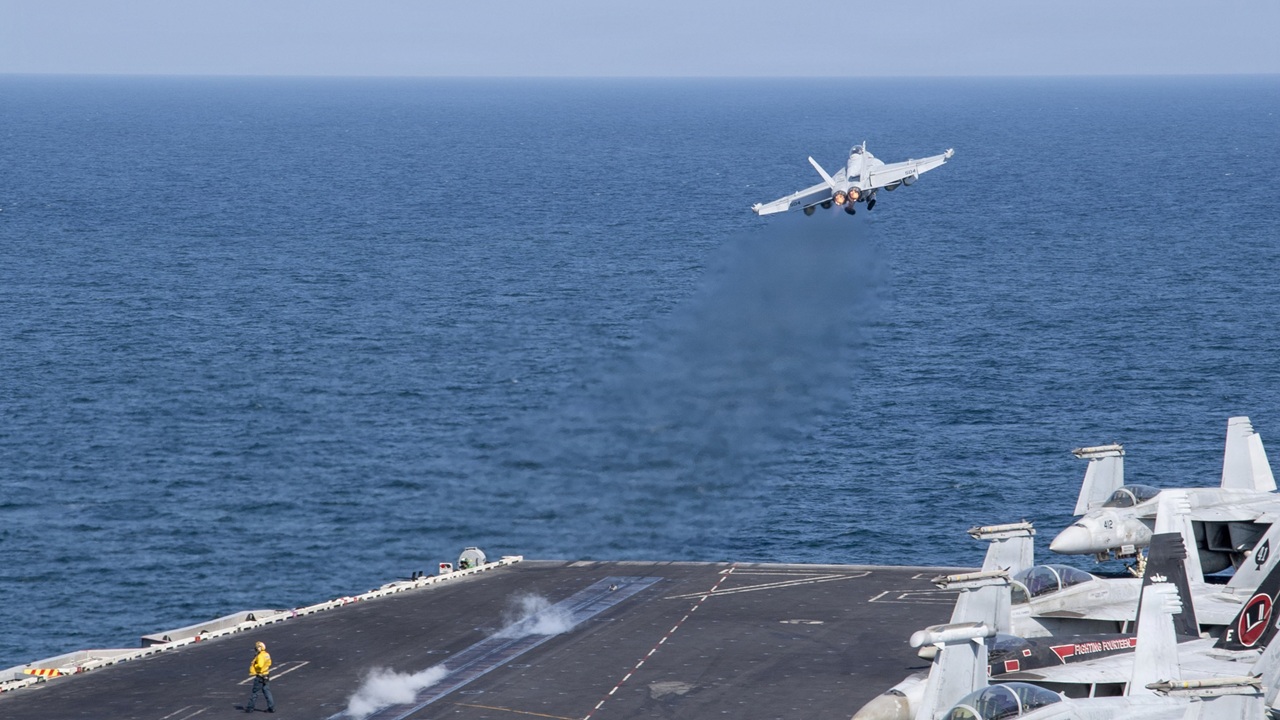
The ongoing cost of the war in Iran could run as high as $30 billion, though estimates of war costs are always difficult due to their complicated nature.
As Operation Epic Fury, the US military’s codename for the ongoing war over Iran, nears its fourth week, the Pentagon’s war-related expenses continue to swell. Despite its undeniable tactical and operational success thus far, the war against Iran is proving to be quite expensive for the United States.
The US Has Used Thousands of Missiles in the Iran War
It is always difficult to estimate the direct cost of any combat operation. Many of the costs involved are “operations and support costs”—the cost of operating the ships and aircraft involved in the mission—but this is complicated by the fact that these costs are already budgeted for, and employ soldiers and vehicles who are enlisted in active duty in the military. In other words, if a ship were not taking part in combat operations in the Arabian Sea, it might be performing naval exercises somewhere else in the world at a roughly comparable cost, and the sailors involved would still be paid.
Cost estimates of Operation Epic Fury therefore tend to focus on the losses of perishable munitions, such as drones and missiles, as well as the losses of vehicles—such as the recent shootdown of three F-15E Strike Eagle fighter jets over Kuwait to friendly fire.
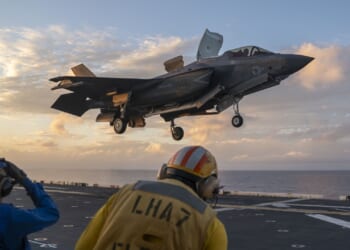
In the first 100 hours of the operation, the US military fired thousands of munitions of at least 11 different types against targets in Iran. The cost for those first 100 hours of the operation came at approximately $5.6 billion, or about the cost of a Nimitz-class aircraft carrier, according to an estimate by the Center for Strategic and International Studies (CSIS).
The first six days of the conflict cost over $11 billion, or nearly the cost of a brand new Gerald R. Ford-class aircraft carrier, according to different measurements released by the Department of Defense. Estimates put the cost at Day 12 at almost $17 billion. Extrapolating from this data, the cost of three weeks of fighting, or 21 days, would add up to nearly $30 billion.
The US military has been using a plethora of munitions against Iran, including BGM-109 Tomahawk land-attack cruise missiles, GBU-31/32/38 Joint Direct Attack Munitions (JDAM), AGM-114 Hellfire munitions, AGM-88 HARM/AARGM-ER anti-radar missiles, MGM-140 ATACMS and PrSM short-range ballistic missiles, and GBU-57 Massive Ordnance Penetrators (MOP).
Although there is some concern about the stamina of the Pentagon’s arsenal in the face of an operation of such a sustained nature, the US military does not face an imminent risk of low munitions stocks. If operations continue, however, then there could be an issue.
Of course, there is great strategic value in what the United States has achieved thus far. Iran’s longtime supreme leader and many of its senior leaders are dead, and the country no longer has a viable navy or air force.
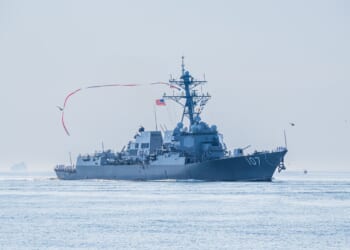
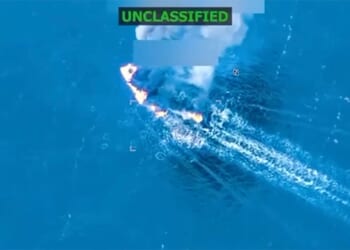
The US Navy and Air Force have sunk over 50 Iranian vessels, including a frigate by submarine torpedo—the first such action for the Navy since World War II. They have also annihilated the Iranian Air Force, destroying fighter jets, helicopters, and air defense systems.
Moreover, Iran’s vast ballistic and cruise missile arsenal has been destroyed or depleted to a point that it will not pose a serious threat to the region for several years. To be sure, Tehran still has missiles and one-way attack unmanned aerial systems, and it is likely to develop more in the years ahead—but for the time being, it does not have enough to wage a sustained full-scale long-range fires campaign.
Despite Rising Costs, the War Is Still Ongoing
In spite of some signaling from the White House that the campaign is nearing its end, there is no sign yet that the volume of strikes and sorties against targets across Iran will slow down.
In a recent round of targeting, CENTCOM focused on Kharg Island. Located approximately 16 miles off the southern Iranian coast, Kharg Island serves as the loading depot for Tehran’s oil exports. Nearly 90 percent of Tehran’s oil passes through Kharg.
US aircraft and warships struck more than 90 Iranian military sites located on the small island, including naval mine storage facilities, missile storage bunkers, and multiple other military sites. Crucially, US forces did not target oil infrastructure.
Since the start of Operation Epic Fury, the US military has conducted over 6,000 combat flights in support of the operation, striking more than 7,000 military and commercial targets, including air defense sites, command and control centers, mobile missile launchers, warships, and missile and drone storage and manufacturing facilities.
Operation Epic Fury is costly—but war is seldom cheap.
About the Author: Stavros Atlamazoglou
Stavros Atlamazoglou is a seasoned defense journalist specializing in special operations and a Hellenic Army veteran (national service with the 575th Marine Battalion and Army HQ). He holds a BA from the Johns Hopkins University and an MA from the Johns Hopkins’ School of Advanced International Studies (SAIS). His work has been featured in Business Insider, Sandboxx, and SOFREP.