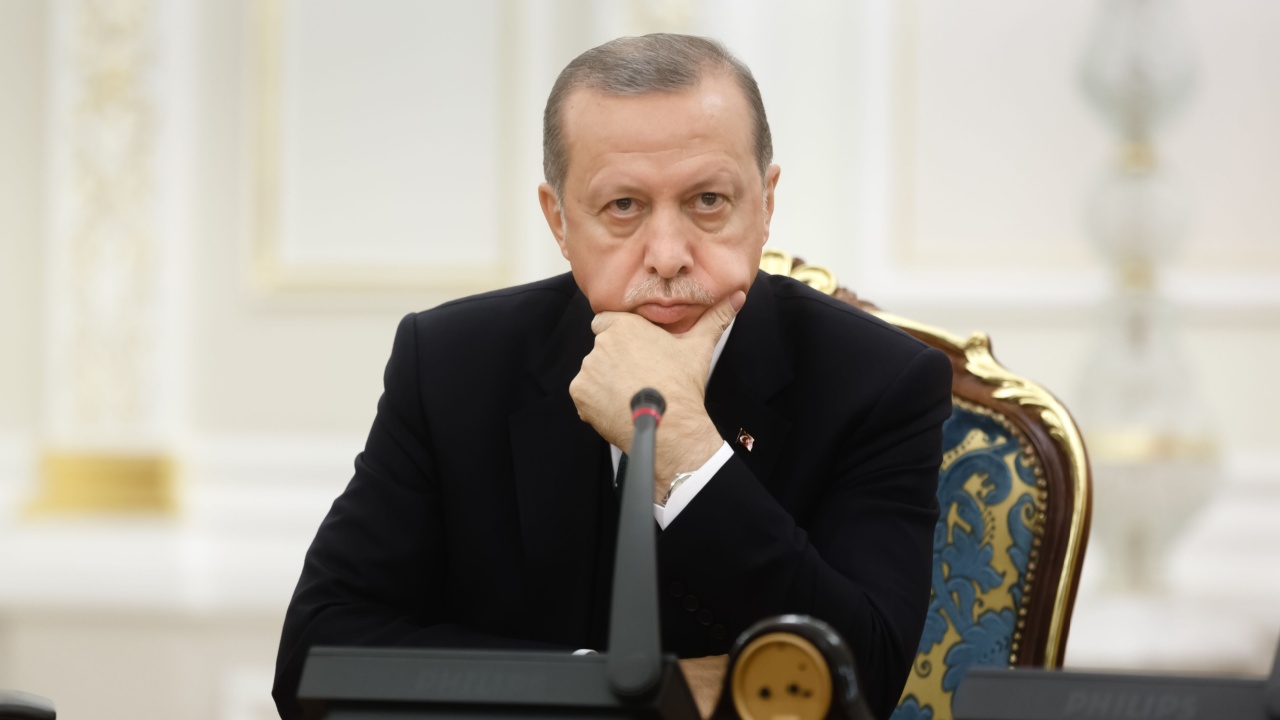
Turkish President Recep Tayyip Erdogan is reluctant to get involved in the Iran War, fearing it would hurt his party’s chances in the next election.
Three weeks into the Iran War, Turkish leaders have seen two Iranian missiles enter their airspace before NATO air defenses intercepted the rockets. While Iranian regime elements appear resolved to continue targeting key NATO assets in Turkey, the situation presents a serious dilemma that could sway Turkey’s political future at home and its credibility abroad.
NATO forces downed an Iranian ballistic missile entering Turkish airspace over Gaziantep, in the country’s southeast, on March 9. Iran’s Islamic Revolutionary Guard Corps (IRGC) previously fired a ballistic missile toward southern Turkey on March 4, sparking outrage from NATO.
Official Turkish responses to Iran’s attempted strikes indicate that while Ankara seeks no involvement in the war, its patience with Iran is running thin. During a press conference, Turkish President Recep Tayyip Erdogan expressed Turkey’s resolve to stay out of the conflict while cautioning Iran against “persistence and stubbornness in error.” Foreign Minister Hakan Fidan, who has shouldered Turkish efforts to secure a negotiating table for Tehran, urged the Islamic Republic on March 7 to “be careful” and avoid further launches towards Turkey.
Turkey’s military holds a broad range of capabilities to respond to Iranian attacks, but its courses of action depend on the Turkish electorate’s tolerance for involvement. With the country’s first post-Erdogan presidential election due in two years or less, the president’s chief concern is ensuring that his political movement continues. If Tehran pushes Ankara too far, Erdogan will face the challenge of reestablishing deterrence against Iran while avoiding politically toxic escalation.
Why Is Iran Targeting Turkey?
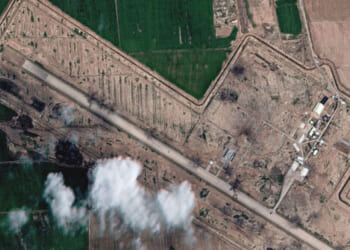
The target of both failed Iranian attacks was most likely Incirlik Air Base, a major military installation in southern Turkey immediately outside the city of Adana. As a result, the US State Department ordered all non-emergency employees and families to evacuate the consulate at Adana. At the surface level, Incirlik is a valuable military target that would likely put shock into US and NATO forces if the Islamic Republic were to conduct a successful strike.
Incirlik is a strategically vital base for Turkey and NATO as a whole for several reasons. It is Turkey’s most important military base, functions as a logistical hub for NATO forces in the Middle East, and hosts some 1,800 American soldiers and civilians alongside Turkish and other NATO soldiers. Owing to its geographic position, it is vital for reconnaissance and air operations against threats in Iraq and Syria, namely the Islamic State. In addition, Incirlik is a storage site for US nuclear weapons, housing between 20 and 50 B-61 atomic bombs. All these factors make Incirlik seem like an attractive target, which Iran could strike to deal a significant blow to US and NATO morale.
But the Iranian regime is unwise to persist in attempting to hit Incirlik or other military assets on Turkish soil, even if its objective is to weaken US resolve by widening the war and raising costs on third-party states. Unlike the Gulf monarchies under heavy Iranian drone and missile bombardment, Turkey has a large and effective conventional army with a robust domestic defense industry.
Ankara derives its air power from both its advanced, albeit aging, NATO aircraft, including over 200 American-made F-16 fighter jets, and its domestically produced combat drones. NATO has also become furious over Iran’s firing at Turkey, and a successful strike on Turkish home soil could prompt treaty members to start discussing collective military action under Article 5 in place of solely bolstering defenses.
Perhaps most importantly, the IRGC’s missile attacks needlessly provoke Turkey, given the efforts Ankara’s government made to plead Tehran’s case and avert US strikes before February 28. Since the war broke out, Erdogan has still denied US warplanes access to Turkish airspace, not wanting any part in offensive operations against Iran’s regime. Repeated ballistic missile attacks will not strong-arm Turkish leaders into suing for peace but instead alienate those who vouched for Tehran in the past.
This indicates that the Islamic Republic’s remaining core leadership is unlikely to authorize ballistic missile attacks on Turkish territory. Instead, the IRGC’s “mosaic defense” doctrine, which allows local commanders to make decisions without Tehran’s approval in cases of regime decapitation, has likely put the decision to fire missiles at Turkey in the hands of provincial officers.
Splintering within Iran’s damaged high command points to this probability. While President Masoud Pezeshkian apologized for strikes on Iran’s neighbors, Foreign Ministry spokesman Esmail Baghaei refused all remorse, saying “there is no point to talks about anything but defense and crushing retaliations against enemies.”
Potential Flashpoints for Turkish Military Action
Several scenarios could ignite a Turkish military response and some degree of involvement in the Iran war.
First is a successful IRGC missile attack on Turkish soil. Whether it reaches its intended target—perhaps one of Turkey’s key air bases or radar stations—or misses and hits a civilian-populated area, Erdogan’s cabinet may very well be compelled to locate and strike the units or sites responsible.
Second is rising pressure from Turkey’s allies and partners to join the fray, facing repeated attacks from Tehran and its proxies. Even beyond NATO concerns, Iran and its partner-proxy, the Lebanese Hezbollah, have attacked Ankara’s strategic friends and interests: Azerbaijan and Cyprus. On claims of protecting the Turkish-populated occupation zone in Northern Cyprus, Turkey has already dispatched six F-16 fighter jets to the island, even though the Cypriot government desires nothing of Turkey’s military buildup. Air-raid sirens sounding over key partners and possible entreaties from NATO for logistical assistance would make for a slippery slope into Turkish involvement.
Third, and somewhat separately, is the Kurdish issue. Global media outlets reported rumors of US-Israeli intelligence operations to arm and prepare Iranian Kurdish rebels to wage an insurgency against the regime on March 3. These rebels, including the Kurdistan Free Life Party (PJAK)—an Iranian arm of the Kurdistan Workers’ Party (PKK) which Ankara detests—would be launching a protracted fight for Kurdish autonomy along Turkey’s southeastern border. Given Ankara’s track record in dealing with Kurdish forces in Syria, a PJAK uprising would likely spark Turkish cross-border air and/or ground assaults.
Why Is Recep Erdogan Hedging?
Turkey is watching the war in Iran with deep concern—but not necessarily for the reasons many in Washington assume. Publicly, President Recep Tayyip Erdogan calls for restraint and warns that the conflict could engulf the entire region. But beneath that rhetoric lies a more calculated strategy.
For Erdogan, the survival of the Islamic Republic has long served a geopolitical purpose. Iran’s network of proxy groups—from Hezbollah to Hamas—keeps pressure on Israel and fragments the regional balance of power. That fragmentation creates strategic space for Turkey to expand its own influence across the Middle East, the Caucasus, and Africa. But the risk of Turkey becoming an unintended battlefield undermines its mediating posture and limits Ankara’s long-term maneuvering.
This is the dilemma facing Ankara. Turkey wants Iran weakened—but not replaced by a democratic, pro-Western government that could become a powerful regional competitor and an ally to Israel. A damaged Iranian regime still capable of sustaining anti-Israeli proxy pressure helps limit Israeli regional dominance, which Erdogan views as essential to Turkey’s own ambitions. From Ankara’s perspective, the ideal outcome of this war is paradoxical: a weakened Iran, an Israel still under pressure, and Turkey positioned to emerge as the region’s central power.
Aside from the strategic double-bind, domestic anti-war sentiment will likely function more to limit the scope of military options Erdogan may consider rather than shift Turkey’s red lines or raise Ankara’s tolerance for threats from Iran. Over the last decade, the Turkish president has shown his readiness to order military operations within Turkey and overseas, from Iraq and Syria to Libya and Somalia.
If Iran crosses a red line by firing missiles on a Turkish military base or a civilian-populated area, many Turks may approve of some limited response. Still, the opposition Republican People’s Party (CHP) has already begun rallying voters against Erdogan and his Iran policy, claiming he is too open to military action already.
Domestic approval is especially sensitive because Erdogan is preparing to complete his presidency, paving the way for the highest-stakes election the country has seen in over two decades. Since Turkey’s last election in 2023, Erdogan’s government has become increasingly unpopular for its erosion of democracy, chiefly for arresting CHP presidential nominee Ekrem Imamoglu in March 2025.
This, and Erdogan’s apparent plan to prop up his son Bilal as the AKP’s next leader and presidential candidate, has alienated much of Turkey beyond the president’s most loyal voters. If Erdogan deems a military response to Iranian strikes or Kurdish insurgents necessary, he will be hard-pressed to define a clear objective, set limits, and prepare an off-ramp.
About the Author: Sinan Ciddi
Sinan Ciddi is a senior fellow on Turkey at the Foundation for Defense of Democracies (FDD) in Washington, DC. Sinan has over two decades of research experience focused on Turkish domestic politics and foreign policy, with bylines in Foreign Policy, Foreign Affairs, Politico, Newsweek, The National Interest, and 19FortyFive. He frequently provides commentary on various media outlets, including BBC, CNN International, DW News, France 24, the Greek Current Podcast, and CBS’s John Batchelor Show. Sinan is also an associate professor of national security studies at Marine Corps University and an adjunct professor at Georgetown University’s School of Foreign Service.