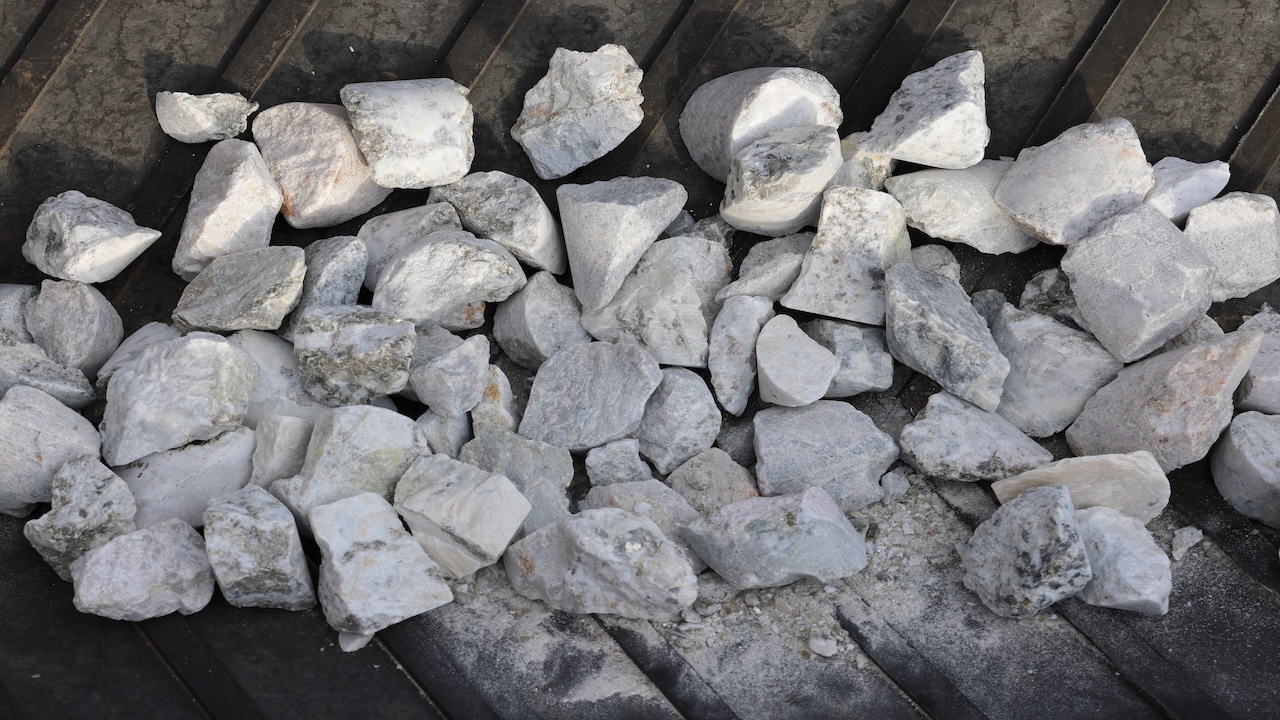
Lithium is emerging as a strategic resource, pushing Europe to develop domestic mining and reduce dependence on Chinese-controlled critical mineral supply chains.
In recent years, the European Union (EU) has become increasingly focused on the strategic implications of concentrated supply chains. Lithium is emerging as a resource for the 21st-century economy, with an importance comparable to that of petroleum in the 20th century.
China produces roughly two-thirds of the world’s refined lithium supply, and many European leaders worry about its geopolitical implications. With demand expected to grow fivefold by 2030 for lithium, Europe is picking up a shovel and scrambling to build its own lithium mining and processing capabilities—and for many members of the EU, that process all starts with digging in their own backyards.
From Germany to Serbia to Portugal, mining firms are racing to develop promising new discoveries of lithium. For countries without promising lithium deposits, stockpiling is the only option. “All European countries today have strategic reserves for oil and gas. We should do the same for strategic raw materials,” said Stéphane Séjourné, European Commissioner for Industrial Strategy, in an interview with Reuters.
Europe’s Push to Develop Domestic Lithium Mining
At the start of the year, Europe was believed to be home to only 5 percent of global lithium deposits. Portugal was home to Europe’s only commercial lithium mining operation—for use in ceramics.
Now, Portugal’s Barroso lithium mining project has been designated “strategic” by the European Union under the Critical Raw Minerals Act (CRMA). Large-scale production at the site could begin as early as 2027. However, the project faces local opposition, and a rare United Nations report has condemned the lack of transparency surrounding the project. Across Portugal and elsewhere, Europe’s rush for white gold has drawn criticism from environmentalists who worry about the impact of mining operations.
Serbia’s Jadar Lithium Project and EU Strategic Interests
Another nation with large lithium deposits lies just outside the European Union—in Serbia. The Eastern European country has been a candidate for European Union membership since 2012.
“The European Union’s interest in Serbia was almost too good to be true, it is claimed the country could provide up to 15% of Europe’s lithium needs alone,” said Joannes Laveyne, an energy specialist with Ghent University. The mineral jadarite, rich in lithium, is unique to Serbia’s Jadar Valley. Mining the stable mineral is comparatively low-impact, unlike other lithium mining operations, but political concerns remain.
“Questions about Serbia’s commitment to European ideals and to a lesser extent its ties to Russia are significant hurdles,” said Mr. Laveyene.
Global mining company Rio Tinto has long supported the project and welcomed the inclusion of the mine under the European Union’s CRMA framework last summer. However, it announced it was pausing local operations due to opposition from environmental groups.
“Sooner or later, this or some new project about mining in lithium will move forward in Serbia,” said Neven Cvetićanin, a fellow with the Institute of Social Sciences Belgrade and former member of the Serbian parliament. Mr. Cveticanin allowed that the political situation is not ideal for large-scale projects. “Serbia lacks several conditions, including political stability due to ongoing student protests,” Mr. Cveticanin said.
Germany’s Lithium Discovery and Europe’s Resource Potential
Other countries hope they are sitting on Europe’s motherlode of white gold. British-based Neptune Energy announced the discovery of 43 million tons of lithium carbonate in Saxony-Anhalt, Germany. The company has proposed extracting the mineral from brine in a process that would involve minimal land usage.
“It’s a potential game-changer for the European Union’s lithium ambitions,” said Christopher Ecclestone, a strategic mining analyst. “If validated, Germany’s reserves could put Europe on par with global producers.”
If confirmed, the find could rival those of South America’s “Lithium Crescent,” which spans Bolivia, Chile, and Argentina. While the United States has long imported lithium from this region, it is not without geopolitical risk. Bolivia, for example, called for a lithium cartel similar to OPEC in 2020, and last year, the country’s state-run lithium company signed development deals with Chinese and Russian commercial entities.
The Critical Raw Materials Act and Europe’s Lithium Strategy
The European Union passed the Critical Raw Materials Act in 2024. The law has expedited the development of mining and recycling projects deemed “strategic.” However, the act’s rapid rollout drew criticism—notably from Green Party lawmakers who argue that the approval process lacks transparency.
Of the 47 projects labeled “strategic” at the time under the act, 22 involve lithium in some capacity. Lithium recycling will also play a role in meeting future demand.
Lithium may ultimately decide the balance of industrial power around the globe. Whether mined in the valleys of Serbia or recovered from brine in Germany, Europe’s lithium mines hope to rewrite the global energy map—one battery at a time.
About the Author: Joseph Hammond
Joseph Hammond is a journalist and former Fulbright Public Policy fellow with the government of Malawi. He has reported from four continents on topics ranging from the Arab Spring to the M23 rebellion in the Eastern Congo, with bylines in Newsweek, The Washington Post, Forbes, and more. He has contributed to The National Interest since 2016. Hammond has been a recipient of fellowships organized by several think tanks, including the National Endowment for Democracy, the Atlantic Council of the United States, the Heinrich Boll Stiftung North America Foundation, and the Policy Center for the New South’s Atlantic Dialogue.