Iranian-backed militias in Iraq are seeking to tie down US forces in the Middle East.
Iran is seeking to inflame Iraq and drag it into an ever-widening conflict in the Middle East. In the wake of US and Israeli airstrikes on Iran on February 28, there have been numerous attacks in Iraq by Iran and Iranian-backed militias. US Secretary of State Marco Rubio spoke with Iraqi Prime Minister Mohammed Shia al-Sudani on March 9 and “condemned terrorist attacks by Iran and Iran-aligned terrorist militia groups in Iraq, including in the Iraqi Kurdistan Region.”
In the wake of the call, the attacks have increased. Kurdish media outlet Rudaw estimates that there have been more than 270 drone and missile attacks on the autonomous Kurdistan Region in northern Iraq. These attacks have targeted US forces as well as other members of the anti-ISIS Coalition. In addition, they have targeted bases of Kurdish Iranian opposition groups. Italy said on March 12 that it believes an attack on its forces in Iraq was deliberate.
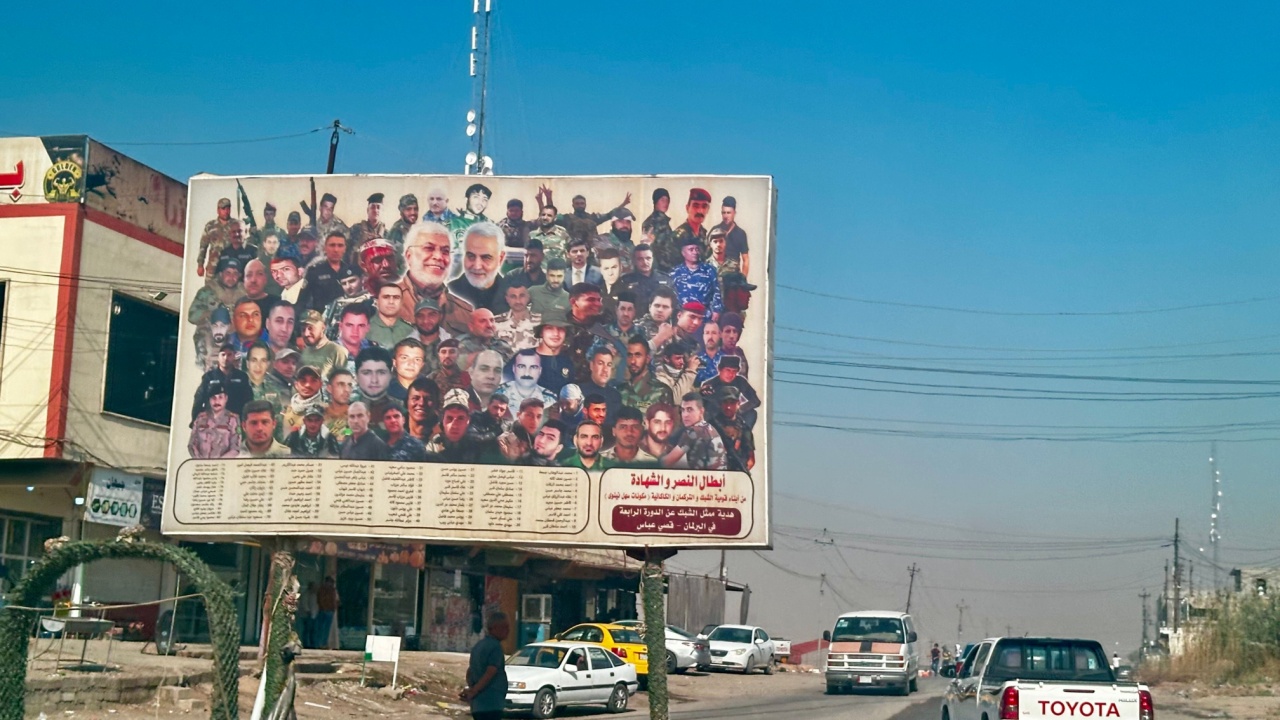
While the Iranian-backed militias in Iraq have been attacking, there has also been retaliation against the militias. The militias are part of a larger organization called the Popular Mobilization Forces. The PMF was founded in 2014 as part of Iraq’s attempt to recruit young men to fight ISIS. Most of the PMF ranks come from the Shia community of Iraq.
The PMF is not a single organization but is composed of dozens of brigades from different groups, such as Kataib Hezbollah, Asaib Ahl al-Haq, the Badr Organization, and Kataib Sayyid al-Shuhada. There have been numerous airstrikes on camps and bases of these militias since February 28. Several dozen PMF members have been killed. Iraq’s Ministry of Defense said on March 13 that kamikaze drones targeted one unit of the PMF. Social media reports have claimed this may be a deployment of the new US-made LUCAS drone.
Iran carefully sought to position Iraq as a potential frontline over the years by empowering the militias and using them to strike at Iran’s adversaries. For instance, Kataib Hezbollah was blamed for a January 2024 attack on Jordan in which three US service members were killed.
In 2020, after numerous attacks on US forces in Iraq by the militias, the United States killed Iran’s Islamic Revolutionary Guard Corps Quds Force commander Qassem Soleimani in a drone strike in Baghdad. Abu Mahdi al-Muhandis, the head of Kataib Hezbollah, was also killed in the strike, illustrating the close link between the Iranian IRGC and the Iraqi militias.
While Iran has used the militias in Iraq in the past to carry out drone and missile attacks, the volume of attacks since February 28 has increased massively. With hundreds of attacks in around twelve days of fighting, it is clear that Iran is seeking to spread the war to Iraq and make the country a frontline. This is not pitting a number of forces against each other as the country is being destabilized. The militias have targeted the Kurdistan autonomous region. Erbil, in the Kurdistan region, is home to a large new US consulate.
In addition, US forces have redeployed from the rest of Iraq to the Kurdistan region in the last year. The region is now a key lynchpin to US forces in Syria. In addition, the region exports oil via Turkey. Turkey is a member of NATO, and therefore, the Kurdistan region in Iraq essentially sits at a crossroads of strategic power in the region, between Iraq, Iran, Turkey, and Syria.
With the Iran war continuing, it appears Tehran hopes to neutralize opposition groups and US forces in the Kurdistan region. If it can’t neutralize them, it hopes to at least force US military attention to Iraq, rather than Iran. No country has claimed responsibility for the airstrikes on the militias. However, it is clear that these Iranian-backed groups blame the United States and Israel. Most of these militias already operate under US sanctions.
The only major PMF militia not sanctioned is the Badr Organization. The Iranian-backed militias often create new front groups to perpetuate their war in Iraq. One of these is called Saraya Awliya al-Dam. Another umbrella group for Iran’s operations in Iraq is the Islamic Resistance in Iraq. The difficulty in confronting these groups is their staggering and ever-shifting variety.
The airstrikes that have targeted the militias have gone after some key nodes of the militia network. Airstrikes have hit the plains of Nineveh, near Mosul and Kurdistan. Airstrikes have also targeted an area near Kirkuk and also in western Anbar near Qaim on the border with Syria. In addition, Camp Saqr near Baghdad has been struck. Nonetheless, it is unclear whether the airstrikes will deter the militias.
Iraq also faces other problems on the frontline. Oil tankers are under attack from Iran or Iranian-backed groups off the coast of Iraq, near Kuwait. The closure of the Strait of Hormuz means Iraq cannot export through the Persian Gulf, leading to economic headaches for Baghdad. Alternative routes may be pursued, but the pipelines through Kurdistan have limited capacity. The economic challenges could lead to other issues in trade, such as panic over possible food shortages and other problems.
Iran’s work to make Iraq a frontline zone is a multi-decade one. Militia members such as Abu Mahdi al-Muhandis left a decades-long trail of terror, going back to plots in Kuwait in the 1980s to attack Western targets. After 2003, Iran sought to turn Iraq into a kind of “near abroad,” making its state dependent and hollowing it out by the militias. Now the fruits of that work have grown, and Baghdad is reaping what Tehran sowed.
About the Author: Seth Frantzman
Seth Frantzman is the author of Drone Wars: Pioneers, Killing Machine, Artificial Intelligence and the Battle for the Future(Bombardier 2021) and an adjunct fellow at The Foundation for Defense of Democracies. He is the acting news editor and senior Middle East correspondent and analyst at The Jerusalem Post. Seth has researched and covered conflict and developments in the Middle East since 2005 with a focus on the war on ISIS, Iranian proxies, and Israeli defense policy. He covers Israeli defense industry developments for Breaking Defense and previously was Defense News’ correspondent in Israel. Follow him on X: @sfrantzman.