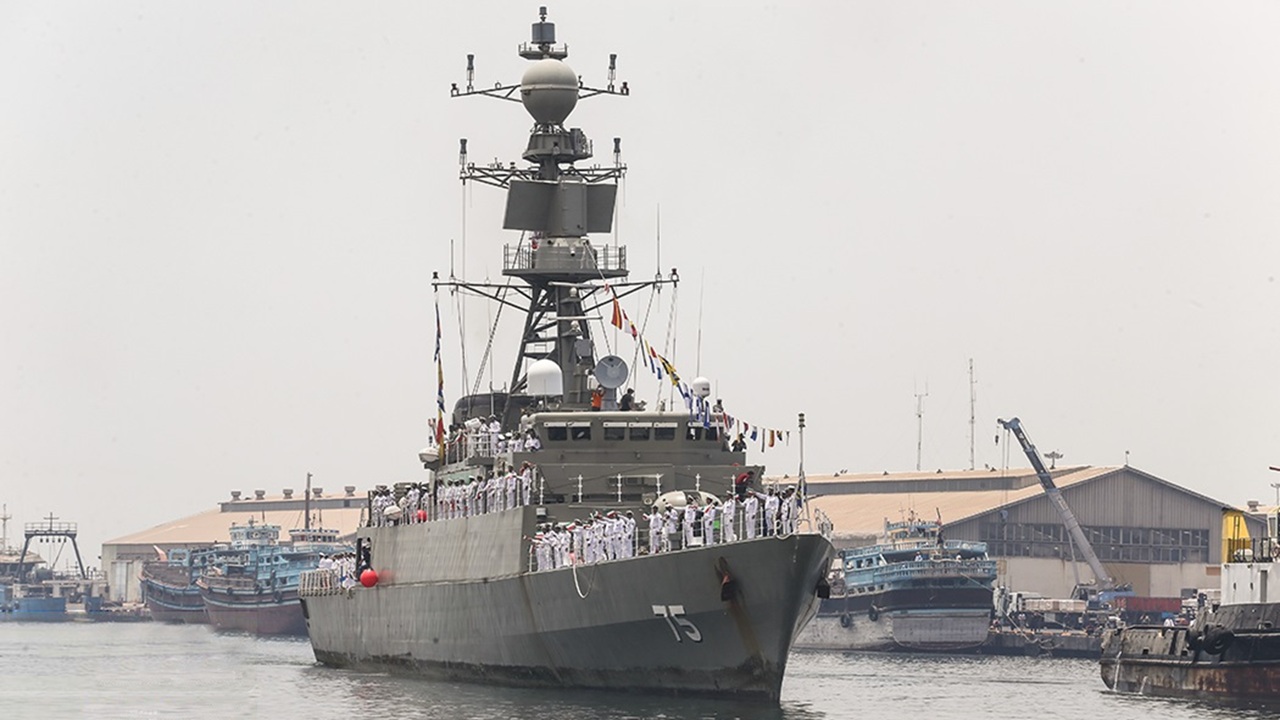
During the air campaign against Iran, US and Israeli strikes have disabled or destroyed around 60 Iranian vessels, a significant fraction of its total naval power.
Operation Epic Fury has resulted in the widespread destruction of Iran’s naval forces, fundamentally reshaping the balance of naval power in the Persian Gulf. Since the campaign began on February 28, US and Israeli forces have carried out a sustained maritime strike campaign targeting Iranian infrastructure, resulting in the systemic dismantling of Iran’s surface fleet.
According to Adm. Brad Cooper, the commander of US Central Command (CENTCOM), more than 60 Iranian vessels have been destroyed or disabled to date, including major surface combatants, logistics and command ships, missile and minelaying vessels, small swarm craft, and submarines. This includes vessels from both the regular Islamic Republic of Iran Navy (IRIN) and the Islamic Revolutionary Guard Corps Navy (IRGC Navy), which have a combined total of around 250–300 ships of various sizes and strengths.
The remainder of Iran’s naval force is tattered and disorganized—a severely degraded version of its former self.
Which Iranian Ships Has America Sunk So Far?
Before Epic Fury, Iran relied on a maritime doctrine of both conventional and asymmetric capabilities, with a few surface combatants, missile boats and swarm craft, submarines, minelaying operations, and naval drones. The centerpiece of the entire Iranian naval strategy was the lingering threat to close the Strait of Hormuz, through which 20 percent of the world’s global supply flows. In that sense, Iran’s Navy was never a blue-water force, but rather a regional deterrent that posed a legitimate threat to local shipping lanes.
Now, roughly two weeks into the war, several of Iran’s most prominent naval vessels have been destroyed or disabled.
- The IRIS Dena, a Moudge-class frigate, was one of Iran’s most capable surface combatants, equipped with anti-ship missiles, radar systems, and helicopter support capabilities. It was reportedly sunk by a US Navy submarine using a Mark 48 torpedo, marking the first combat sinking of a major warship by a US submarine since World War II.
- The IRIS Shahid Bagheridrone carrier was a converted commercial vessel designed to launch and support unmanned aerial systems. The Bagheri was built to extend Iran’s drone warfare capabilities at sea—but was destroyed while docked at Bandar Abbas during precision air strikes.
- The IRIS Makran was a massive converted tanker serving as a floating logistics hub and forward operating base, providing support for drones, helicopters, and special operations forces; it was heavily damaged during the early days of the campaign.
- The IRIS Jamaran corvette was a domestically produced combat ship armed with missiles and air-defense systems; it was destroyed during initial strike waves targeting naval bases.
- And the Sahand and Sabalan frigates, older but still capable surface combatants, were both reported struck or destroyed during strikes on naval facilities.
Beyond major warships, the campaign has heavily targeted Iran’s asymmetric fleet, with confirmed losses including 16 minelaying vessels destroyed near the Strait of Hormuz and 10 additional mine ships destroyed at port—as well as numerous fast attack craft used in swarm tactics. These smaller vessels were central to Iran’s strategy of overwhelming larger ships through numbers and surprise.
Iran’s Naval Ambitions Are Shattered from the War
Strategically, the destruction of Iran’s fleet severely weakens its ability to threaten the Strait of Hormuz; without its surface ships and mine warfare capability, sustaining a blockade becomes far more difficult. And the loss of vessels like Shahid Bagheri and Makran functionally ends Iran’s ambitions for an expeditionary navy.
Iran still possesses a limited submarine force and coastal missile launchers and small irregular craft. But these assets are paltry relative to the fleet that existed just two weeks ago. In sum, the Iranian navy has effectively collapsed, forcing a short-term doctrinal shift, and potentially, a long-term rebuild that could take decades.
About the Author: Harrison Kass
Harrison Kass is a senior defense and national security writer at The National Interest. Kass is an attorney and former political candidate who joined the US Air Force as a pilot trainee before being medically discharged. He focuses on military strategy, aerospace, and global security affairs. He holds a JD from the University of Oregon and a master’s in Global Journalism and International Relations from NYU.