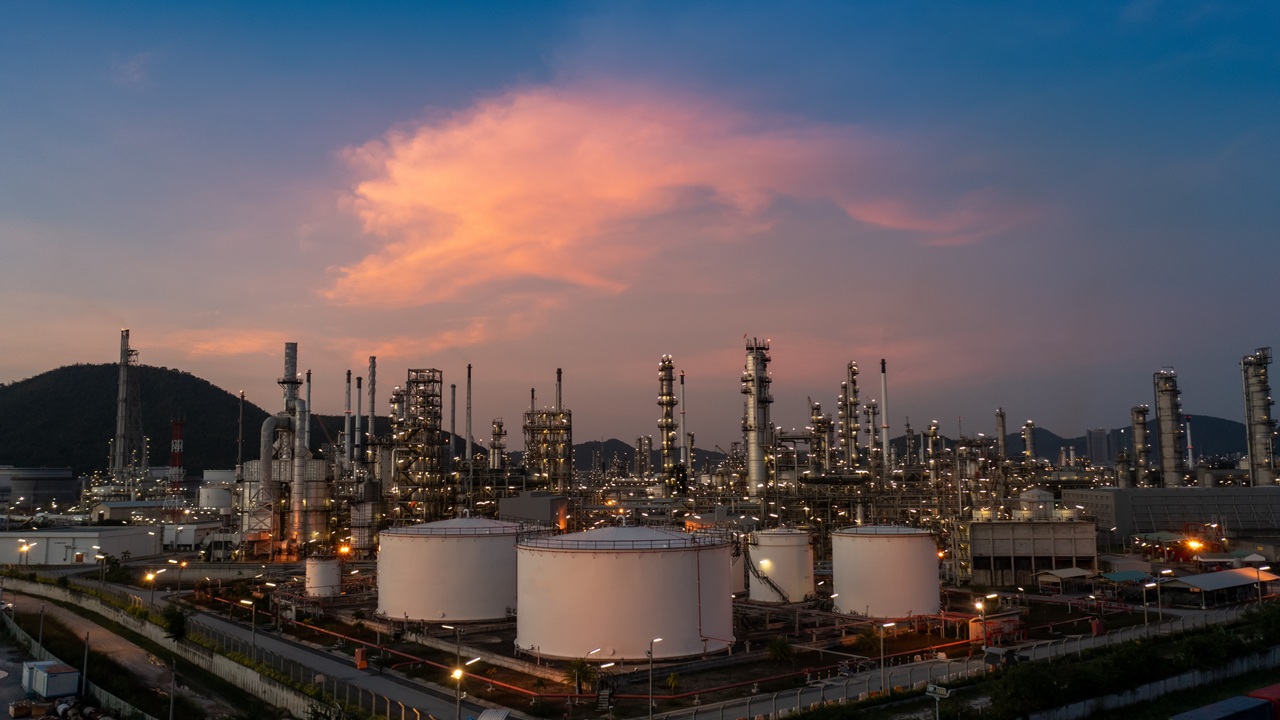
Oil markets are losing an estimated 15 million barrels per day from the closure of the Strait of Hormuz—a loss that spells disaster for the global economy.
Among most people in the financial world, the idea of a near-total halt in flows of oil through the Strait of Hormuz has long been considered a “fat tail” risk scenario: one that would be immensely important, but would probably never happen. The political risk consultants like me who they deal with were often seen as “crying wolf” when they had the idea that there was even a small probability of that happening. Time and again, there were brief periods where things looked like it was at least possible that the Persian Gulf would see a conflagration, with concerns about Israel going it alone in 2007 and 2012, President Donald Trump pulling out of the JCPOA in 2018, the 2019 Iranian drone attack against critical Saudi oil infrastructure at Abqaiq, the US killing of Gen. Qasem Soleimani in January 2020, and other episodes. None of them ended up having a major impact on the availability of oil. Those of us professionally involved in this even spoke of “Iran fatigue,” where clients would be eager to move on to the next subject during a presentation.
Now, however, the wolf is actually here.
All the supposed firebreaks that would prevent this from happening have failed. Some of them have historically been staples of a number of hawkish commentators about the Middle East: that Iran would not even retaliate facing such an overwhelmingly dominant United States, that it would not target Gulf Arab states, and that the US Navy could thwart any attempt to close the Strait before it had any real market impact. Those arguments have all proven untrue, though with enough time and casualties the US could probably take control of the coasts along the Strait.
What has proven to be the core logic of the situation is the unwillingness of tanker operators to take extreme risks with their vessels, their potential liability for oil spills, and the lives of their crews. I had picked up on this back in the late 2000s, when I dealt with some shipping industry and ship broker clients at a former employer, and had the opportunity to discuss this at length with senior managers there. Sending ships into dangerous waters is not merely a matter of obtaining insurance. Tanker companies and captains need to believe that they are not taking an imprudent level of risk. As long as Iran is able to strike against tankers in the Strait, with missiles, mines, fast boats, and the like, and has clear intent to do so, it will not be business as usual. The Trump administration clearly underestimated Iran’s asymmetric leverage here.
What a Prolonged Hormuz Closure Means for Oil Prices
The volume of crude oil lost in the conflict so far is staggering. Even with Saudi Arabia’s ability to send some volumes across the peninsula to the port of Yanbu on the Red Sea, and the United Arab Emirates having a pipeline to Fujairah outside the Strait on the Arabian Sea, most estimates place the net loss from the conflict at around 15 million barrels per day. Saudi Arabia’s usual role of scaling up spare production capacity during global crises to make up for shortfalls elsewhere will not work this time, due to its limited pipeline and tanker loading capacity on the Red Sea. As storage tank capacity is exhausted, wells are being shut-in across the region. There is a lot of oil in both commercial and strategic storage outside the Gulf, but the price impact kicks in well before the storage tanks run dry.
In theory, if the loss of the 15 million bpd drags on for months on end, severely depleting global storage, rising prices will eventually balance the market by reducing demand to match supply. It is very difficult to know where that would top out, because there has never been an analogous situation to model it from. What we do know, though, is that it would of necessity cause a global recession. The current level of global productive activity would not be possible without that oil, even as higher prices could be expected to accelerate efficiency gains a bit.
The last 72 hours has been a roller coaster in international oil markets, with Brent crude oil spiking as high as $118 per barrel in the early hours of March 9, and falling back into the $80s before beginning another sharp rise. The only thing this makes clear is that the market is collectively assuming that the worst case scenario of a months-long oil crisis will not play out—either via Trump finding a face-saving way to withdraw from the conflict, Iran crying uncle, or the United States taking enough control over the Strait to make it safe for shipping.
Trump’s recent comments on his commitment to continuing the war have been all over the place, but it is hard to see crude oil staying under $100 per barrel if there is not a ceasefire within a week. Conversely, an outage of a month at this rate would deplete global storage by about 450 million barrels—more than the entire volume in the US Strategic Petroleum Reserve (SPR). The fact that the world has a lot in storage is of limited comfort, because prices will balance the market well before we physically run out of oil, which would be economically devastating.
The Trump Administration Failed to Appreciate Iran’s Strengths
Unfortunately, this situation is one of Iran’s two strengths—the other being that Iran is too large and too populous for the United States to invade and occupy. Trump and his close advisors, most of whom lack any expertise on subjects related to this situation, seem to have bought into the viewpoint of hawkish analysts and pundits that Iran was not capable of halting shipping in the Strait. They are now learning that that viewpoint was wrong.
The United States probably could restore the flow of oil eventually solely by military force, but it would be costly and difficult. The conundrums this creates for both sides may eventually lead both of them back to the negotiating table, as neither has good ways of achieving everything they want.
About the Author: Greg Priddy
Greg Priddy is a senior fellow for the Middle East at the Center for the National Interest. He also consults for corporate and financial clients on political risk in the region and global energy markets. From 2006 to 2018, Mr. Priddy was director, global oil, at Eurasia Group. His work there focused on forward-looking analysis of how political risk, sanctions, and public policy variables impact energy markets and the global industry, with a heavy emphasis on the Persian Gulf region. Prior to that, from 1999 to 2006, Mr. Priddy worked as a contractor for the US Energy Information Administration (EIA) at the US Department of Energy. Mr. Priddy’s writing has been published in The New York Times, The National Interest, Barron’s, and the Nikkei Asian Review, among others.