Recent stories of note:
“A Deeply Human Vision”
Samuel Gregg, Law & Liberty
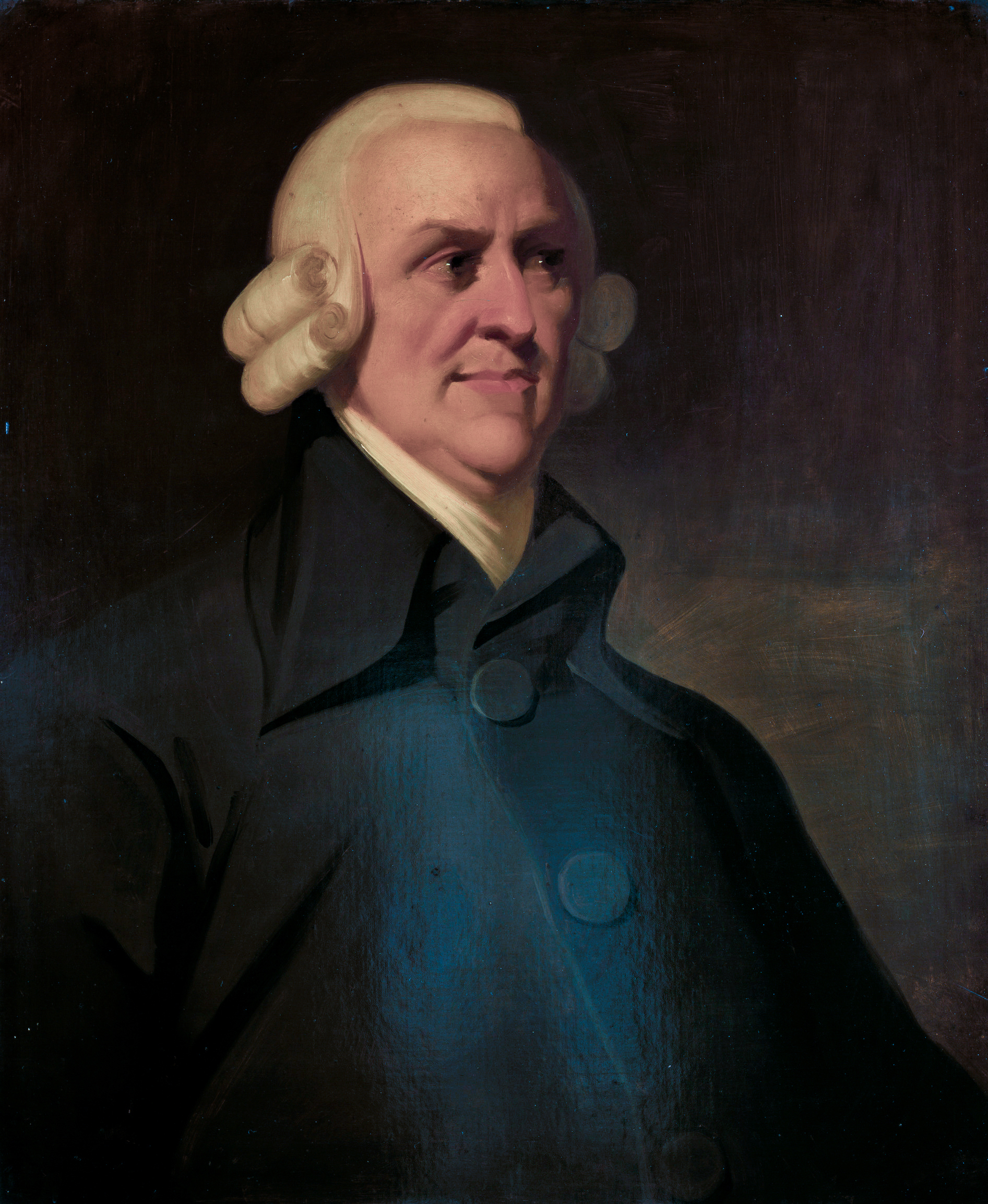
It is a remarkable coincidence that Adam Smith’s Wealth of Nations was published the same year as the Declaration of Independence, which gave birth to the nation that not only came to embody most fully Smith’s principles but also played a pivotal role in successfully exporting his ideas all over the globe, producing wealthier nations the world over as a result. But while today Smith is known primarily as the father of free markets, his economics are inseparable from his less well-known moral writings, specifically The Theory of Moral Sentiments (1759). As Samuel Gregg explains, Smith’s empirical approaches to morality and wealth creation are centered on common humanist principles of “mature liberty, personal responsibility, and virtue.” Gregg makes clear that Smith advocated for a society of moral and economic interdependence rather than an amoral arena of Randian individualists. The absence of any widely adhered-to system of morality, therefore, bodes nothing good for the future of a truly free market, or indeed a free country.
“The Human Condition or the Conditional Human?”
David Polansky, The Hedgehog Review
Nowhere are the consequences of the divorce between economics and morality more visible than in the realm of artificial intelligence. David Polansky deplores how impoverished our national conversation about the subject is: “Entrepreneurial drive and ambition, not philosophical acumen, define our current captains of industry.” As tech magnates push ever-greater economic optimization and attempt to transcend every human limitation—including death itself—Polansky urges us to take a step back and ask whether all this scientific and technological progress is not fundamentally antihuman and regressive. Luckily, a toolkit for evaluating our current situation is readily available, in the form of the humanist tradition, which emphasizes the timeless, irreducible complexity of human nature. Whether humanist inquiry can actually get tech magnates to think twice about playing the sorcerer’s apprentice is another matter.
“The history of conservatism is a history of crisis”
Gwion Wyn Jones, Engelsberg Ideas
There is something of the humanist ethos in Roger Scruton’s definition of conservatism as hesitation (think of Montaigne motto’s “What do I know?”). Unlike humanism, however, conservatism is a distinctly modern and ever-changing disposition, as Gwion Wyn Jones makes clear. The word in its political sense entered the common parlance only in the early nineteenth century to describe, of all things, the Napoleonic French senate; in 1830, it was used for the first time to designate the British Tory party, which rebranded as Conservative only four years later. Within a decade the term had crossed the Atlantic and was being used on both sides of the political spectrum: in the 1850s, Southern papers spoke approvingly of the “conservative influence” of slavery over the federal government, even as Lincoln appropriated the language of conservatism to preserve the Union. Today, as conservatism in the United States (and in Britain) undergoes an identity crisis—think of how often politicians accuse each other of betraying the conservative movement—it is perhaps a small comfort to note that crisis is the rule, not the exception, in the history of conservatism: as Margaret Thatcher, who was reviled by many Conservatives for her radical free-market policies, put it (quoting Tennyson), “That man’s the true Conservative/ Who lops the mouldered branch away.” Wise words, but, as Jones writes, the question then becomes “how much lopping ought to be done” before the tree itself becomes unrecognizable?