In the final segment of this three-part series, I will address the third question:
Why did God choose the cross, and how has the cross functioned as a universal icon of Christianity, eventually becoming a worldwide symbol of hope, faith, and eternal redemption?
The Cross’s Visual Simplicity and Symbolic Depth
To better understand how the cross embodies visual simplicity and symbolic depth, consider its technical qualities: it has two intersecting lines—a form so simple even a child can draw it, yet so distinct that it is immediately recognizable worldwide. This simple geometry makes it open to symbolic interpretations. The horizontal line evokes the relationships among human beings; the vertical line represents the relationship between God and humanity; and the intersection between the two represents the union of heaven and earth—the human and the divine—held together in the person of Christ.
Furthermore, no other ancient execution method can be represented in such an iconic, simple, and repeatable form. For example, stoning has no single, simple form; beheading is an act rather than a shape—at best, a sword or axe could symbolize it, but these are weapons, not passive instruments. While burning at the stake is a symbol that is just as powerful, visually speaking, it is amorphous and often associated with a violent form of death rather than peace.
The cross, in comparison, is simple enough to carve, scratch, embroider, or forge in any material. As a simple signpost, it is visible from a distance and is instantly reproducible across cultures and artistic styles. Indeed, if God desired a visible, powerful, yet simple symbol that could unify His Church across time and geography, the cross is uniquely suited for this purpose.
The Cross and Biblical Prophecies
Beyond geometry and symbolism, the cross uniquely satisfies key biblical images and prophecies. Psalm 22:16 speaks of a person’s hands and feet being “pierced,” which fits crucifixion in a way stoning or beheading could not perfectly represent.
Moreover, Jesus Himself declares, “And I, when I am lifted up from the earth, will draw all people to myself” (Jn. 12:32). Crucifixion involves literal elevation on a stake or tree—quite visible to onlookers at a distance. At the same time, the image of being hung on a tree (Deut. 21:23) and made a “curse” for us (Gal. 3:13) aligns with the wooden cross, which symbolizes the ultimate sacrificial act of Jesus Christ.
Finally, according to St. Aquinas, the cross is a “fitting” emblem, as it harmonizes divine intentions, biblical prophecies, and the symbolic language needed for a universal faith (Summa III, Q. 46, Art. 4).
The Cross as a Suitable Symbol
While a sword is an active instrument of aggression—its symbolism is bound to combat, a cross is a passive structure; it does not act, but it receives. Such passivity is crucial in a theological sense because it signifies endurance rather than attack and conveys the idea that God absorbs human violence rather than inflicts it on man. Hence, the cross visually communicates that victory comes not by killing enemies, but by suffering for and forgiving them.
The cross embodies Jesus’ ethic of enemy love (e.g., “turn the other cheek,” “love your enemies,” and “Father, forgive them”) in a way that a sword never could. Had God chosen something else and the Church’s symbol had been a weapon, faith might be misunderstood mainly as a crusading or war-making force. However, with the cross, the essential message takes on a cruciform dimension: the idea of power through self-sacrifice rather than coercion.
The cross is also a suitable icon that brings together two contrasting realities that rarely coexist in a single image: unimaginable pain and unimaginable hope. Historically, crucifixion was engineered to maximize the duration of agony, the degree of public shame, and the spectacle of being crucified. Therefore, the cross is used to represent the worst the world can do to a human body. Yet, because it has later become associated with the crucifixion of Christ, it has become a powerful symbol of pain and ultimate sacrifice through nonviolence.
When Christians look at the cross, they are not bypassing suffering but looking at it directly, recognizing the very message that matters in a pastoral and ethical sense, because victims of injustice and violence can see in the cross a God who recognizes the full extent of human pain. Hence, this powerful symbol also declares that God is not distant from the tortured, the oppressed, and the humiliated; rather, He has known such treatment in His own flesh.
Because of the cross, maximum suffering has become the symbol of maximum power. On the cross, Jesus not only overcomes sin by bearing it but also overcomes hatred by responding with forgiveness through the immortal words, “Father, forgive them, for they know not what they do” (Lk. 23:34). Hence, Jesus breaks the cycle of violence not through retaliation but through the act of allowing such a violent act to be done on Him—and then resurrecting thereafter.
Theologians like Green and Baker (n.d.) stress that the cross reveals not a God trapped in victimhood, but a God freely choosing nonviolent, redemptive suffering as the way to defeat evil. Similarly, Septemmy Lakawa (n.d.) describes the cross as the place where God breaks the supposed inevitability of “violence answered by violence,” offering forgiveness as a risky but powerful alternative. In this way, the cross is the antithesis of a war standard: it does not command, “Kill for God,” nor does it proclaim, “God has died for you, even when you were His enemy.”
The Cross Throughout Christian History
Although Christianity has fragmented into countless denominations throughout history, one reality stands out: the cross remains a central—and shared—symbol across nearly all Christian traditions.
In the earliest centuries, the cross and crucifixion were considered so shameful that some early Christians were hesitant to foreground them. Yet over time, the cross began to appear in catacomb art and in simple monograms, such as the Chi-Rho (Wikipedia, n.d.).
After the conversion of the Roman Emperor Constantine in the fourth century, the cross was transformed from an obscure image into an imperial emblem. Many years later, relics of the “True Cross” became objects of veneration, and churches across the empire featured similar cruciform (cross-shaped) floor plans, making it the principal badge of Christian identity (Jensen, 2017).
Across the major branches of Christianity, the cross remains foundational, despite variations in how it is depicted. In Roman Catholicism, the crucifix—a cross bearing the corpus (body) of Jesus Christ—emphasizes the ongoing sacrificial yet compassionate presence of Christ. As a symbol, it highlights the costliness of grace and the continual relevance of the Passion. In Eastern Orthodoxy, various forms of the cross (often with additional bars) are embedded in iconography and liturgy. For example, the cross is venerated as the “Tree of Life,” uniting heaven and earth as a cosmic axis of salvation. In Protestant traditions, many emphasize the “empty cross,” focusing on the resurrection and the finished work of Christ (The Pappas Patristic Institute, 2023). In these diverse examples, the cross remains the central emblem on church buildings, pulpits, and in personal devotion.
In many ways, this shared symbol performs an essential social and spiritual function. This is how believers from a fourth-century medieval monastery or a modern-day Pentecostal church would recognize each other’s faith. Throughout history, pilgrims, refugees, and travelers would only need to look for crosses to identify places of worship that offer aid, respite, and sanctuary. These examples show how the cross serves as a standard by which all Christians can find common ground, regardless of faith, language, or culture.
From these discussions, our original premise is reiterated: God’s choice of a distinctive, simple, and universally reproducible symbol—once a shameful execution device that later became a beloved symbol of faith—ensured that His followers would always have a recognizable mark of identity and unity, serving as a theological anchor—and a powerful symbol—that links all branches to the foundational event of Christ’s death and resurrection.
Editor’s Note: This is the final article on The Cross, the Ultimate Symbol of the Faith: How a Torture Device Became a Global Symbol of Peace, Hope, and Redemption. Catch up on the rest of the series here.
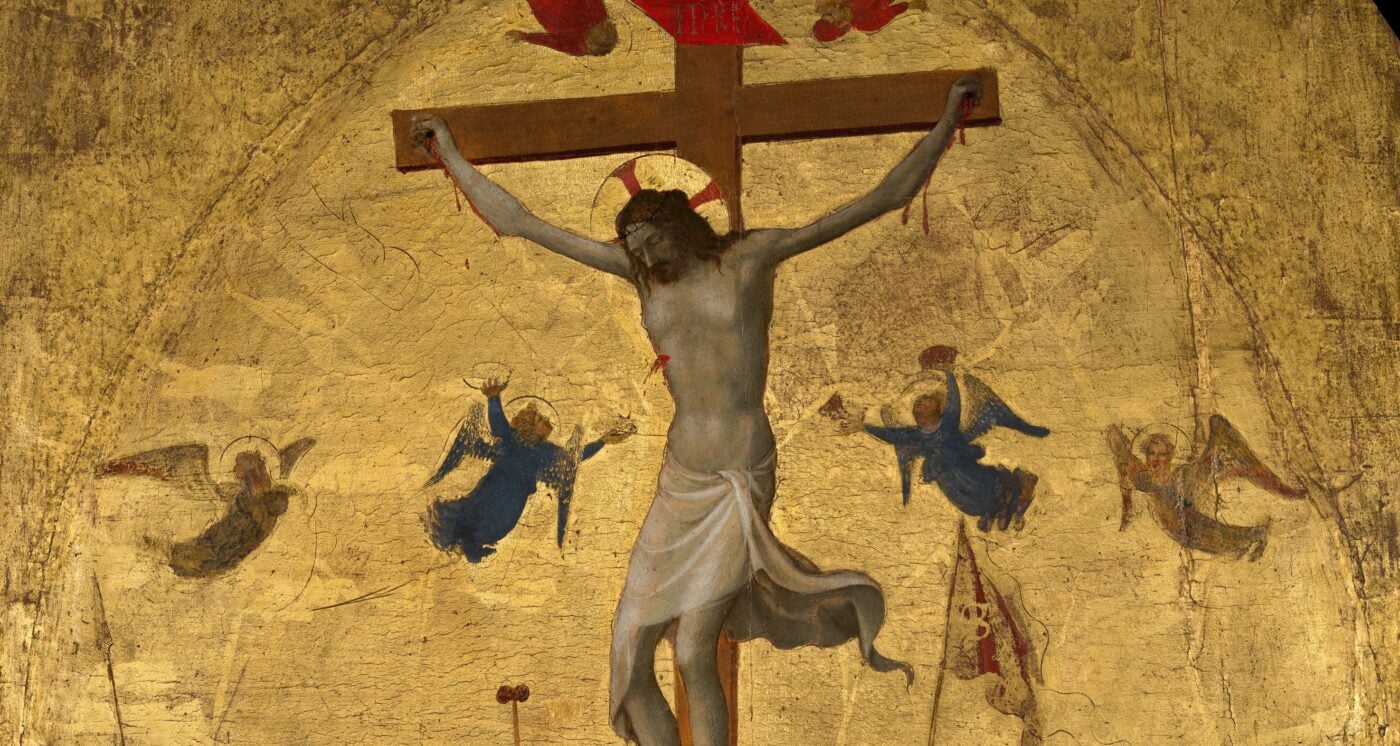
Image from MetMuseum.org