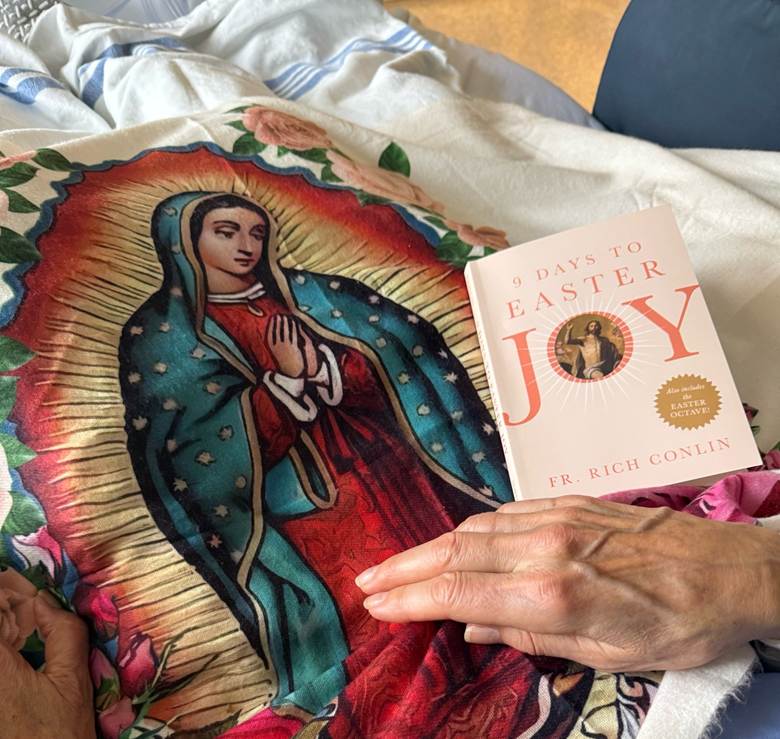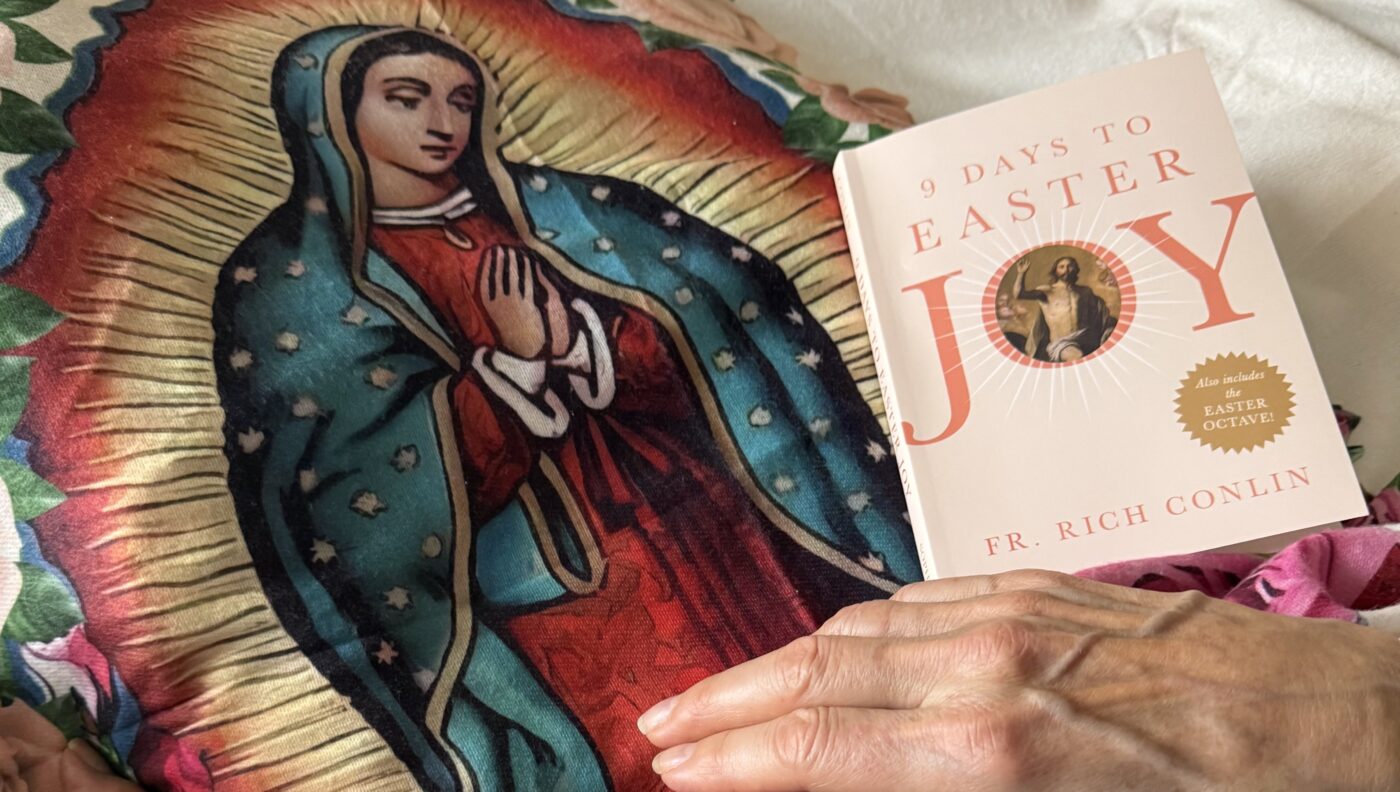
On February 9 of this year, my mother and I were in Mexico, nearing the end of a nine-day pilgrimage that would culminate at the Basilica of Our Lady of Guadalupe in Mexico City. We were just one day away from seeing the tilma—the miraculous cloak of St. Juan Diego on which the image of Our Lady was imprinted in 1531.
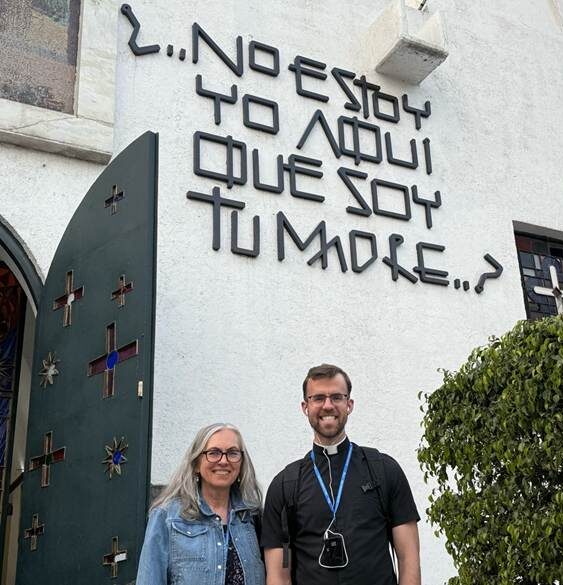
The pilgrimage had been a long-awaited grace for both of us.
Twenty years earlier, my mother had been diagnosed with stage-four cancer. During that terrifying time, the words of Our Lady of Guadalupe to Juan Diego became a lifeline for her: “Am I not here, I who am your mother?” Through Our Lady’s intercession, my mother experienced profound healing—physically and spiritually—and a deep devotion to the Mother of God took root in her life.
Our Lady of Guadalupe also played a role in my own story.
During my college years in California, where I was playing NCAA Division I golf, I had drifted away from the Church. My mother watched from a distance as I pursued success, competition, and a life that looked increasingly like the prodigal son’s journey into the far country.
One year, for my birthday, she asked me for a gift: that I would go to Confession.
I went.
In that confessional, I encountered Jesus Christ in a way I had never experienced before. It was the beginning of my return home. The Lord gradually redirected my life, and years later I was ordained a Catholic priest. By a beautiful providence, I celebrated my first Mass on December 12—the feast of Our Lady of Guadalupe.
So, when my mother and I finally stood together on pilgrimage to visit her shrine, it felt like the culmination of a long story of grace.
But the day before we were to arrive at the basilica, tragedy struck.
My mother suddenly suffered a massive brain hemorrhage. Within hours, she lost the ability to speak. Soon she could barely move. She was rushed to a hospital in Mexico, where doctors confirmed the seriousness of the stroke.
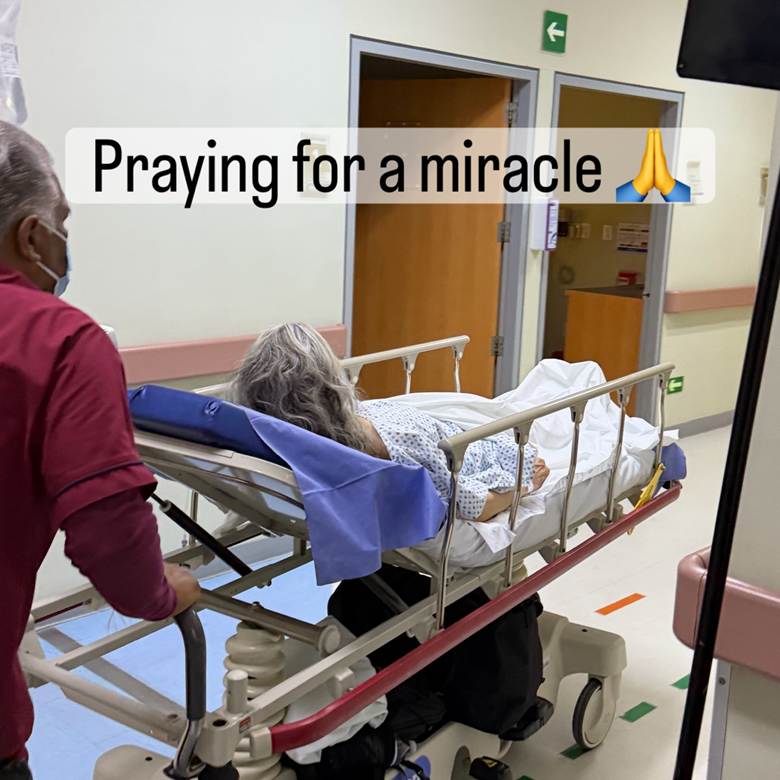
The shock was overwhelming. Sitting beside her hospital bed, hearing the doctors explain the damage to her brain, and watching her struggle to communicate was the most painful experience I have ever faced. Being in a foreign country only heightened the uncertainty. We did not know whether she would need surgery or whether we would be able to bring her home to Vancouver.
In that moment, I did the only thing I knew how to do: I asked people to pray. From that hospital room in Mexico, I called upon friends, parishioners, and people around the world to pray for a miracle for my mother. The response was immediate—messages began arriving from every direction, promising rosaries, Masses, and prayers.
The next day, while I was sitting beside her bed trying to process what was happening, two different friends texted me the exact same Scripture verse: “We know that in everything God works for good with those who love him” (Rom. 8:28).
It was my favorite verse in the Bible.
When the message arrived twice within minutes, I knew the Lord was speaking to me.
In prayer I sensed that God was inviting me to place that verse around this tragedy like a protective fence. The promise of Romans 8:28 would guard the situation from the enemy’s interpretation—despair, bitterness, or the lie that this suffering was meaningless.
So I leaned over my mother’s hospital bed and said quietly, “Mom, all things are going to work for good because you love God.”
She looked at me, and I could tell the words resonated. I began repeating them again and again, sensing a new hope rising within me.
A few days later, while praying the rosary for her, another insight came that deepened my understanding of what we were living through.
I realized that my mother was going through her Sorrowful Mysteries.
Her anguish and tears reminded me of Jesus in the Garden of Gethsemane.
The medical procedures, the confusion of doctors and nurses around her, and the intense headaches she endured felt like echoes of the scourging at the pillar and the crowning with thorns.
At times I had to hold her arm and walk beside her through the hospital corridor so she would not fall. Supporting her step by step, I could not help thinking of Jesus carrying His cross to Calvary.
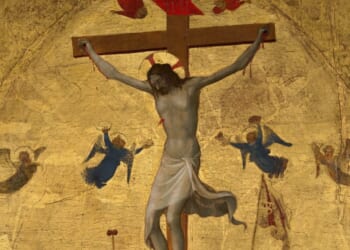
And when she lay motionless in the hospital bed—unable to speak, unable even to lift herself—it felt like standing at the foot of the Cross.
In that moment I understood something I had never grasped so clearly before: her suffering is sacred.
Christ did not eliminate suffering from the human story; He entered into it and transformed it. When suffering is united to His, it is no longer meaningless. It becomes part of the mystery of redemption.
Finally, a third insight burst forth—and with it came Easter joy.
The rosary does not end with the Sorrowful Mysteries. It moves toward the Glorious Mysteries.
That realization filled me with a quiet but powerful hope. Yes, right now my mother is living the Sorrowful Mysteries. But Good Friday is never the final chapter of the Gospel.
With Jesus, Easter always comes.
Every day I pray for the Glorious Mysteries to break into her life—for healing, for restoration, for a miracle. I do not know when or how God will write that chapter. For now, we are still living in the mystery of the Cross.
But because Christ is risen, I know the story is not finished.
That is why, even in the midst of the greatest tragedy of my life, I can still speak about Easter joy. Easter joy does not deny suffering. It looks directly at the Cross and believes that God is already preparing the Resurrection.
The Glorious Mysteries are coming.
And that changes everything.
Author’s Note: This reflection is inspired by my book 9 Days to Easter Joy, a devotional that guides readers through Holy Week and the Easter Octave, helping them encounter the Risen Jesus and discover how the hope of Easter can transform even life’s darkest moments. Learn more here.