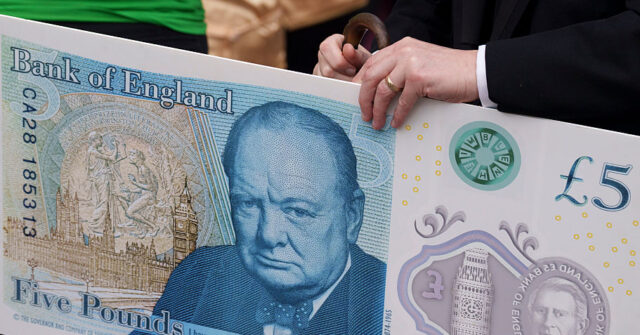
The Bank of England is to end the tradition of printing images of great Britons on the verso of paper money notes, stating it has decided to proceed with pictures of wildlife instead after it wanted something “not divisive”.
Sir Winston Churchill will no longer grace the pockets of Britons after it was announced the 50-year practice of printing portraits of famous Britons on the opposite side of notes from that of the reigning monarch is to end. The Bank of England, which issues money on behalf of the government, said in a statement on the change, emphasised that the change was supported by their research into public taste, which showed that images of native wildlife would be less “divisive” than historic figures.
They said the future designs had to meet their criteria, which included that new pictures symbolised the UK, resonated with the public, and “is not divisive: The theme should not involve imagery that would reasonably be offensive to, or exclude, any groups.”
In recent memory wartime leader Sir Winston Churchill was uncontroversial in his position as the “greatest Briton of all time” but, evidently, with the UK shorn of its uniting common culture this no longer applies. Indeed, the statue of Sir Winston in Parliament square has been repeatedly vandalised in recent years.
While Britain’s paper money originally only showed an image of the sitting monarch, from 1970 the verso, or back side, also began to show portraits of famous Britons. Those chosen for the honour has changed with ever-greater frequency: those first figures chosen, The Bard William Shakespeare and the victor of the Battle of Waterloo the Duke of Wellington graced Britain’s money for over 20 years each, and now Second World War codebreaker Alan Turing is up for replacement with an animal after just six.
Apart from artists and military leaders, and unsurprisingly given the history of the people of the islands, perhaps the greatest source of great Britons for the money has been engineers and scientists. Among them were giants of scientific history; Sir Isaac Newton, Sir Christopher Wren, George Stephenson, Michael Faraday, Charles Darwin, Boulton & Watt, and Alan Turing.
Through history, money has been associated with national self-image and the designs of coins and notes used by monarchs and then governments. Yet money being progressively divorced from place or people is rapidly becoming the norm. Notes for the European Union single currency are designed to be so of ‘anywhere’ that the images of bridges that feature on them are works of fiction.
Britain’s switch to animals is the second major change to its paper money in recent years. Former Bank of England governor Mark Carney — now the Prime Minister of Canada — ended the practice of printing money on cotton paper, switching it for plastic notes instead. While he praised this as making the notes more hardwearing and harder to forge — benefits for the Bank, mostly — and demonstrated this by dipping one in a pot of curry, they have not proven popular with the public. Paradoxically the plastic polymer notes alternatively suffer from both being too slippery or too sticky, making them harder to count by hand, and fold badly, making putting them in a wallet or purse less easy.