Previous attempts to restore Middle Eastern monarchies have met with little success.
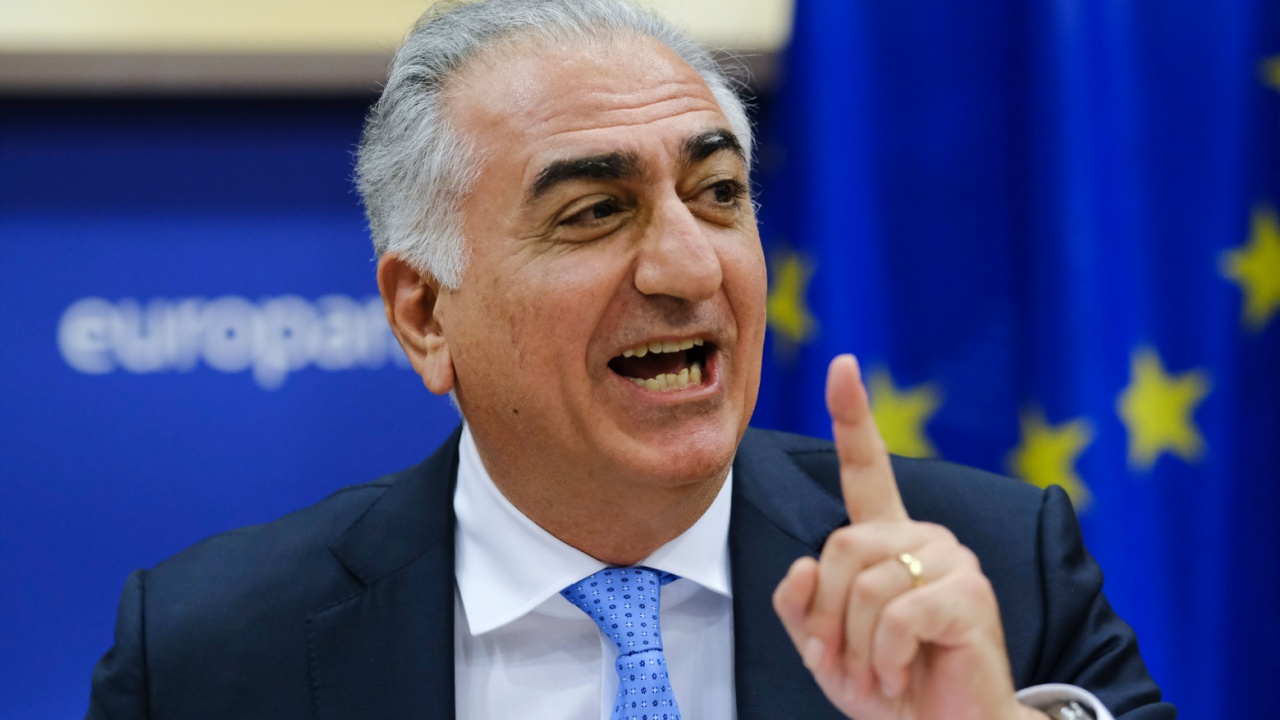
“The Iranian people have called on me to lead the transition after the regime is gone,” declared exiled Iranian crown prince Reza Pahlavi in a video statement posted on his X account on March 6. “I have accepted that responsibility.”
While the video has been met with elation from his fan base, it has also encountered cynicism, with some adding, “despite nobody offering him the position, and nobody accepting his offer.” In any case, the Islamic Republic’s succession machinery quickly replaced the assassinated Supreme Leader Ali Khamenei with his own son, Mojtaba.
In Marjane Satrapi’s graphic novel and film Persepolis, a poignant scene depicts the Iranian military officer Reza Khan’s overthrow of the Qajar Shah after World War I, seeking to establish a secular republic like Turkey. The British, who had installed monarchies in Iraq and Jordan, encourage him instead to declare himself shah in 1925. The backroom deal that ensured the British oil concession gave rise to the Pahlavi dynasty, which ruled Iran until 1979. It saw only two rulers, father and son. Now, the grandson, Reza Pahalvi, plans a political comeback.
Once the stuff of diaspora debates, talk of restoring the Iranian monarchy has reached a fever pitch amid the ongoing US-Israel war on Iran. The idea of reinstalling a monarchy may sound unusual in the 21st century, but it is not without precedent. Whenever Western policymakers confront the uncertainty that follows regime collapse, some begin looking to the past for ideas.
Royalists often recast monarchies overthrown during the turbulent middle decades of the 20th century as potential “anchors of stability” or “fathers of the nation.” Yet these recurring flirtations with restoration, tinted by nostalgia, rarely hold up when brought into contact with reality. Versions of this idea have surfaced over the last two decades, from Afghanistan to Iraq, and later during the Arab Spring.
Afghanistan’s Failed Camelot
In the aftermath of the US-led intervention that toppled the Taliban in 2001, attention initially turned to Afghanistan’s last monarch, Mohammad Zahir Shah, who had ruled from 1933 until his overthrow in 1973. For many Afghans and outside observers, his four-decade reign came to be described as “the golden age”, or even a “Camelot moment”, a comparatively stable and modernizing era in the country’s turbulent history.
Supporters argued that Zahir Shah brought a rare combination of tribal pedigree, international recognition, and broad acceptance among Pashtuns, while also commanding respect among segments of the Afghan diaspora.
Still, the appeal was not universal. Some ethnic Tajiks, Uzbeks, and Hazaras associated the monarchy with entrenched Pashtun dominance, and the king’s long years in exile in Rome raised doubts about how well he understood new ground realities in Afghanistan after decades of war.
“There was a lot of hope at the time, and people wanted to create a new Afghanistan, democratic, plural, and prosperous,” says Zalmai Nishat, founder and executive chair of Mosaic Global Foundation, a UK-based charity focused on Afghanistan and Central Asia. “For those forces who had fought for years for a new Afghanistan, with the possibility of social justice and equality between diverse communities, a return to the old system of governance seemed anathema.”
In the end, Zahir Shah returned not as a reigning monarch but as a symbolic figure with the title “Father of the Nation.” Authority rested with the new republican institutions led by Hamid Karzai, who, in an ironic twist, channeled that symbolism himself by cutting a distinctly regal figure, his traditional Afghan cape and karakul hat drawing admiration in Western media.
Looking back, some argue that a stronger constitutional role might have provided a unifying center for Afghanistan’s fragile post-Taliban order, or even opened channels of dialogue with the insurgency. Whether that would have altered the country’s trajectory is impossible to know. What is clear is that the notion of restoring a monarch did not end there.
The Fallen Crowns of Iraq, Egypt, and Libya
Two years later, attention turned to Iraq, where the idea of restoring a monarchy briefly resurfaced after the fall of Saddam Hussein in 2003. Like Afghanistan, Iraq had once been ruled by a royal family, the Hashemites. The accession of Faisal I in 1921 was sponsored by the British amid the collapse of the Ottoman Empire. The imperial connection was perhaps best symbolized by Faisal I’s hat, called the sidara, imported from London, and presented to local intellectuals as a badge of progressiveness and enlightenment.
The Hashemite reign in Iraq was short-lived, ending in savage violence in 1958 with the assassination of King Faisal II and several members of his family, leaving a country that had once been on a path toward Western-style development and statehood in the hands of military authoritarianism.
In the post-Baathist era, some Iraqis and exiled members of the Hashemite royal family (the same family ruling Jordan), including Sharif Ali Bin Al-Hussein, floated the idea of a constitutional monarchy. Supporters envisioned a neutral figure who could rise above sectarian divisions, serve as a rallying force, and provide a link to Iraq’s earlier statehood. The obstacles were not negligible. Decades of exile had left the royal family disconnected from modern Iraqi society, while its historic association with British colonial power tainted its legitimacy. Finally, a Sunni ruling house might have stoked tensions with a majority Shia nation.
For these reasons, Iraq continued its republican system built on sectarian power-sharing. Critics argue that a symbolic, non-partisan monarch might have offered the kind of unifying presence that the rigid quota system failed to provide. Today, these thoughts are merely “what if” in the country’s tumultuous postwar history.
During the upheavals of the Arab Spring, the same notion entered the discourse. After the fall of Muammar el-Qaddafi in Libya, monarchists suggested restoring the royal line of Idris. Rival claimants emerged, similar to the competing pretenders seen earlier in Iraq, but the idea never gained real traction amid Libya’s splintered political landscape.
In Egypt, where King Farouk was deposed by a group of military officers in 1952, talk of restoration hardly caught on, despite some half-hearted suggestions following President Hosni Mubarak’s departure in 2011. The surviving heir, Fuad II, had spent most of his life in Europe and showed little interest in returning to politics.
Iranian Monarchy: Unifying Symbol or Authoritarian Relic?
Drawing on these historical examples, Iran presents a unique case where restoration talk is entangled with the country’s revolutionary legacy and ongoing geopolitical tensions. Unlike Afghanistan or Iraq, where monarchs were overthrown in coups or abrupt military interventions, Iran’s monarchy fell amidst a mass, grassroots uprising that mobilized millions across class, ethnic, and religious lines. The 1979 Revolution wasn’t just the deposition of a single ruler (albeit in his final days, Mohammad Reza Pahlavi was widely unpopular), it dismantled an entire political system, replacing it with a theocratic republic.
This reality complicates any discussion of Reza Pahlavi’s potential role. While some in the diaspora hail him as a unifying symbol of a more secular, internationally engaged Iran, many inside Iran view him as a relic of a regime tied to Western intervention and authoritarian excess. His recent statements endorsing US-Israeli strikes on Iran and his failure to condemn the atrocities left in their wake have only exacerbated the skepticism. Even among reform-minded Iranians, nostalgia for the Pahlavi era is tempered by memories of repression and social inequality under the monarchy.
According to Hamid Dabashi, professor of Iranian studies and comparative literature at Columbia University, Pahlavi’s return to Tehran’s Golestan Palace is “highly unlikely” because of “the organic growth of Iranian political culture.”
As the joint US-Israel air strikes continue to leave a trail of death and destruction across Iran, calls for the return of an overthrown monarchy can easily be perceived as yet another imperial maneuver. The pretender’s grandfather rose to the throne with British backing, while his father regained absolute power through the US- and UK-engineered coup that removed Prime Minister Mohammad Mossadegh in 1953. Iran’s monarchy was ultimately overthrown through mass mobilization. Any attempt to sell it back to the people would have to contend with decades of revolutionary memory, popular resentment, and institutional change.
“[Iran has] passed an authoritarian monarchy and then a totalitarian theocracy,” says Dabashi. “Iranians will never settle for anything other than securing their democratic aspirations of an independent and undivided republic.”
In Iran, nostalgia and political reality have collided head-on. Reza Pahlavi may evoke hope among elements of the diaspora. Yet, within the country, his image is inseparable from a regime known for repression, foreign influence, and a lifetime of luxury abroad. The appeal of a unifying figure is real, but calling for the restoration of a discredited monarchy fails to consider the changes wrought by revolution, war, and decades of new institutions. As in Afghanistan, Iraq, and elsewhere, the idea of a returning king reflects a longing more than a path to practical governance. In these countries, royalty might invoke nostalgia, but nostalgia alone cannot rule a state.
About the Authors: Tanya Goudsouzian and Ibrahim al-Marashi
Tanya Goudsouzian is a Canadian journalist who has covered Afghanistan and the Middle East for over two decades. She has held senior editorial roles at major international media outlets, including serving as opinion editor at Al Jazeera English.
Ibrahim al-Marashi is an associate professor of Middle East history at California State University, on the board of the International Security and Conflict Resolution (ISCOR) program at San Diego State University, and a visiting faculty member at The American College of the Mediterranean and the Department of International Relations at Central European University. His publications include Iraq’s Armed Forces: An Analytical History (2008), The Modern History of Iraq (2017), and A Concise History of the Middle East (2024).