Walking home from Lincoln Center last night, at about 11:45, I heard a man say on his phone, “It was truly, like, the greatest thing I’ve ever seen.” He was speaking of a performance of Wagner’s Tristan und Isolde at the Metropolitan Opera.
In the title roles were two worthy singers. But no one is more important in a Tristan than the conductor. Of course, this is true of many another Wagner opera as well. And of operas at large.
Our conductor was Yannick Nézet-Séguin, the Canadian who is the Met’s music director. He shaped the Prelude with tender loving care. That’s a phrase I frequently use about Nézet-Séguin: “tender loving care.” In this case, there was perhaps too much care. The Prelude struck me as . . . careful, cautious, without enough movement.
But the rest of Act I? First-class. Nézet-Séguin followed Wagner’s ebbs and flows naturally. A spell was cast. That is always a question in Wagner: Was the spell cast? In Act I, it was. The music was like one long tone poem, without a seam. It might have been the Siegfried Idyll, or even a song.
The final pages were tremendously stirring and exciting. I was aware of shivers down my spine. I’m not talking metaphorically. This was a physical sensation. At the end of the act, the audience let out an animal roar.
You sometimes hear that in an opera house. And when you do, it’s thrilling.
When Nézet-Séguin returned for Act II, he received a rapturous ovation, the kind a conductor might dream of for the end of an opera. This act began with a muffed entrance. The act in general was not at the level of its predecessor. The spell was uncast, in my view.
The Love Duet was a little careful, a little cautious, a little “placed,” as I say. The notes were placed, like utensils on a table, rather than occurring naturally. I thought the duet was a little plodding, a little dull, frankly.
But Act III? This was as good as Act I. It was beautifully sculpted, by Nézet-Séguin—by Wagner, actually, whom Nézet-Séguin was representing. And the music had its due intensity, even urgency. This was great operatic drama.
The Liebestod, at the end, was beautifully breathed, by both conductor and soprano. It was well-nigh perfect—and I say “well-nigh” only as a reflexive hedge.
At concerts, a conductor often asks principal players to stand for solo bows. That does not happen in the opera house. But if it did, each principal player last night would have received a hearty ovation. The Met Orchestra brought its A-game. It played like a major orchestra, not a pit band (even a good one).
Actually, there was one soloist—the English horn—on the stage. He was Pedro R. Díaz, playing with beguilement and wearing a giant white costume whose meaning was lost on me.
“She’s a once-in-a-generation performer,” a man behind me said. He was speaking of Lise Davidsen, the Norwegian singing Isolde. I will get to her in due course.
Our Tristan was Michael Spyres, an American tenor. But come to think of it, he styles himself a “baritenor”: half baritone, half tenor. Listening to him, I thought of tenors of the past who started as baritones, and sang with a “baritonal trunk”: among them Lauritz Melchior, the great Wagnerian.
In Tristan’s music, Spyres was smooth and gleaming. There wasn’t a hint of a “Tristan bark.” He might as well have been singing German art songs. At the same time, he had Tristan’s pride and nobility—his heroism.
In Act III, Spyres showed a little straining, a little hoarseness. But that was both permissible and inconsequential.
Ryan Speedo Green, the American bass-baritone, was King Mark. He brought the right dignity and gravitas. The King’s monologue was a definition of “more in sorrow than in anger.” He gave his knight, Tristan, a tender dressing-down.
Brangäne, Isolde’s maid, was sung by Ekaterina Gubanova, the Russian mezzo-soprano. She is a poised, smart Wagnerian. She suffered a wobble on the “acht” of one of her warnings: “Habet acht!” (“Beware!”). But this was a mere glitch on a good night.
Also having a good night was Tomasz Konieczny, the Polish bass-baritone singing Kurwenal, Tristan’s servant. He conveyed a manly vigor.
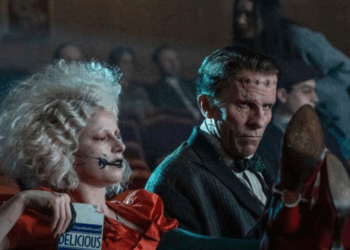
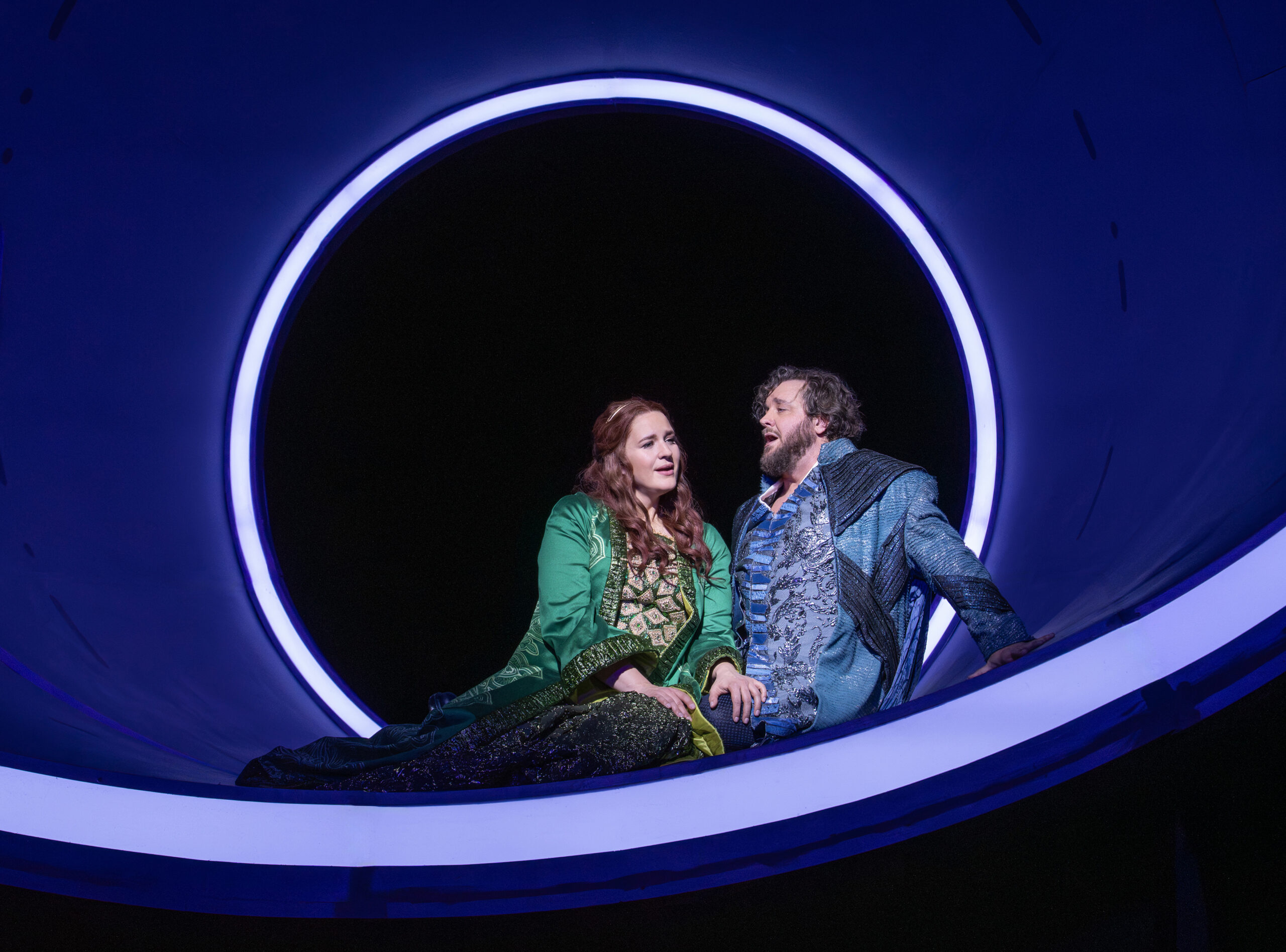
The Met’s production of this opera is a new one, in the hands of Yuval Sharon, an American stage director. It is visually striking, this production. It is obviously thoughtful. That is, the director has thought a lot about the story. The stage abounds in symbolism, some of which I understood, some of which I did not.
Clint Ramos serves as the costume designer. Those costumes are excellent, whatever I may think of the English horn’s get-up.
Mr. Sharon does not leave the Prelude alone. There is stage action—storytelling—during the Prelude. I believe the music alone can do the job, and should.
For some reason, he leaves the Prelude to Act III alone, which is nice.
“Doubles” seem to be the fashion in opera productions right now: actors who represent the characters—the singing characters—in some way. In this production, each of the title characters has not one but two doubles.
I have no doubt the director knows what he’s doing. But the doubles sometimes struck me as—I’m sorry—clutter.
Before Isolde expires, she gives birth. (I think.) King Mark embraces the baby and walks on into the future. (I think.) Is this what Richard Wagner had in mind? Does it matter?
At the back of the stage is a giant tube. The singers often sing in this tube. The acoustics vary, as the singers move within that tube. From my seat, Tristan suddenly sounded amplified. At other times, singers sound—a little faint.
There comes a time in Act I when Isolde is finally allowed to sing on the stage. Not in the tube at the back, but near the front of the stage. This was such a relief. Everything was more vivid, more present.
Mr. Sharon has Isolde sing the Liebestod back in the tube. I thought, “If you have Lise Davidsen—Lise frickin’ Davidsen—singing the Liebestod, don’t you want her front and center, on the stage?”
She’s a phenomenon, Ms. Davidsen. She has a rare, rare combination of power and lyricism. Usually, you’ve got to choose. You can have big or you can have lyrical—but you can’t have both. With Davidsen, you can.
I wrote some version of those words a hundred times about Deborah Voigt. If people know her only from her final seasons, they don’t know her. She was stupendous.
For hours last night, Davidsen gave us walls and waves of beautiful sound. She was also subtle. And she was, crucially, in tune. We tend not to notice intonation until it’s off. Davidsen was true.
There is a statue of Kirsten Flagstad, the legendary Wagner soprano, in front of the Oslo Opera House. As I have said before, I believe that this current Norwegian, Lise Davidsen, will join her one day—join her in stone.
Speaking of Flagstad: Marilyn Horne, the great American mezzo, once told me that the first opera she ever saw was Tristan und Isolde, in Los Angeles. Tristan was Ramón Vinay and Isolde was Flagstad.
“I was maybe fifteen or sixteen,” said Horne. “My memory is that it was glorious. I remember falling asleep, because I had been in school all day. I didn’t know you needed a little nap before Wagner—now I know!”
At the first intermission last night, I overheard a man say to his wife, “Even the synopsis is long!” I couldn’t help commenting, “That’s a funny remark.” He said, “Go ahead and take it!”